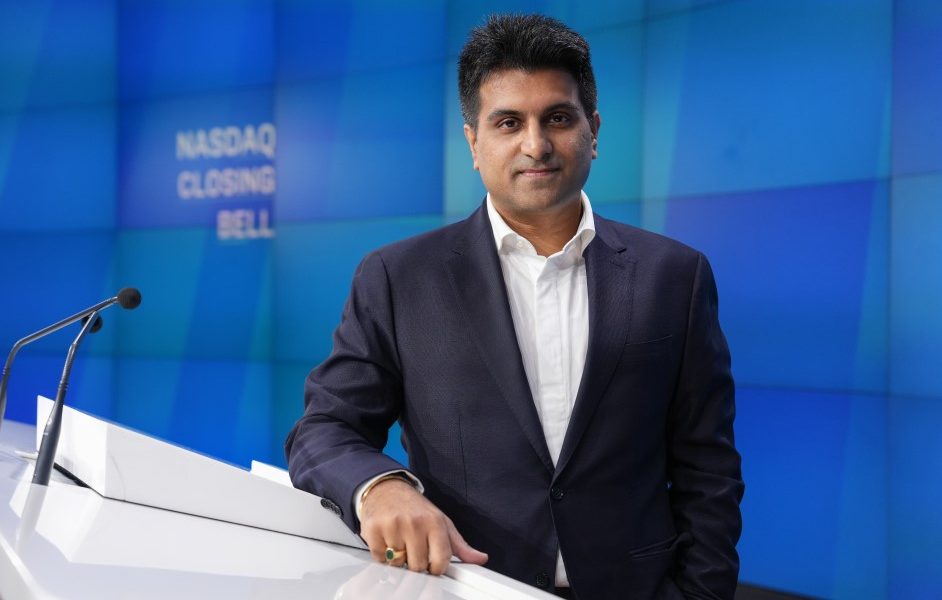
Rohan Malhotra is CEO, Founder, and Director of Roadzen, a global insurtech company advancing AI at the intersection of mobility and insurance.
Roadzen is a pioneer in computer vision research, generative AI, and telematics, including tools and products for road safety, underwriting, and insurance claims. Companies such as AXA, Allianz, Tata and Audi use Roadzen to deliver a better car insurance experience for every driver on the road. Mr. Malhotra previously served as Chief Executive Officer of Avacara, his enterprise software and data analytics company that provides product development services to Fortune 500 companies. Mr. Malhotra holds a bachelor’s degree in engineering from NSIT, University of Delhi, India, and a master’s degree in electrical and computer engineering from Carnegie Mellon University, where he studied AI and robotics.
What first attracted you to computer engineering and machine learning?
I was drawn to robotics from an early age, fascinated by the idea of creating machines that can perform tasks autonomously. This fascination with robotics was my introduction to the field of computer engineering. As I learned more, I realized that hardware could be abstracted into software, and I became interested in building systems that scale and learn. Now, at Roadzen, we’re applying these ideas to make cars more intelligent and the traditional insurance world dynamic and real-time.
Can you tell us the Genesis story behind Roadzen?
Roadzen was born out of a frustrating experience in 2015 when a friend of mine had an accident that resulted in long delays in getting roadside assistance, and he had to spend over 4.5 hours on the phone to file a claim. This challenging episode inspired me to apply his AI expertise to enhance road safety and transform the auto insurance industry.
How does Roadzen use computer vision to value vehicles?
Roadzen uses computer vision to determine vehicle value through its vehicle inspection and valuation platform VIA. VIA leverages AI, machine learning, and high-resolution imaging to conduct digital vehicle inspections to overcome challenges associated with manual inspections, such as human error, subjectivity, and processing delays.
This technology provides a comprehensive view of vehicle health by integrating real-time data and historical records. VIA’s computer vision capabilities leverage millions of underwriting decisions for accurate loss recognition and underwriting. It also incorporates fraud detection through automated analysis of patterns and user behavior. The platform ensures high transparency with customizable access controls for insurers during the inspection and underwriting process.
VIA makes vehicle inspection and underwriting seamless, efficient, and transparent, speeding the process while providing reliable valuations through dynamic reporting and real-time notifications.
The same technology is used post-incident, can you discuss the process for customers and on-site inspectors?
Roadzen’s claims management technology can recognize any auto part and identify 10 types of damage within one second, making claims processing much faster. This moves the claims process from a reactive to a proactive one, starting the claims process when an accident occurs and allowing customers to process claims at the scene of the accident instead of waiting weeks.
Roadzen’s automated claims platform, xClaim, seamlessly engages customers and insurers in an efficient claims process. Customers can quickly report incidents through the app, provide initial visual documentation through customer-captured videos and images, and work remotely with inspectors to recognize exact damage within minutes. can. The system also has built-in fraud detection to strengthen the integrity of the claims process. The platform provides dynamic reporting and real-time notifications that speed claims processing, while dedicated customer support ensures transparency and assists all parties. The platform’s customizable access controls improve the customer experience while creating a digital record of information that can be accessed for future reference.
Roadzen provides real-time driver safety data, can you explain how the AI analyzes the safety of a particular driver? So how can this information be used to prevent accidents?
Combining the predictive capabilities of AI with real-time data paves the way to truly dynamic and effective driver safety, able to assess and warn an individual’s level of risk at any given moment.
Roadzen’s comprehensive telematics suite includes a computer vision system that identifies driver behavior patterns. The system leverages real-time vehicle data and applies computer vision to critical decisions such as time-to-crash, accident prevention, and obstacle detection.
One of Roadzen’s key innovations is distraction monitoring. The vehicle’s advanced facial detection technology allows the system to identify if the driver is drowsy, distracted by a cell phone, or not wearing a seatbelt. This proactive approach can significantly reduce accidents caused by distracted driving.
Roadzen has successfully solved one of the most complex challenges in computer vision: road object detection. This technology can accurately measure the distance between vehicles, an important safety measure to prevent collisions.
Human drivers typically take 1.3 seconds to react before an accident occurs, but Roadzen’s technology alerts drivers approximately 3 seconds in advance, effectively tripling their reaction time. This could potentially eradicate 60% of accidents caused by human error or distraction, and would be a major advance in the insurance industry.
Roadzen’s technology stack uses telematics to compile this data, create comprehensive driver profiles, and provide dynamic quotes tailored to each driver. This personalized approach improves the accuracy of risk assessments and ensures fair premiums based on individual driving habits and circumstances.
What other AI and machine learning technologies are used in Roadzen?
Roadzen focuses on advancing AI through fundamental and applied research focused on the intersection of mobility and insurance. Roadzen (AIR)’s AI research team is working to advance our understanding of critical areas such as computer vision, generative AI, and core machine learning. Computer vision allows machines to interpret and manipulate visual data. This is an important feature in mobility and insurance due to the rich information visual input provides. Additionally, we’re putting a lot of effort into Machine Learning Operations (MLOps) to streamline how teams can train and deploy models accurately and quickly. Also, use synthetic or generative AI to accelerate model training.
What are some of the challenges that AI integration poses to the insurance industry?
Challenges include manipulating complex data structures, processing legacy data, and managing high-quality data sets from the vast amounts of data generated. Addressing potential issues around data privacy, security, and algorithmic bias is critical to building trust and ensuring fair use of AI in insurance. Open and responsible AI development will be critical to ensuring fair practices, preventing bias in AI-driven decision-making, and protecting customer data.
Can you share your vision for the future of insurance and AI?
As the mobility landscape changes and the majority of cars become connected and autonomous, AI has the potential to create a more efficient, customer-centric insurance ecosystem for connected mobility. Predictive modeling for risk assessment leads to more accurate pricing and better risk management. AI and advanced analytics allow insurers to anticipate customer needs, personalize offers, and improve the customer experience.
Advances in computer vision and telematics will make great strides in preventing accidents and improving driving behavior. This results in fewer claims, lower costs and safer roads.
Automated damage assessment streamlines the claims process, making it faster and more objective. AI will also transform underwriting by making it faster and fairer by more accurately assessing risk and eliminating human bias. And we’re working to ensure this future is built on responsible AI principles.
Thank you for the wonderful interview. Readers interested in learning more should visit Roadzen.