

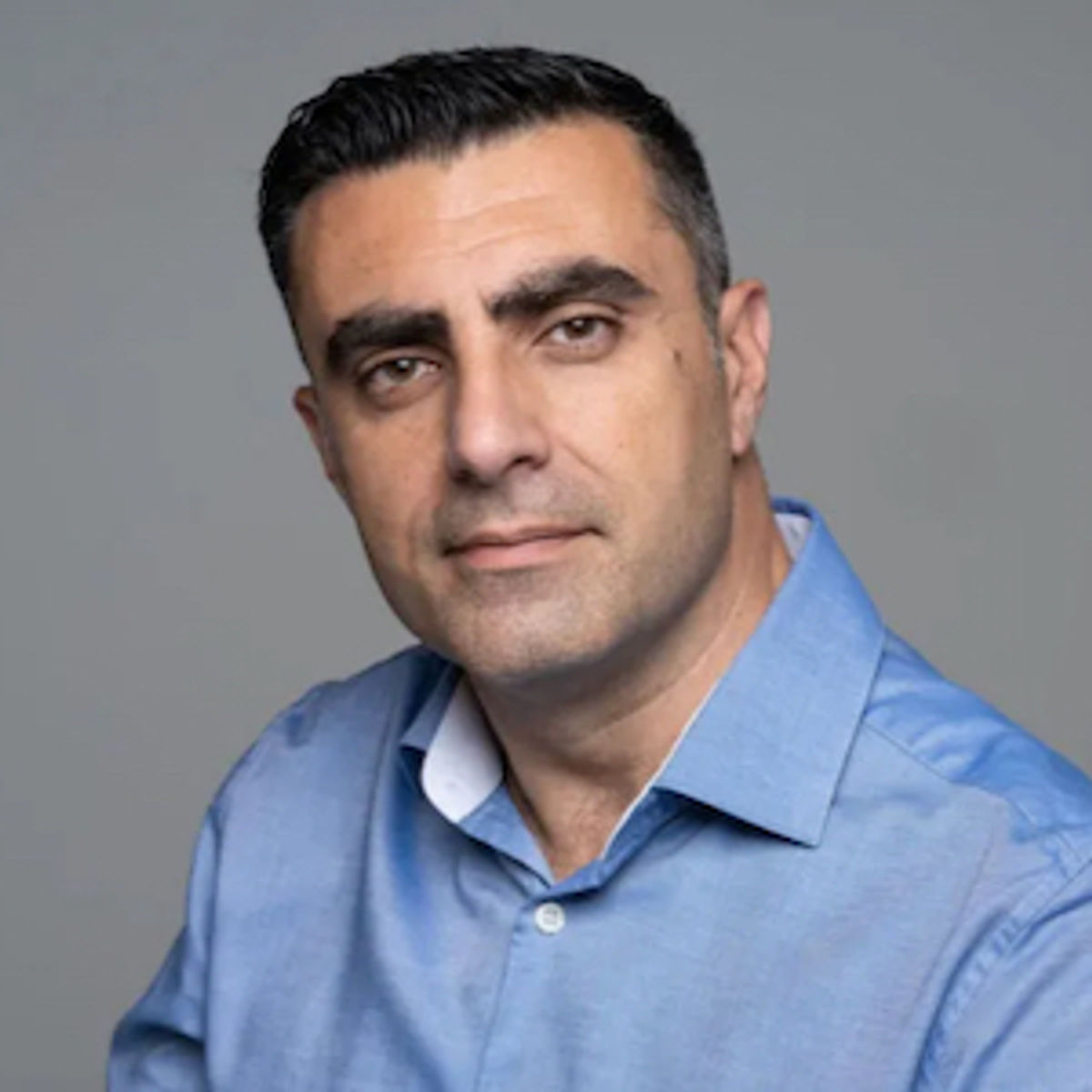

Mark Cuschieri is GBTA Board Chair and UBS Executive Director of World Travel
Last August, Mark Cuschieri was elected chair of the Global Business Travel Association board, becoming the first person outside the United States to hold the role. The London-based executive director of global travel at UBS achieved a similar milestone two years ago when he was elected vice president.
“I think this really shows where the GBTA is in terms of its mission and its goals, which is to bring the ‘G’ back to the GBTA,” he said, adding that he was once the association’s He added that he was one of his biggest critics. “I’ve been volunteering for 13 years. I’m a strong believer that if you want things to change, it’s better to get involved in it than just throwing stones.”
In the summer of 2020, the GBTA was rocked by allegations of misconduct against then-CEO Scott Solombrino. Although he was cleared of the charges, Mr. Solombrino resigned and the association entered a period of rebuilding.
“The GBTA is in a very different situation right now, and only our members can tell us that. I have taken the time to listen, engage, and meet new members, and they are It tells us that the GBTA is moving in the right direction,” Cuschieri said. “Perfect? No. We all agree that the industry is rapidly changing and evolving, so the GBTA needs to support its members as they face these challenges and opportunities.”
Although a global organization with many universal challenges, Cuschieri recognizes that every region and country has its own idiosyncrasies. For example, sustainability is a higher priority for companies in Europe than in some other regions. Therefore, there is a need to pursue common standards and discuss “big, big themes,” as well as regional efforts to “talk about the nuances of markets and how to advocate with governments.” What’s most important, he says, is diversity of opinion among the many volunteers the GBTA relies on.
How does he think his term as president will go? “The pandemic is over. We need to move forward and my objective is to reset the board and I It’s not about what we accomplish or what the board accomplishes in the next two years. We want to leave our tenure in a better position than we started it with, and we want it to be more than just a temporary thing. , setting the framework for the future.”
Cuschieri says the board, like any organization, should be the one behind the scenes creating governance. “There’s no question that boards aren’t as front-facing as they used to be. That’s no disrespect to my predecessors or anything like that, but my mission and the board’s mission is to really be there and support them. , to be an ambassador. Suzanne [Neufang, CEO] And our amazing GBTA team is positive. ”
Perhaps the biggest issue for the industry at the moment is considering carbon footprint and justifying travel. “If you talk to any supplier in the value chain, sustainability will be in the top three. [priority] region. we need to travel The problem is carbon, not travel,” Cuschieri said. “The benefits of bringing people together face-to-face are so important to any business. So we need to innovate somehow, and we need to do it quickly.”
He said the way people travel is already changing, a trend many are witnessing: travelers taking fewer but longer trips, business travelers cutting back on their travels; He cited the modal shift from airplanes to trains.
“Will we travel less? Probably,” Cuschieri says. “Sustainability is also a mindset that is becoming an important part of the culture of young talent and organizations. My thinking is how do we proceed with the business of sustainability as usual? We want to get to the point where we don’t even talk about it because it’s part of the process. Have we arrived yet? Or is that the purpose? When choosing to travel, it’s normal I think that should be considered as a deciding factor.”
Are buyers ready for CSRD? No, not necessarily.Everyone is on a different path when it comes to sustainability
Government intervention will also be fundamental to helping the industry reduce its environmental impact, Cuschieri said. “Advocacy is very important because, for example, regulation is needed to ensure that the use of sustainable aviation fuels accelerates. How do you scale SAF production? No. How do we do that? It requires government intervention and incentives to accelerate production.”
Europe’s international high-speed rail ‘bookability’ is another area that needs improvement to get business travelers off planes. “Booking long-distance rail travel with multiple operators should be easy, but it isn’t,” says Cuschieri.
Such improvements fall within the scope of the EU’s Multimodal Digital Mobility Services (MDMS) initiative. Another EU initiative that many buyers are most interested in is the Corporate Sustainability Reporting Directive. It requires companies of a certain size to report their 2024 carbon emissions by 2025, including carbon emissions related to business travel (Scope 3.6) and employee commuting. (Scope 3.7).
Are buyers ready for CSRD? “No, not necessarily. Everyone is on a different path when it comes to sustainability. “Every little thing is worth more than what you did yesterday. It’s about building the foundation,” Cuschieri says.
“Given our membership, scope, and size, we need to be more there for those who don’t have access to resources within our organization. [GBTA] We need clarity, so we are doing a lot of advocacy work in Brussels to better understand the upcoming requirements. We are already preparing to provide tools to support and assist our membership. A lot is happening in a very short period of time. ”
Perhaps the most divisive topic brought up by Cuschieri is the issue of content fragmentation, the fallout from airline promotional strategies that will impact businesses in 2023.
“Content is paramount and things are changing and evolving very quickly,” he says. “There’s certainly room for that in modern retail, but we need to do it together as an industry. That’s important to me. I just want to sit at the table while I’m doing it.”
The problem of travelers finding cheaper fares on leisure booking sites and taking them to travel management companies is all the rage again. “It’s very frustrating to have these conversations in this day and age,” Cuschieri said. “When our industry came together like never before during the pandemic, we all talked about collaboration, but I’m worried that it’s going back to pre-2019 levels, and that’s the industry’s biggest challenge. It’s not good for suppliers, it’s not good for buyers, it’s not good for anyone. This is a time where we all need to come together and have a very transparent and open conversation, even if it’s a difficult conversation. It should be done in a certain way.”
According to GBTA research, nearly half of buyers feel that industry technologies such as NDC will pose challenges in the year ahead. According to Cuschieri, this is largely due to companies not knowing how to close the growing content gap and a lack of clarity from TMCs and airlines.
“I’m not going to point to any particular supplier, but there are always disruptors in the industry. Some are probably trying to spread the ball a little too far,” Cuschieri says.
“If a supplier doesn’t want to be active in the corporate field, that’s their choice. It’s up to the companies to decide for themselves whether that’s right or wrong for them. In my opinion, it might suit some buyers. The GBTA does not judge whether it is right or wrong because it may not be right or wrong for another buyer. What we are asking is for suppliers to do their own research before making a decision. It’s about considering the consequences of your actions.”
What companies shouldn’t do is “stick their heads in the sand and think it’s going to go away”. The market is changing, Cuschieri said, and that’s when the GBTA can do its best work. “It’s about informing, learning and educating. Our role is to provide a platform for these discussions and to provide factual information to better educate and inform our members. It’s about providing.”