

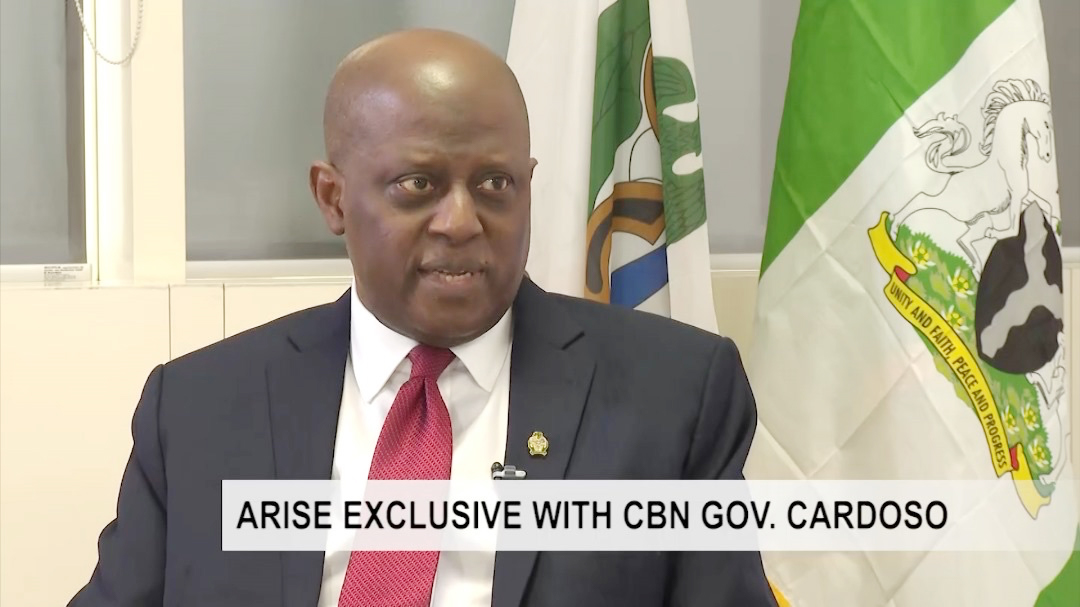
Analysts on Tuesday praised the recent intervention of Central Bank of Nigeria (CBN) Governor Olayemi Cardoso to clear the air on the federal government’s foreign exchange obligations.
The CBN governor, in an interview with Arise Television on Monday, set the record straight about the government’s actual foreign exchange commitments, contrary to speculation.
Previously, the federal government’s total foreign exchange debt was reported to be in the range of $7 billion to $10 billion, but this figure was long debated and was finally put to rest by the CBN.
Citing various issues and efforts by the CBN to reposition the economy, Cardoso said a forensic audit commissioned by the bank revealed that $2.4 billion of the federal government’s laudable $7 billion in outstanding foreign exchange debt was fraudulent. It was revealed that the transaction turned out to be a Valid for payment.
The CBN Governor also said that the bank has settled verified foreign exchange claims amounting to $2.3 billion, adding that the total outstanding foreign exchange liability currently remains at $2.2 billion. This is very different from the headline claims about foreign exchange balances.
He also explained the policy direction of the apex bank in terms of various reform efforts to correct imperfections in the foreign exchange market and stabilize the naira.
Cardoso also pointed out that some of the major $7 billion in unpaid foreign exchange claims were fraudulent, citing the results of a forensic audit by Deloitte management consultants commissioned by the apex bank.
Analysts in separate interviews said the central bank governor’s clarity would boost investor confidence in the economy.
Mr. Cardoso’s explanation indicates the bank’s future policy direction.
Managing Director and Chief Executive Officer of Dignity Finance and Investment Limited, Dr. Chijoke Ekechukwu, said the governor’s “comments clarified certain ambiguous issues, thereby increasing investor confidence.” ” he said.
He said: “Mentioning outstanding amounts to creditors gives confidence and hope to investors. The interviews revealed quite a number of murky issues. I made it clear that I was going to focus on that.”
Ibrahim Sheren, an asset management and business development consultant, said Nigerians and foreign investors would be encouraged by Cardoso’s comments.
“There is no doubt that the exchange rate situation is a major concern for the Nigerian economy, given the recent rapid devaluation of the currency,” he said.
“Foreign portfolio investors who previously avoided investing in Nigerian securities may now do so more.
“We hope that the noted forex demand backlog will break down and provide a more positive outlook.”
“It will definitely be more satisfying because the backlog has been touted to be significantly reduced,” Schellen said. It is easy to see how the government can solve this problem, especially considering the expected return of FPIs.
“However, it remains to be seen whether there will be more activity in the stock and bond markets. Most likely, sovereign bond yields will rise to attract more FPIs.”
Idakolo Gbolade, Managing Director and Chief Executive Officer of SD&D Capital Management Limited, said the interview revealed the Cardoso administration’s policy framework.
He said: “The new management of the CBN faces a difficult situation within the bank and will take bold and calculated steps to restore the CBN to its traditional position.”
“The new policies taken so far are aimed at helping the naira find its level and stopping bank profiteering regarding our country’s currency situation.
“An active buyer and active seller policy for foreign exchange is a policy that will ultimately strengthen and stabilize the naira and the economy as a whole once other policy measures begin to bear fruit.”
Mr Idakolo particularly expressed satisfaction with the central bank’s plan to rationalize the exchange bureau operators, saying they are important stakeholders that can determine the success of apex bank policy reforms.
“There is a need to properly monitor the activities of BDCS and ensure that it is procuring FX from the CBN,” he said.
There is a need to improve the CBN’s traditional roles, including monetary policy implementation and financial sector supervision, and provide appropriate sanctions for violators of established guidelines.
“The new CBN team is on the right track if it can ensure strict implementation of the policy.”
James Emejo