


McLaren MCL38 rear wing details
Photo credit: Giorgio Piola
McLaren modified the rear wing for Saudi Arabia, adding a recessed area in the center of the main plane and an upper flap, and removing the similarly curved notch on the trailing edge of the upper flap.

Stake F1 Team Kick Sauber C44 Rear Wing Details
Photo credit: Giorgio Piola
Exterior view of the Sauber C44 rear wing with a double-pillar layout with a shallow swan neck arrangement. Also notice the teardrop-shaped flap pivot. It was first introduced a few seasons ago and has since been adopted by other cars up and down the grid.

Ferrari SF-24 rear wing details
Photo credit: Giorgio Piola
Ferrari’s rear wing has a Gurney flap attached to the trailing edge of the upper flap, but it could be removed if the team can find the right balance, which would likely improve straight-line speed. It’s also worth noting that the team continues to use the semi-separated tip section solution it introduced this season.

Aston Martin AMR24 rear wing details
Photo credit: Giorgio Piola
Aston Martin’s rear wing features varying chord heights and a trimmed trailing edge, starting with a short chord section before reaching its maximum height, working inward from the tip section, then finishing in the middle. The sections also feature notches.

Mercedes F1 W15 rear wing details
Photo credit: Giorgio Piola
Mercedes has a new low-downforce rear wing arrangement at its disposal this weekend, as the central part of the mainplane has been flattened and the upper flap follows a similar contour. Also note the use of a notch in the center of the top flap to reduce drag. You can also see a diagram of the DRS mechanism without the bodywork installed.
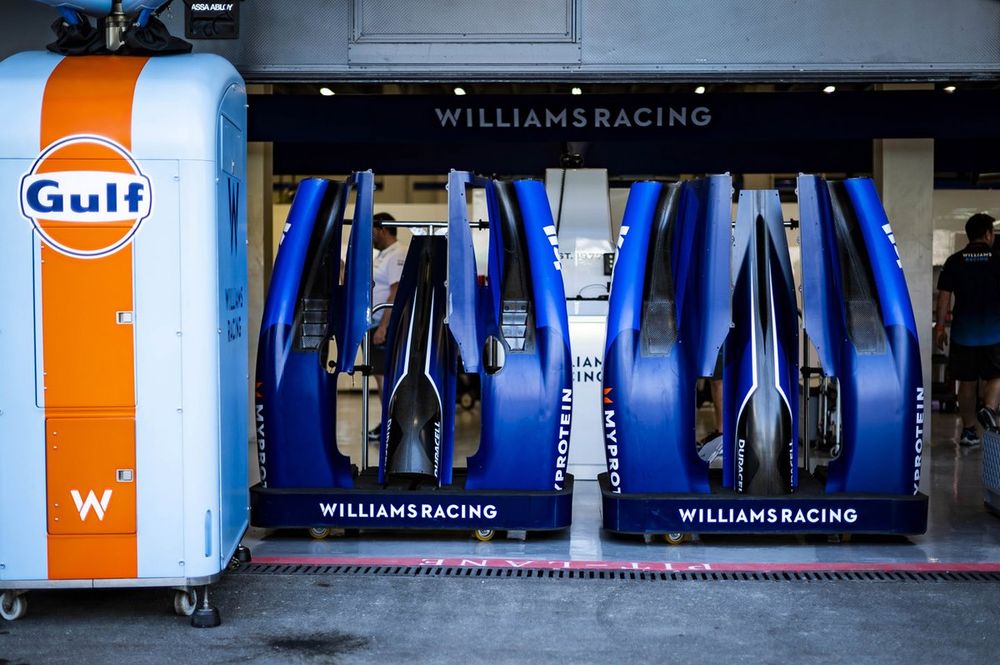
Williams Racing Garage Atmosphere
Photo credit: Shameem Farhas
Two different cooling configurations for Williams. The left arrangement shows louvered panels in the sidepod gully.

RB F1 Team VCARB 01 Rear Detail
Photo credit: Giorgio Piola
The RB01’s low-downforce rear wing features a semi-separated tip section with a very shallow angle of attack between the main plane and top flap.

Aston Martin AMR24 rear detail, Saudi Arabia GP
Photo credit: Giorgio Piola
A close-up of the Aston Martin AMR24’s rear impact structure reveals the twin winglet arrangement the team has adopted this year, with one element attached directly to the impact structure and the rearmost element positioned on the spar. placed on the outside. crash structure.

Red Bull Racing RB20 technical details
Photo credit: no credit
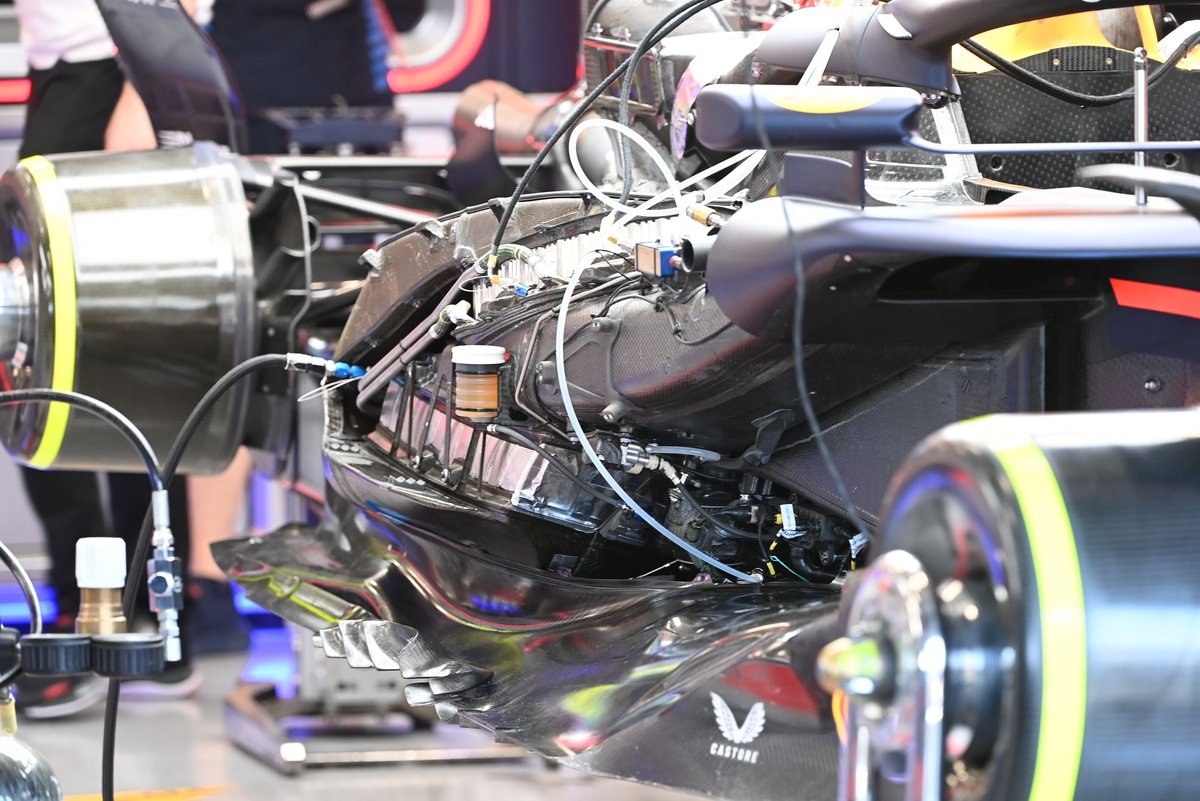
If you look inside the Red Bull RB20’s sidepod without any bodywork installed, you’ll see a V-shaped layout for the radiator and cooler.

Red Bull Racing RB20 technical details
Photo credit: no credit
Close-up of the forward upsweep section of the Red Bull RB20’s edge wing. It also features splittable strakes to manage flow within this area.

Red Bull Racing RB20 technical details
Photo credit: No credit
Red Bull’s low-downforce rear wing arrangement is similar in DNA to the wing seen in Bahrain, with changes to the camber, cord and angle of attack of the main plane and upper flap to reduce downforce and drag. There is.

Red Bull Racing RB20 technical details
Photo credit: No credit
Close-up of the Red Bull RB20 snorkel. Combined with a similar arrangement housed within the nose to supply cool air to the cockpit.

Red Bull Racing RB20 front brake drum details
Photo credit: No credit
Red Bull uses a D-shaped inlet arrangement for the front brake duct, which then takes on a similar shape along its length and is used as a hot outlet at the rear of the assembly.

Red Bull Racing RB20 technical details
Photo credit: No credit
An enlarged view of the semi-separated tip of the RB20 rear wing. It features a teardrop-shaped flap pivot that the team also adopted.

Mercedes W15 technical details
Photo credit: No credit
A look under the bodywork of the Mercedes W15 with the centerline cooler on display. You can also see some of his suspension elements inboard, with the team switching to a pushrod layout for his 2024.

Mercedes W15 technical details
Photo credit: No credit
Another angle showing Mercedes’ downforce-reducing rear wing. The main plane of the central section is reduced in size and features a more abrupt transition to the end plates. This is also reflected in the design of the top flap, resulting in the leading edge extending forward above the main plane.

Ferrari SF-24 technical details
Photo credit: No credit
Close-up of the inboard suspension elements of the Ferrari SF-24. The team uses disc springs as part of the heave damper arrangement.

Ferrari SF-24 technical details
Photo credit: No credit
Close-up of the Ferrari SF-24 front caliper and its enclosure.

Ferrari SF-24 rear wing
Photo credit: No credit
Ferrari will also feature a semi-separated tip section on the rear wing for 2024, changing the relationship between the main plane, end plate and rear cutout section to better channel the vortices released from this area. We are making it possible to manage it.

Ferrari SF-24 front brake drum details
Photo credit: No credit
Close-up view of the front brake duct inlet of the Ferrari SF-24. Divided into multiple channels to supply cool air to various components. Note that wires are used at the tips of these channels to prevent debris from clogging the air passage to these channels.

McLaren MCL38 front wing details
Photo credit: No credit
Close-up view of the outer section of the MCL38 front wing. All three upper elements are angled from the endplate to create a clear drop-off surface and improve outwash around the front tire.

Williams FW46 details
Photo credit: Philip Crellen
To reduce drag and balance the car, Williams will trial the use of a single beam wing element on the FW46 during practice.

RB F1 Team VCARB 01 Details
Photo credit: Philip Crellen
Similarly, the RB01 is also equipped with a single-element beam wing, but combined with a lower downforce rear wing arrangement.

Red Bull Racing RB20 side detail
Photo credit: Giorgio Piola
Take a look at the RB20’s rear bodywork modified for the Saudi Grand Prix to suit the track’s cooling requirements.