

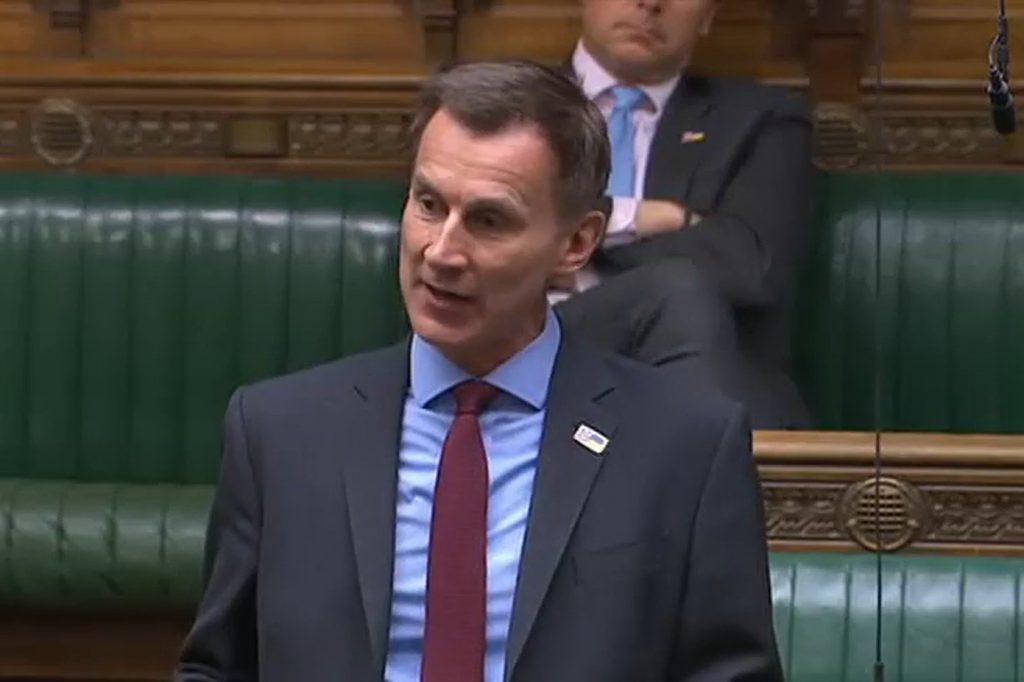
Health service leaders have warned of another “tough year” for the NHS after the Spring 2024 Budget is announced.
This afternoon, Chancellor of the Exchequer Jeremy Hunt announced the UK Government’s financial plan for 2024-25, which includes a number of measures that will affect nursing and the NHS in general.
“What we need is not a bigger nation, but a more productive nation.”
jeremy hunt
Mr Hunt’s main announcement was a 2p cut to National Insurance, in addition to the 2p cut made in the autumn. He said the measures would help boost growth and “reap the rewards of work” without jeopardizing funding for public services.
Mr Hunt, a former health and social care secretary, said the previously announced 1% annual increase in public spending would be kept, but despite calls from some quarters there would be no increase.
Instead, the Chancellor said £4.2bn would be put into public sector productivity programmes, including £3.4bn for the NHS.
The Prime Minister said investment in the NHS would go into new technology and digital transformation, including replacing “outdated IT systems” and other equipment.
He said this would improve the efficiency of health services by reducing time lost due to unnecessary physical paperwork and IT infrastructure issues.
The funding will also support the introduction of a national electronic patient record, an electronic directory via the NHS staff app, and artificial intelligence (AI) to support clinical staff.
“While spending has increased year on year, public sector productivity remains nearly 6% below pre-pandemic levels,” he said.
“This shows that the way to improve public services is not necessarily to have more money or people; we need to run them more efficiently.
“What we need is not a bigger nation, but a more productive nation.”
Mr Hunt argued that these measures would allow the NHS to promise a 1.9% annual increase in productivity.
NHS England chief executive Amanda Pritchard claimed Mr Hunt’s announcement showed the government’s determination to “support the NHS”.
“The introduction of the latest technology is already having an impact on the way we deliver services to patients, from getting prescriptions on the NHS app to virtual wards for home care,” she said.
“A significant capital investment of £3.4 billion to fund new technology means the NHS can commit to achieving 2% annual productivity growth in the final two years of the next parliament, which will This could save tens of billions.”
The Prime Minister also announced a £45 million increase in funding for medical research charities, which aim to develop new drugs for diseases such as cancer, dementia and epilepsy.
He also said that with “government support”, pharmaceutical company AstraZeneca would “expand its footprint” at Cambridge University’s biomedical campus and set up a vaccine manufacturing site in Liverpool.
“I have long believed that we should not only develop drugs, but also manufacture them,” Hunt added.
It was also announced that tariffs on cigarettes and e-cigarettes would be increased to increase the “economic incentive” to quit smoking.
Meanwhile, Mr Hunt said he would keep alcohol duty frozen until 2025 in a bid to boost Britain’s pubs.
But Mr Hunt’s announcement did not mention loan forgiveness for student nurses, which the Royal College of Nursing (RCN) and modern university organization MillionPlus had been pressing him to implement ahead of the budget.
RCN general secretary and chief executive Professor Pat Cullen said the Chancellor’s tax cuts would be enough to fund student loans for NHS nurses over the next 40 years and that “the public does not support his policies”. Ta.
“They would rather rebuild the health service than support tax cuts,” Professor Cullen said.
“Technology is transforming the healthcare sector but we still need enough staff to use it, but the Prime Minister failed to confront that NHS staffing plans are heading in the wrong direction. .
“The number of people starting nursing courses is decreasing, not increasing.
“Nursing staff are already being forced to provide hallway care and treat 15 patients at a time, and his productivity plan should not require them to do more than that.”
Professor Cullen said financial measures, including loan forgiveness, “should have been announced” to boost the recruitment of nurses domestically.
NHS Provider Chief Executive Sir Julian Hartley He welcomed that day-to-day public sector spending continues to rise each year, which he said equates to around £2.5 billion of extra spending on the NHS.
However, Lord Julian described this as a “temporary respite” and urged the Prime Minister to go further.
“Leaders across the NHS want nothing more than to deliver high quality patient care and improved services,” he said.
“But to achieve this, health leaders need to be able to plan for the future, rather than constantly worrying about continued budget cuts, such as the stop-start approach to NHS funding. with the announcement of emergency short-term funding.
“But they will be pleased that the Prime Minister has finally listened to the public’s calls for further investment in digital and technology in the NHS, which will transform healthcare for patients and improve access to services. It has the potential to free up staff time.”
Targeted interventions for social care were also missing from the budget.
Professor Vic Rayner, chief executive of the National Care Forum, said Mr Hunt’s budget was evidence that the government had “ruined” past promises on social care.
She said: “It is clear that the Chancellor has missed an important opportunity to address the huge funding pressures on local authorities and social care providers. These pressures are causing multiple councils across the political spectrum to Soaring prices have led to the company declaring bankruptcy.
“For the thousands of people waiting for assessments and care packages, this budget will do nothing to improve access or availability of care.
“Additionally, addressing ongoing workforce and recruitment challenges does not help organizations that provide care and support.”
Professor Rayner added that he called on the Government to improve future investment in social care, including improving wages and working conditions for social care workers.