

Map apps are both a blessing and a curse.
These can be very useful for finding the fastest route to avoid traffic jams or the nearest ice cream shop. But it can also be frustrating when they mistakenly list a business as closed or mistake a house for a boat launch.
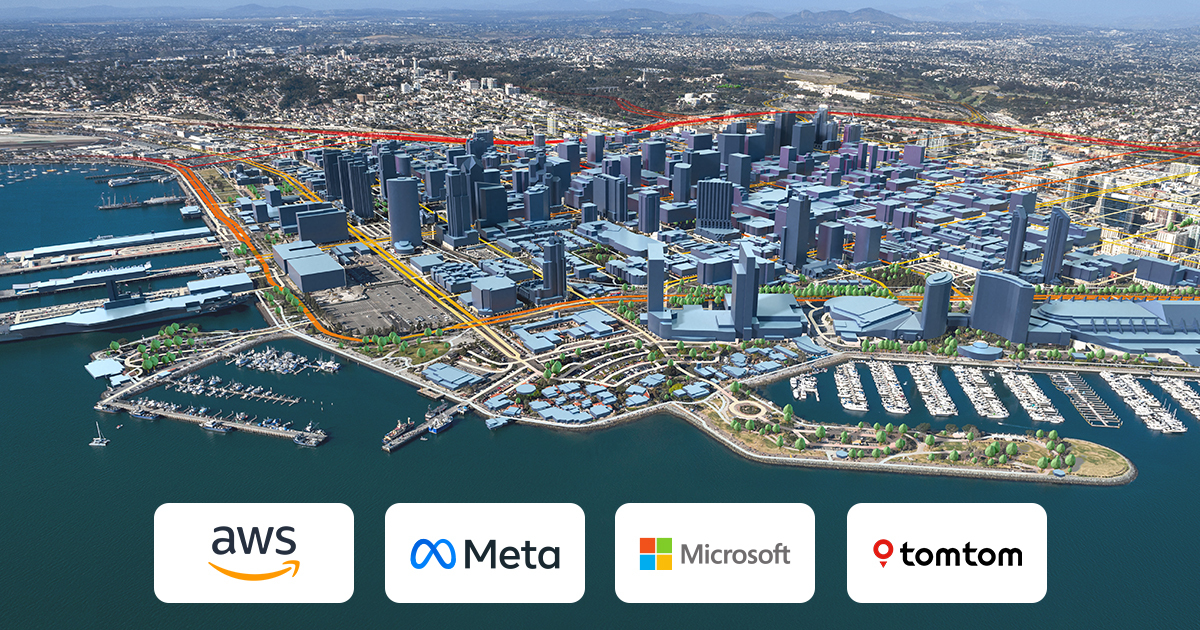
Efforts to guide lost and misdirected people out of the GPS wilderness are underway with Overture, a joint initiative facilitated by the Linux Foundation and founded by Meta Platforms Inc., Amazon Web Services Inc., Microsoft Corp., and TomTom NV. It’s underway through the Maps Foundation. The goal is to create reliable, well-structured schemas that incorporate map data from multiple sources and ultimately reduce errors.
“Maps change all the time. That’s part of the challenge with maps,” Overture executive director Marc Prioleault said in an interview with SiliconANGLE for this article. “If someone uses a map that he has used 999 times and it has worked only once, he will remember that one time until he dies.”
building a structure
Inherently, the pursuit of more reliable mapping is a data challenge. Mapping applications rely on up-to-date information from a wide range of sources and engines that can process large amounts of directional data quickly and accurately.
Founded in December 2022, Overture aims to power the next generation of mapping products through the development of reliable, easy-to-use, and interoperable open map data. The Foundation released the Data Schema and Global Entity Reference System (GERS) in June and the second version of Open Map Data in October.
As Overture focuses on building a structure that facilitates open map data sharing, GERS has emerged as a key element. This is a tool that increases interoperability between different datasets by using IDs to bridge Overture’s open map data with geospatially tagged information from businesses and organizations.
” [GERS] Connectors are really important,” Prioleau said. “We see that as a connector for people to build wealth.”
Utilization of AI
The rise of generative AI provides opportunities to create even richer map datasets, and many new use cases have emerged in recent months. Earlier this year, an international organization used AI to track unreported fishing vessels, and AI Superior GmbH developed a solution to quickly detect and locate graffiti on urban road signs. In February, Google LLC announced a pilot project to add generative AI capabilities to its maps application.
“There are some interesting things happening with generative AI,” Prioleau said. “People are using large-scale language models to interrogate map data and generate quality control metrics. But right now, it’s difficult to do that at scale across the globe.”
One major company noticeably absent from Overture’s list of contributors is Google, but the search giant participates in other ways as well. The foundation has worked with both Microsoft and Google to tackle the vexing problem of reliable location data by increasing the number of buildings mapped to the dataset by more than 2 billion through their satellite imagery.
“One of the most difficult datasets to map is location data,” Prioleau explained. “The amount of data we can get has really increased.”
An open question for now is how many automakers will participate in Overture. Although automakers have a strong interest in providing accurate mapping technology to their customers, Hyundai is the only automaker currently listed as a contributing member of the Linux Foundation’s efforts.
Prioleau said that founding member TomTom is deeply involved in automotive mapping and that he expects more automakers to join Hyundai as the foundation’s work progresses.
“I think we’ll have some more soon,” Prioleau told SiliconANGLE. “I hope we can offer them a really good value proposition.”
Overture Maps is part of a broader effort on the part of the Linux Foundation to make open data freely available for anyone to use, reuse, and redistribute. By promoting open data access to mapping information, the Foundation hopes to strengthen mapping services around the world through shared assets that improve over time.
“What’s happening with map data is that a lot of data is being incorporated into map data,” Prioleau said. “That data set is becoming so large that it’s virtually impossible for any one company to do that. What we’ve done is lay the foundation.”
Image: Tom Tom
Your upvote is important to us and helps us keep our content free.
Your one click below will support our mission of providing free, deep and relevant content.
Join our community on YouTube
A community of over 15,000 #CubeAlumni experts, including Amazon.com CEO Andy Jassy, Dell Technologies Founder and CEO Michael Dell, Intel CEO Pat Gelsinger, and many other celebrities and experts. Please join us.
thank you