

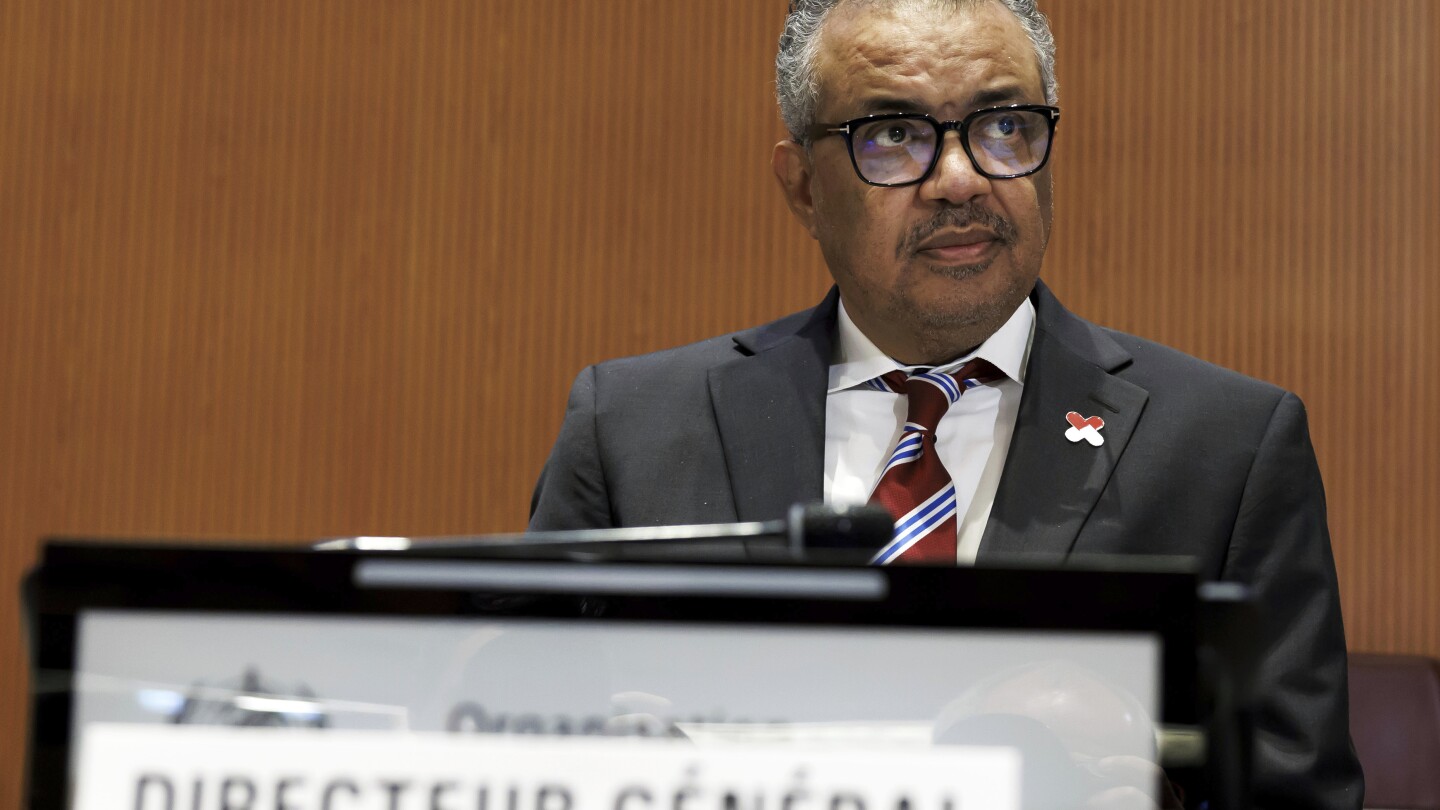
GENEVA (AP) — Member states kicked off the World Health Organization’s (WHO) annual meeting Monday in hopes of improving global preparedness for deadly epidemics like COVID-19, after an ambitious “pandemic treaty” hit a snag last week.
As health officials race to get the world to agree on new ways to prepare for and fight inevitable future pandemics, COVID-19 is fading into history as elections, climate change, war and other crises grab public attention.
A bold project to adopt a pandemic “treaty” at the World Health Assembly this week Shelved A two-and-a-half-year effort hit a disagreement on Friday over sharing information about the pathogen that causes the pandemic and the technologies used to fight it.
Experts say the Assembly’s best opportunity now to address pandemics would be to propose changes to the WHO’s 2004 International Health Regulations, which would encourage countries to step up alert, detection and containment capabilities and international cooperation.
One proposal would allow the WHO director-general to declare a “pandemic emergency.”
Similar disagreements between developed and developing countries have stalled negotiations on a pandemic treaty, though envoys say an agreement is close. Problems remain over proposed “technology transfer” and the creation of a new WHO fund in 2030 to help improve pandemic response capacity, especially in developing countries.
WHO Director-General Tedros Adhanom Ghebreyesus insisted the stalled pandemic treaty was not a failure, alluding to the years it typically takes UN member states to conclude an international treaty and acknowledging it was a “massive” task with a “very ambitious timeline.”
“Of course, we all hope that by this Health Assembly we can reach agreement on an agreement and get across the finish line,” Tedros said in his opening remarks, “but I am confident that you can still do so, because where there is the will, there is a way.”
“Now it’s up to the World Health Assembly to decide what that modalities are, and the solution is in your hands,” he added.
The premise is that a pathogen that knows no borders requires a united response from all countries, but policymakers are struggling to balance national interests with calls from WHO officials to think more broadly for the good of humanity.
Health ministers must now try to overcome deep-rooted differences, including over how the world can share information about emerging pathogens and scarce resources like vaccines as demand surges.
“If nothing comes out of the WHA, it will be a huge missed opportunity,” said Yuan-Kiong Hu, senior legal and policy adviser at Doctors Without Borders. “How are we going to get this process done if we don’t get a clear roadmap?”