

In a historic move, the World Health Assembly, which brings together 194 Member States annually, today agreed to important amendments to the International Health Regulations (2005) (IHR) and made a specific commitment to complete negotiations on a global pandemics pact no later than one year. These important steps have been taken to ensure that comprehensive and robust systems are in place in all countries to protect the health and safety of all people, everywhere from the risk of future epidemics and pandemics.
These decisions are two important steps taken simultaneously by countries on the final day of the 77th World Health Assembly and build on lessons learned from several global health emergencies, including the COVID-19 pandemic. The package of regulatory amendments will strengthen global preparedness, surveillance and response to public health emergencies, including pandemics.
“The historic decision adopted today demonstrates Member States’ shared desire to protect their people and the world’s people from the shared risks of public health emergencies and future pandemics,” said WHO Director-General Dr Tedros Adhanom Ghebreyesus. “The revised International Health Regulations will strengthen national capacities and coordination among Member States on disease surveillance, information sharing and response, strengthening our ability to detect and respond to future epidemics and pandemics. It is based on a commitment to equity, an understanding that health threats know no borders, and a recognition that preparedness is a shared effort.”
Dr Tedros added: “The decision to conclude the Pandemic Agreement within the next year shows how strongly and urgently countries want it, because it is not a matter of if the next pandemic will happen, but if it will happen. Today’s strengthening of the IHR provides a powerful impetus to complete the Pandemic Agreement, which will help prevent a repeat of the devastating health, social and economic damage caused by COVID-19.”
The new amendments to the IHR include:
- Introducing a definition of a pandemic emergency Facilitate more effective international cooperation in response to events that are at risk of becoming or have already become pandemics. The definition of a pandemic emergency represents a higher level of alert, building on existing mechanisms in the IHR, including the determination of a Public Health Emergency of International Concern. By definition, a pandemic emergency is an epidemic that has had, or is at high risk of having, widespread geographic spread to or among several countries; has exceeded, or is at high risk of exceeding, the capacity of those countries’ health systems; has caused, or is at high risk of causing, significant social and/or economic disruption, including disruptions to international transport and trade; and requires rapid, impartial, enhanced and coordinated international action through a whole-of-government and whole-of-society approach.
- A commitment to solidarity and equity Strengthening access to medicines and finance, including the establishment of a coordinated financing mechanism to help identify and access the funds needed to “equitablely address the needs and priorities of developing countries, including developing, strengthening and sustaining core capacities” and other capacities relevant to preventing, preparing for and responding to pandemic emergencies.
- Establishment of a Committee of States Parties to promote the effective implementation of the revised regulationsThe Committee will promote and support cooperation among States Parties for the effective implementation of the IHR.
- Creation of National IHR Authorities Improve coordination of the implementation of regulations within and between countries.
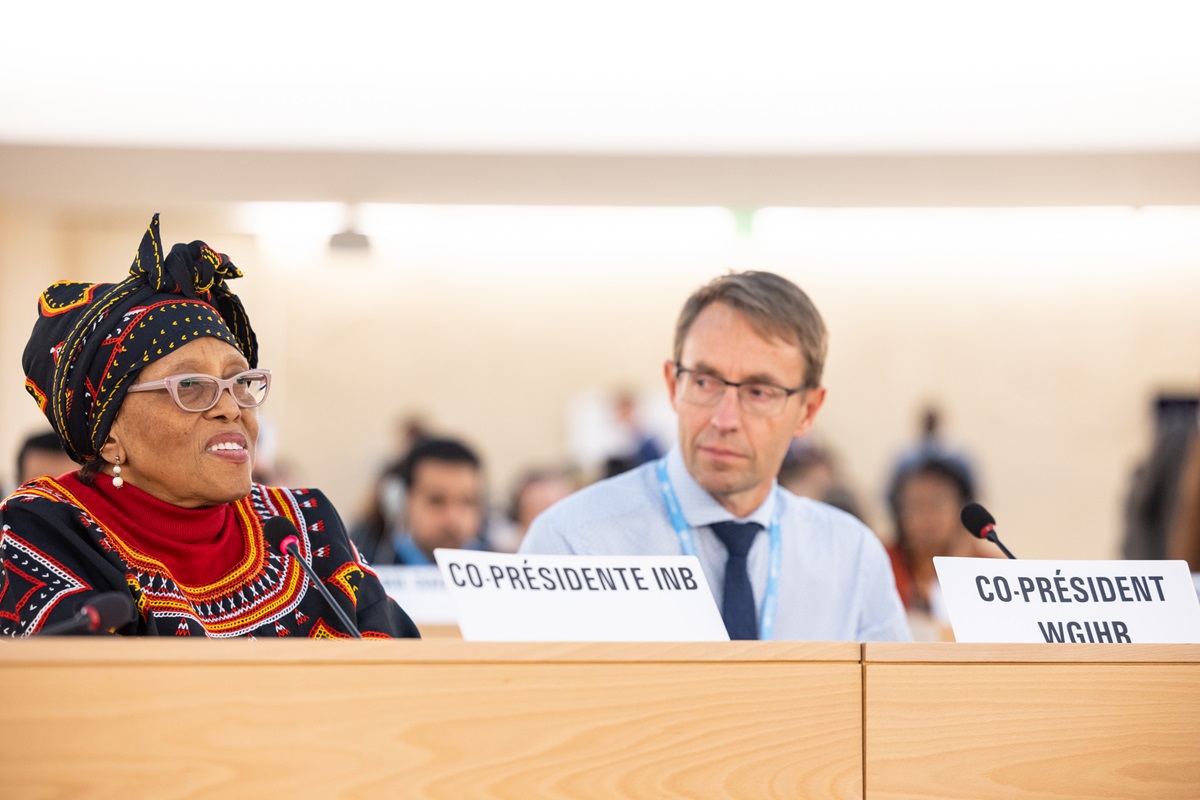
“Experience with epidemics and pandemics, from Ebola and Zika to COVID-19 and mumps, has shown us the need to improve public health surveillance, response and preparedness around the world,” said Dr Ashley Bloomfield of New Zealand, co-chair of the Working Group on IHR Revision (WGIHR) and co-chair of the drafting group that led the negotiations on the amendments during the WHA. “Countries knew what to do and we did it. I’m very proud to have been a part of this.”
WGIHR Co-Chair Dr Abdullah Asiri from the Kingdom of Saudi Arabia added: “The amendments to the International Health Regulations will strengthen our collective protection and preparedness mechanisms against the risk of outbreak and pandemic emergencies. Today’s strong demonstration of global support for stronger regulations is a major boost to the negotiating process for a much-needed international pandemic agreement.”
Agree on plan to finalize pandemic agreement negotiations
The countries agreed to continue negotiating a draft pandemic agreement to improve international coordination, cooperation and equity to prevent, prepare for and respond to future pandemics.
WHO Member States decided to extend the mandate of the intergovernmental negotiating body established in December 2021, with a goal of completing the negotiations of a pandemic agreement within one year, by the World Health Assembly in 2025 or, if possible, earlier by a special session of the Health Assembly in 2024.
“There was a clear consensus among all member states that further measures are needed to enable the world to better fight a full-blown pandemic,” said Precious Matsotho of South Africa, co-chair of the Intergovernmental Negotiating Body for a Pandemic Convention (INB) and the Drafting Group on the INB and IHR Agenda at the World Health Assembly.
INB Co-Chair Roland Dries from the Netherlands said: “Today’s great achievement in approving the amendments to the International Health Regulations will give us the momentum we need to finalize the pandemic agreement. It is clear that we have the will, the purpose and the time needed to complete this generation-long agreement.”
Notes to editors:
The IHR (2005), successor to the 1951 International Health Regulations, was designed to maximize collective efforts to manage public health events while minimizing disruptions to travel and trade. The regulations have 196 contracting parties, including all 194 WHO member states, Liechtenstein, and the Holy See.
During a special session of the World Health Assembly, WHO Member States launched the process of developing a first-of-its-kind global pandemic pact to prevent a repeat of the global health, economic and social impacts of the COVID-19 pandemic. December 2021.