

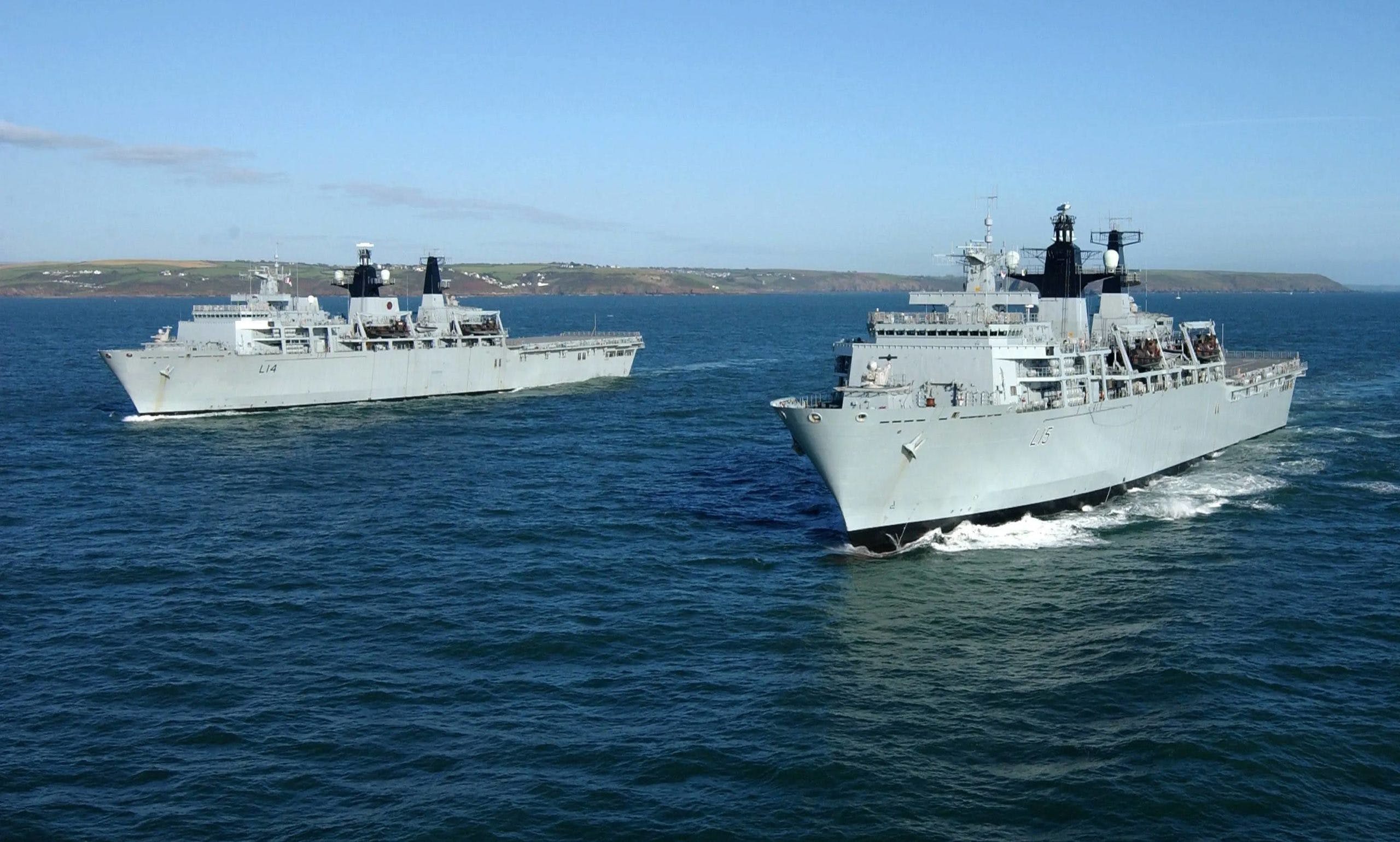
The former commander of Task Group Falklands and the former captain of HMS Fearless have called on the government not to scrap the Albion-class amphibious assault ships.
In a report to the House of Commons Select Defense Committee on the future of HMS.
Albion, HMS Bulwark and Royal Marines Capabilities, 1982 Falklands Amphibious Task Group Commander Brigadier MC Clapp CB. Rear Admiral ESJ Laken, DSO, who commanded HMS Fearless in the Falkland Islands in 1982 and served as Deputy Chief of the Defense Staff (Overseas) from 1988 to 1990, said:
“ALBION class vessels are essential to completing projects quickly and successfully.
Amphibious operations, often described as the most complex of all operations
Joint operations (see again Appendix A).For the command and operations of the British Amphibious Forces
Continued readiness is essential to the UK’s position and deterrence.
This includes outside the NATO geographic area, which is the core of Britain’s deterrence and attack capabilities.
Respond to encroachments on their interests and legal responsibilities.
Amphibious resources have built-in “calmness” at sea and the ability to function as amphibious.
Deterrence tools that can operate across the spectrum between politically targeted
Creates uncertainty in accuracy and deterrence.It complements the attack aircraft carrier.
You can work with these resources either closely or loosely and indirectly.all these
Characteristics work again on a spectrum, from high-intensity behavior to low-intensity behavior.of
Albion Class is perfectly configured to direct, manage and facilitate humanitarian relief
Disaster and resident evacuation status.
Without these amphibious command ships and a capable landing force, including a highly specialized Royal Marines force, Britain’s position among the world’s navies in terms of flexible deterrence would decline, and with it Britain’s reputation as a world power would also suffer. ”
You can read the full text here.