

Posted by: Emily Stern, Mailonline Health Reporter
00:02 February 22, 2024, updated 00:30 February 22, 2024
Today there is an urgent call for donors and philanthropists to provide millions of pounds of funding for vital cancer research.
More than 50 charities and experts said the scientific community is now at a “tipping point” where a united global response is needed to tackle the disease.
In a published Letter to the World, the coalition said the next decade presents a “unique opportunity” to transform cancer care for millions of people through advances in AI and technology.
Philanthropic support will enable the development of new blood tests to detect disease early and algorithms to predict a person’s risk of cancer.
The number of cancer patients worldwide is expected to increase by approximately 50% by 2040.
Domestically, Cancer Research UK estimates that a 15% reduction in cancer death rates in the UK could avert 110,000 deaths over the next 20 years.
The charity is also today launching its own ‘Advancing Research, Reducing Cancer’ campaign, which aims to raise £400m.
In November, it warned in its 200-page Program for Government that there would be a £1 billion shortfall in research funding as it had yet to commit to maintaining spending levels in the sector in real terms.
According to Cancer Research UK, only 38% of publicly funded cancer research in the UK comes from the government, and the US government funds five times more cancer research “per capita” than the UK. He added that there is.
It also warned that charities have long had to “bear the burden of decades of underinvestment”.
Michelle Mitchell, chief executive of Cancer Research UK, said: “We are on the brink of discoveries that will change the way we understand and treat cancer.”
“Discoveries include new blood tests that detect cancer early and algorithms that predict a person’s cancer risk and prevent cancer from developing in the first place.
These discoveries that researchers and the scientific community are working on have the potential to save and improve countless lives. But it requires investment.
“We are partnering with more philanthropists than ever before, all of whom share a drive to translate discoveries and results into real patient benefits. But we need to go further.
“We need people with the means and the vision to create a world where everyone can live longer, better lives free from the fear of cancer.”
Meanwhile, one of the letter’s signatories, Sir Paul Nurse, director of the Francis Crick Institute, added: “Changes through technological innovations mean work can now be carried out more quickly.”
“Over the next decade, childhood cancer treatments could be revolutionized, with blood tests and personal health data enabling early detection of cancer, and patients with complex cancers becoming more personalized.” They will now have access to life-saving treatment.”
“But if we want to continue to make giant leaps forward in how we prevent, diagnose and treat cancer, we need funding.”
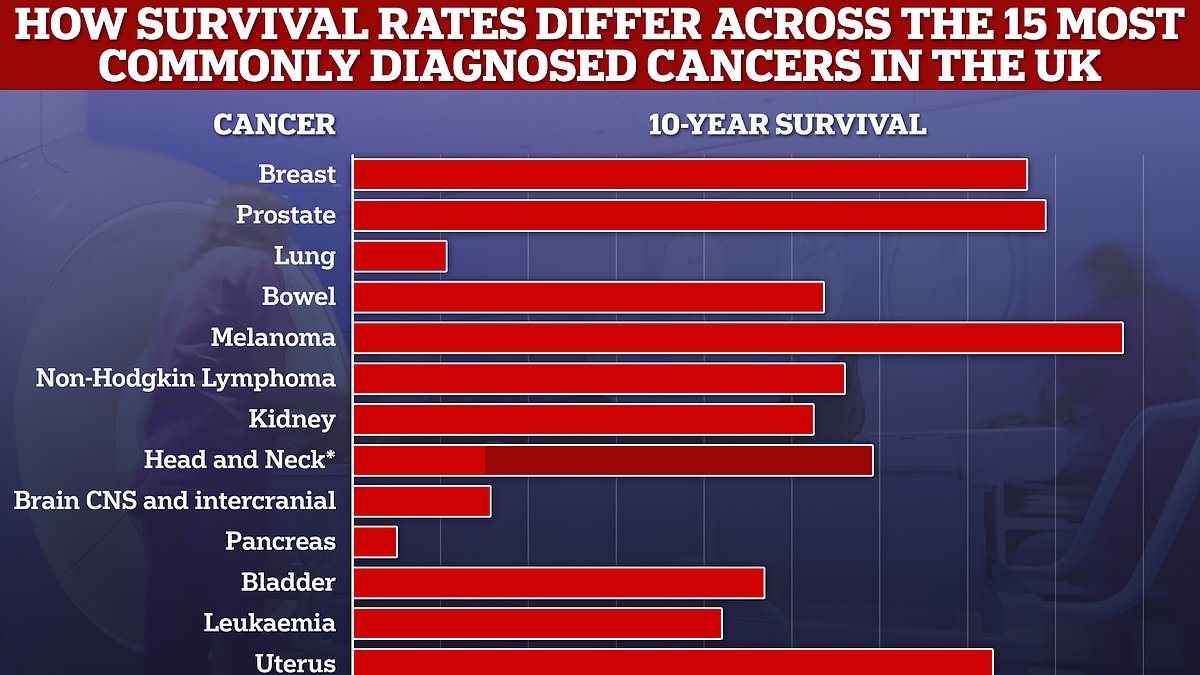
Experts believe that delays in diagnosis and slow access to treatment are currently behind the disastrous disparity in cancer survival rates in the UK.
Health leaders have consistently warned that a range of key cancer targets have not been met in recent years.
The NHS Long Term Plan, published in 2019, states that by 2028, 75% of cancer patients will need to be diagnosed as early as stage 1 or 2.
But when the pandemic first reached the UK, cancer treatment for some patients came to a virtual standstill as appointments were canceled and diagnostic scans delayed as the government focused on protecting the NHS.
They also estimate that 40,000 cases of cancer went undiagnosed in the first year of the pandemic alone.
Official NHS data from December on waiting times for cancer also shows that only 10 patients referred urgently with suspected cancer were either diagnosed with cancer or ruled out within 28 days. It is shown that 7 (74.2%) were middle school students. The goal is 75%.
Only 9 in 10 (91.1%) wait less than 1 month to start their first cancer treatment after the decision to proceed with surgery, chemotherapy, or radiotherapy.
The target is 96 percent, but this has never been achieved.