

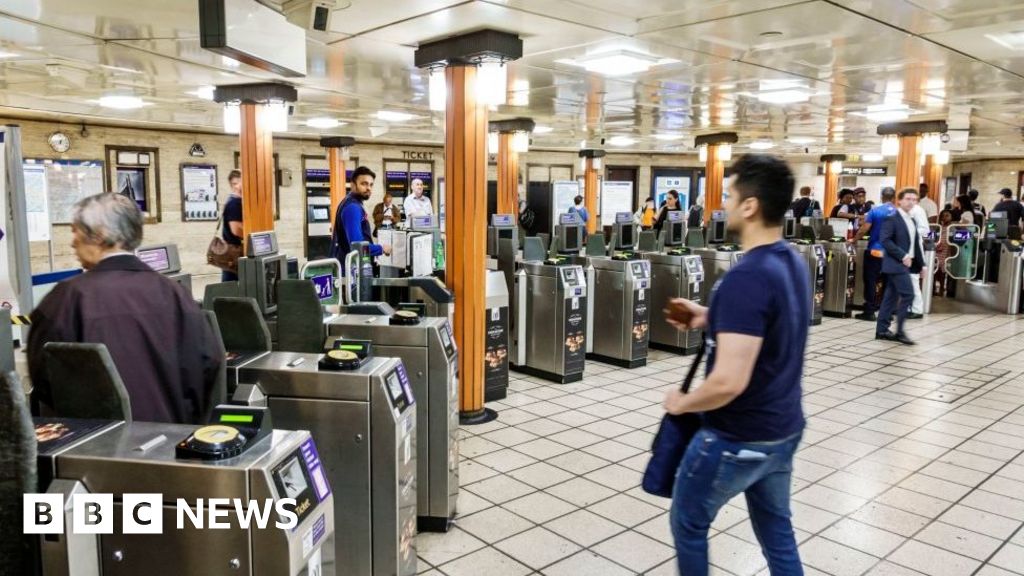
image source, jeff greenberg
New technology allows networks to detect 56% more criminals
Last year, Transport for London (TfL) prosecuted more than 19,500 people for fare evasion, halving the number compared to 2022.
421 people who made more than 50,000 irregular trips on the subway system were investigated on suspicion of habitual fare evasion.
The network said the increase was due to improved technology to detect large numbers of criminals.
This comes after TfL announced it would increase fare fines from £80 to £100.
habitual criminal
TfL said through its Irregular Travel Analysis Platform (ITAP) it has improved its ability to spot and investigate offenders causing the biggest revenue losses.
ITAP detects fare evasion through patterns in ticketing and passenger data and identifies people who avoid paying for all or part of their trip.
TfL said ITAP was collecting registers of repeat offenders who had identified unusual travel patterns and could be prioritized for further investigations and subsequent prosecutions.
image source, Getty Images
Better technology rated able to detect fare evaders
TfL also announced on Friday that body-worn videos will be part of the mandatory equipment for employees, and that fare fines will increase from £80 to £100 as a further deterrent to fare evasion.
It added that disputes over fares were also a precursor to “around half” of reported incidents of work-related violence and attacks against frontline staff.
Siwan Hayward, TfL’s director of security, policing and enforcement, said: “While the overwhelming majority of customers pay the correct fare, there are a small number of customers who choose to travel without a valid ticket.” .
‘result’
“Fare evasion is a crime. Fare evasion deprives Londoners of vital investment in safe, frequent and reliable transport.
“Fare evasion can have an impact on customers and employees, who can feel unsafe on public transport.Sadly, fare evasion often triggers violence and aggression towards co-workers.
“Wherever possible, we strive to ensure that the fare evaders themselves pay the costs, rather than the fares or taxpayers.
“Today’s data shows that anyone who escapes will be caught and must pay the price.”