


Gadget enthusiasts used to have to make do with what they got out of the box. If they wanted to upgrade or change something, they probably had to buy a whole new device. Plus, if an individual component, like an antenna or display, suddenly stopped working, they’d have to take the whole device to a shop, putting a gadget out of commission for days. Not to mention, repair costs can sometimes exceed the purchase price of a brand new device.
But all that is about to change with advances in modular design, which allows manufacturers to create open, adaptable platforms. Whether you’re adding a professional lens to your smartphone or replacing a broken screen, modular design allows for à la carte customization of personal tech, opening up new realms previously accessible only to DIYers and electronics enthusiasts. We partnered with OtterBox to bring you the hottest gadgets in the modular tech space and how they’re rapidly changing the world of personal tech.
Infinity: 1 laptop

Designed by One Education, an offshoot of Australian non-profit One Laptop Per Child, Infinity:One represents a step toward a fully modular laptop that serves as an open platform to address the diverse needs of K-12 education. Infinity:One distinguishes itself from traditional laptops by combining a detachable design with features typically found on smartphones, including a compass, stylus, gyroscope and a front-facing camera, all of which can help teach children a variety of skills, including drawing, photography and orienteering.
Depending on the success of the Infinity:One laptop, which is scheduled to start shipping in Australia in mid-August, One Education will move forward with developing a fully modular laptop. While still in concept, the product will feature fully replaceable and reusable parts, making the device much more adaptable to specific learning tasks as well as extending its lifespan. This could mean fitting various sensors to measure things like air pressure and temperature (think a lesson on weather), or swapping screens and batteries in seconds to bring an otherwise “dead” device back to life.
Blocks Smartwatch

Given the tech industry’s focus on wearables, it’s only a matter of time before modular designs make their way to the wrist. At first glance, the Blocks features a round touchscreen and is similar to many smartwatches currently on the market, including the Moto360 and Fossil Q. But what sets the Blocks smartwatch apart from other smartwatches is its modular strap, which allows users to attach new modules to the watch, similar to the links found on stainless steel watch bands.
These extra features include a flashlight, a rechargeable battery, a GPS sensor, a heart rate sensor, and even an “adventure” module that measures temperature, humidity, and air pressure. Each Blocks watch comes with four modules, with each additional module adding $35 to the $341 starting price. The first version of the Blocks smartwatch will be available in October with six modules to choose from. The company plans to release additional modules to complement the original lineup in the not-too-distant future.
OtterBox uniVERSE Case System

While phone cases have been around for decades, the latest wave of modular phone cases promises to be much more than just decorative and protective shells. The OtterBox uniVERSE Case System is a phone case that doubles as a modular platform for a variety of useful add-ons that allow users to expand the functionality of their smartphones. This includes everyday modules like a snap-on wallet to keep all your cards in one place and a power pack to boost battery capacity by up to 100 percent.
Developed as an open platform, the OtterBox uniVERSE Case System allows other mobile accessory manufacturers to design and create highly specialized modules. Among these are thermal cameras, portable speakers, chip readers for swiping payment cards, and chip readers that accept contactless payment methods such as Apple Pay. There are more than a dozen modules to choose from, with more planned for later this year. Prices range from $19.99 for a wallet add-on to $299 for a compact version of the thermal camera module. The OtterBox uniVERSE Case System itself retails for $49.95 and is available to buy starting today in two colors.
AIAIAI TMA-2 Modular Headphones

The appeal of a modular headset may seem questionable at first, but once you see how dramatically different listening environments can affect the playback experience, any doubts disappear. Building on the success of the TMA-1 headset, Danish company AIAIAI, which developed the TMA-2 headphones, allows users to customize their headset at the component level. Starting with the headband, users are free to choose the material and size of each module, including the cable and ear pads.
But for true audiophiles, the most important modules are the four speaker units: one of them is a balanced speaker with a neutral soundstage, the other has a titanium-coated driver and produces a rich, bass-heavy sound. The TMA-2 headset comes with 23 modules, allowing users to build the headphones that best suit their usage profile, while also making it easy to upgrade or repair in the future. The most affordable configuration is $140, while the most expensive headset is $260 and can be ordered now.
Google Project Ara
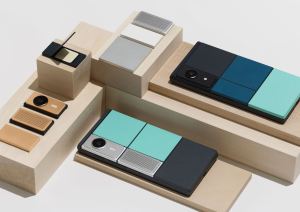
Perhaps Google’s most ambitious modular concept to date, the Ara smartphone aims to break the decades-old paradigm of “closed architecture” phones and allow users to build a smartphone adapted to their needs. Encouraging third-party developer participation, the Ara “frame” itself contains most of what you’d find in a typical smartphone: CPU, GPU, antennas, sensors, battery, display, etc., but still leaves plenty of space for easily attached modules.
Given the number of outside developers currently working on Google’s Android platform, it’s not hard to imagine the breadth of companies interested in developing modules for the Ara platform. These modules could include a GoPro camera for action shots, a snap-on projector for sharing videos, an additional e-ink display for showing secondary information, or even a foldable hand crank for charging batteries in the wilderness. While we won’t see a consumer version of Ara until 2017, developers could receive development kits as early as this fall.
Modularity means you don’t have to settle for what you get out of the box. Now that you know how modular design is helping bring the next generation of futuristic gadgets to life, OtterBox uniVERSE Case A system as a passport to explore the exciting new world of modular technology.