

A landmark report released at last year’s Prime Minister’s AI Summit warned that the world does not have strong safeguards in place to protect against the dangers of artificial intelligence (AI).
Experts from 30 countries have authored the first international scientific report on the safety of advanced AI, focusing on general-purpose AI such as ChatGPT.
“That capability is improving particularly rapidly,” the report said.
“General-purpose AI is different from so-called ‘limited AI,’ which is a type of AI that specializes in performing one specific task or several very similar tasks.”
Current approaches to managing risks from AI, such as ChatGPT, rely on technology developers being able to assess potential harm, the report said.
However, it cautioned that current assessment methods “have limitations and cannot provide strong guarantees against most harms.”
The world’s leading experts have acknowledged that our understanding of the inner workings, social impact and functionality of general purpose AI is “very limited”.
The interim report does not yet include significant input from technology and AI companies.
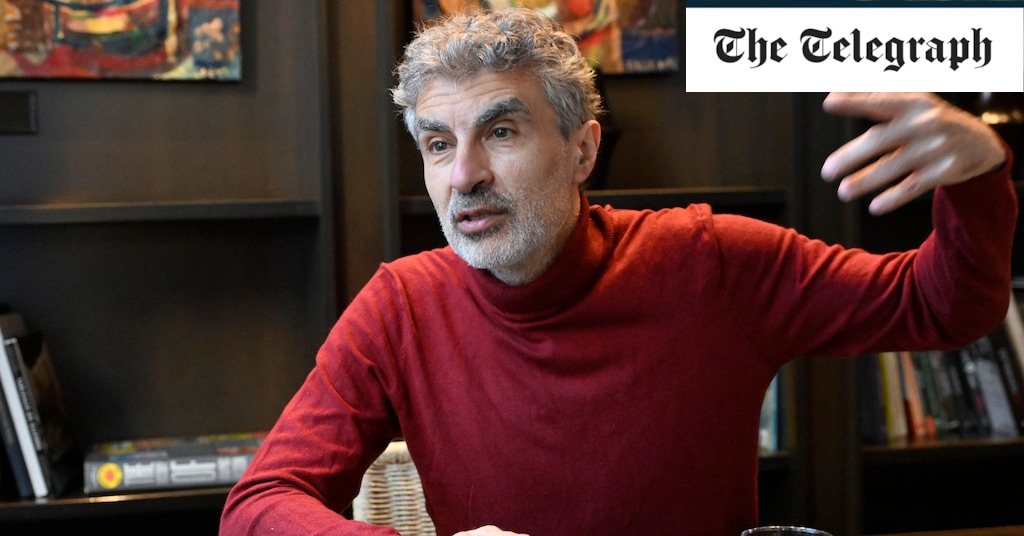
The research team was led by AI expert Professor Yoshua Bengio, and the announcement comes as debate over AI regulation intensifies around the world.
Professor Bengio told the Telegraph he was concerned that most of the world’s governments were “sleepwalking and don’t fully appreciate the magnitude of the risks”.
He said he believes some officials are “too often at the mercy of companies that want to avoid regulatory overhead and don’t do their due diligence and rush ahead.”
Three main categories of risk
The report identified three main categories of risks related to AI: malicious use, malfunction risks, and systemic risks.
The report suggests that malicious uses could include large-scale fraud and deception, deepfakes, misinformation, cyberattacks and aiding the development of biological weapons.
Potential risks from AI malfunctions include concerns about bias, where bias can be unintentionally introduced into the system and have a disproportionate impact on different people, and concerns about the control of AI systems, especially autonomous AI systems. Includes fear of loss.
Among the concerns about potential systemic risks are concerns about the risks posed by AI, as well as the potential impact on the job market, the concentration of development in Western countries, and the concerns that China has regarding access to technology. There were concerns that an unequal system was being created. Protect your privacy through models trained on personal and sensitive data.
The implications for copyright law and the climate impact of AI development, an energy-intensive process, were also highlighted.
The report concludes that the future for general AI is “uncertain”, with both “very good” and “very bad” outcomes, and that further research and debate is needed.
The report will be the starting point for discussions at the next AI summit, the AI Seoul Summit, to be held virtually next week in South Korea.
Secretary of State for Technology Michelle Donnellan, who will co-host the second day of the summit with South Korean Minister of Science, Technology, Information and Communications Lee Jong-ho, said: We needed to reflect the critical importance of international collaboration to build an evidence-based understanding of advanced AI risks. This is exactly what this report does.
“Building on the momentum we built at our historic talks at Bletchley Park, this report aims to ensure we can seize the great opportunities in AI safely and responsibly for decades to come. It will be.”
“Joshua Bengio and his team’s research will play a key role in the discussions at next week’s AI Seoul Summit. We will continue to build on the legacy of Bletchley Park by providing evidence on the safety of AI.
“This interim publication focuses on advanced ‘general purpose’ AI. This includes cutting-edge AI systems that can generate text and images and make automated decisions. ”