

Luke Andrews, Senior Health Reporter, Dailymail.Com
Updated June 5, 2024 21:05, June 5, 2024 22:19
The World Health Organization has warned that a new strain of bird flu could jump to humans and have “major public health implications.”
A 59-year-old man in Mexico died after suffering from symptoms including fever, shortness of breath, diarrhea and nausea for seven days, authorities said.
Tests revealed that he had a strain of avian influenza called H5N2, the first time that strain has been detected in humans.
The patient has no history of contact with poultry or other animals, and the route of infection is currently unknown.
But officials said the risk to the public was “low” because the patient had underlying health conditions, and it was unclear whether the disease had spread to others.
However, the WHO said the man’s infection and subsequent death were “This could have a major impact on public health.
The patient, from Mexico City, fell ill on April 17 but waited a week to seek help at a local hospital.
However, he died the same day he was admitted due to “complications from medical conditions.”
A PCR test conducted on April 24 revealed that the patient was infected with influenza virus, and it was later confirmed that the patient had the H5N2 strain.
This is a different strain from the H5N1 that caused a cattle outbreak that sickened three people in the United States this year.
Officials have tested 17 people at the Mexican hospital where the patient was staying, including one who complained of a runny nose. All came back negative.
Twelve people living near the patient’s home in Mexico City, seven of whom had symptoms of the disease, were also tested for avian flu, but all tested negative.
Officials are now conducting blood tests to check for antibodies to the virus, which would reveal past infection.
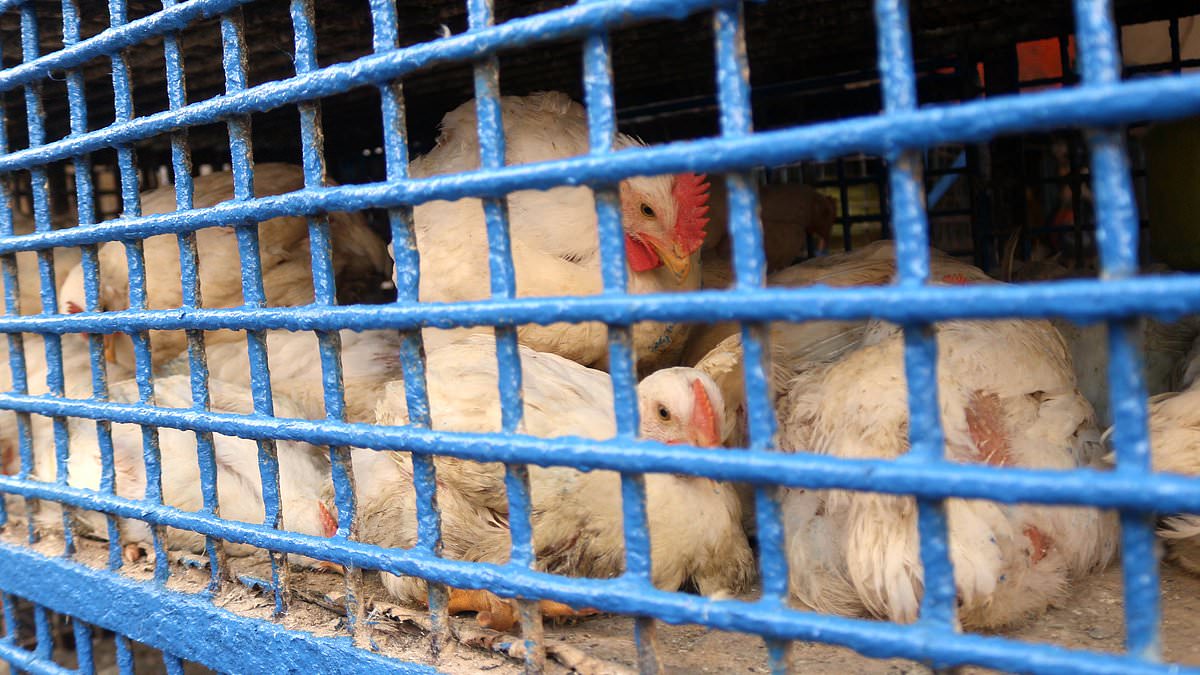
The source of the infection has yet to be identified, but several poultry flocks that may carry the H5N2 virus have recently tested positive for this strain.
The H5N2 virus was first detected in poultry in the 1990s and has since been found in other animals, including pigs, which are known to transmit disease to humans.
This strain is not the strain causing the current widespread infections among animals in the United States.
it is H5N1 has been found in everything from foxes to raccoons, skunks, cows, seals and deer.
Experts expressed concern last week after a third American tested positive for the H5N1 strain and developed new symptoms, including a cough.
This means that the virus can easily spread to others through infectious particles in the air.
In the other two H5N1 cases, symptoms mainly appeared in the patients’ eyes, including a watery discharge and bleeding.
To date, a total of 82 dairy cows have tested positive for avian flu, with Idaho having the highest number.