

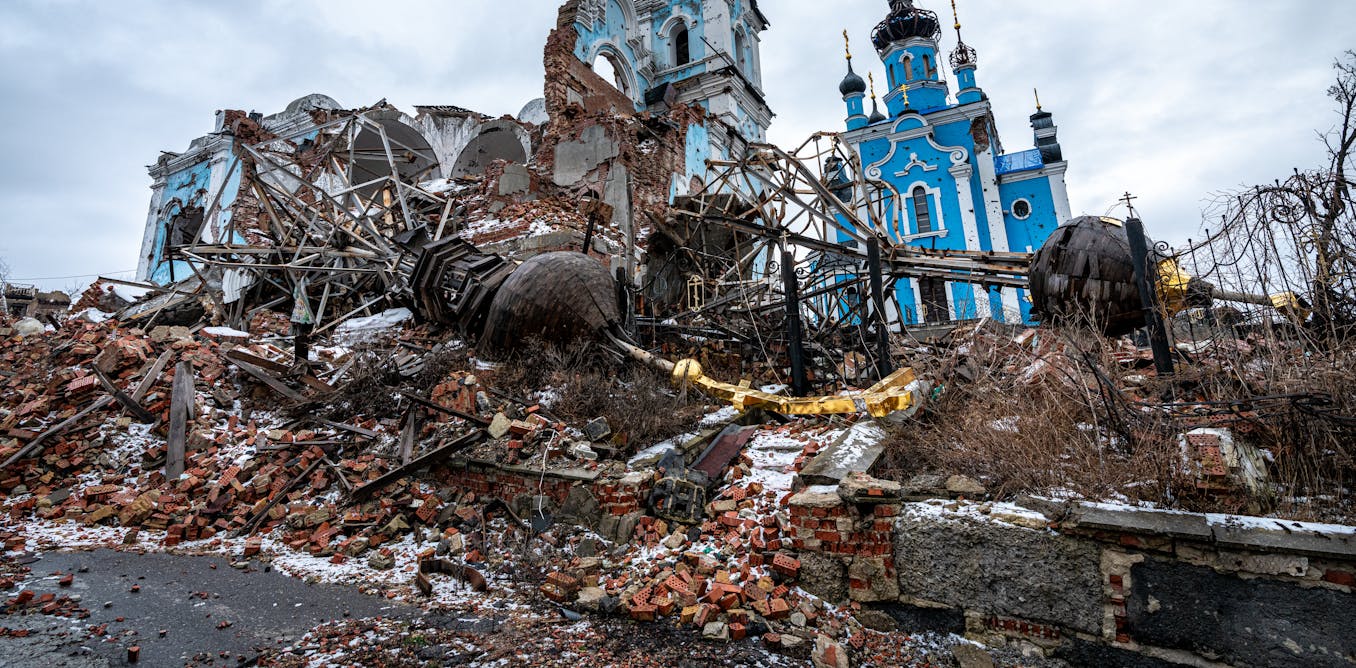
War doesn’t just take lives. It would also tear apart the fabric of the culture.
And in the case of Russia’s all-out invasion of Ukraine, now entering its third year, the significant destruction of Ukraine’s history and heritage from 2022 onwards was not a matter of collateral damage. Rather, Russian forces are deliberately targeting museums, churches, and libraries that are important to the Ukrainian people.
It is impossible to document the full extent of the destruction, especially in the areas of military activity in eastern and southern Ukraine. But as archaeologists and filmmakers, we wanted to do the best we could. This meant visiting liberated villages, museums, and churches in northern and eastern Ukraine, adjacent to areas where fighting continues.
I worked closely with my Ukrainian colleagues and ended up doing two 9-day trips. The first time was in March 2023, and the second time was in October 2023.
Here are some of the things we found.
sift through the ruins
In the liberated areas of Ukraine, the bodies of the dead have long been removed and mostly buried in local cemeteries. However, if you enter the once occupied cities and towns, you will quickly notice that the scars of the fighting that took place from March 2022 to July 2022 are still very visible.
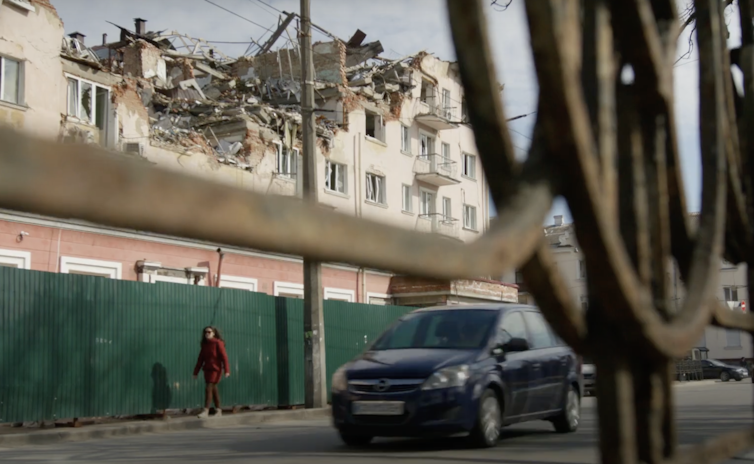
Driving around the northern Ukrainian city of Chernihiv, I saw hundreds of burnt out buildings and many more riddled with bullet holes and damaged by shrapnel.
As I wound my way through small farming villages, I was struck by the ferocity and disorder of modern military firepower. Parts of the village may have been completely flattened, while homes a block away from the road were unharmed.
Ian KiteCC BY-SA
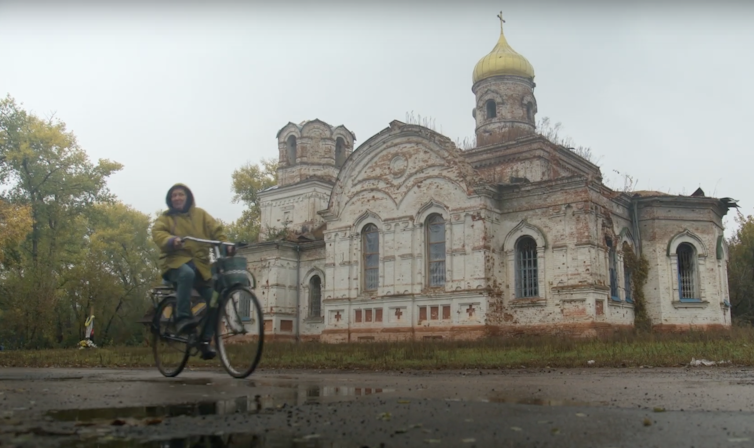
On a rainy day in mid-October 2023, we drove down a small tree-lined road to see the ruins of the Church of the Ascension of the Lord in Lukasivka, a small village about 13 miles from Chernihiv.
Lukasivka, previously home to around 300 people, was captured by Russian forces in March 2022 and later recaptured by Ukrainian forces.
Built in 1913, this large white brick church with a two-tiered bell tower that can be seen from a distance is now a shadow of its former self. The wooden floors are charred and the brick roof has been blown off. The original plaster and paintings are still preserved on some parts of the walls.
Inside the place of worship, we traversed the detritus of war, listening to the crunching of piles of spent shell casings, rocket casings, broken bottles, and burnt cans.
Ian KiteCC BY-SA
We will never know how many soldiers and civilians died in the fighting over Lukasivka and the church.
But we know that during wars, cultural heritage has few friends.
The partially preserved church in Lukasivka is one of hundreds of cultural and religious buildings that have been damaged or destroyed over the past two years. This includes the Transfiguration Cathedral in Odessa, the Mariupol Dramatic Theater and Korolenko’s Kharkov National Scientific Library, one of the largest libraries in Europe.
More than meets the eye
If our trip to Ukraine taught us one important lesson, it’s that digging trenches can erase history.
The destruction of churches, libraries, and museums intuitively evokes a sense of loss, but there is an invisible world beneath the earth’s surface, filled with countless artifacts, bones, and buried buildings. is exposed when it is created.
In fact, the war may have destroyed more history and archeology buried underground than above ground.
As the military had done during World War I, the Ukrainian army built deep trenches and bunkers along rivers and high ground during the early months of the war. Two years later, these defensive trench systems became a central element of ground warfare, demarcating the front lines.
In many cases, trenches were dug into the remains of buried archaeological sites, most of which were previously unknown and untouched.

Scott Peterson/Getty Images
For example, in March 2023, we visited the ruins around Ilipin and Bucha, two villages on the northern edge of Kiev, and learned how medieval and Bronze Age ruins buried beneath the surface of the earth were destroyed by ditches and Or, in some cases, it was recorded whether it was covered. Stop Russian troops in a minefield.
We also visited the 11th century archaeological site of Oster. Oster, located on a small hill southeast of Chernihiv, was an important regional center in the Middle Ages. It had a brick and stone church and a large village nearby. As part of the siege of Chernihiv in March 2022, Ukrainian forces constructed deep trenches and bunkers around the edge of Oster. This location overlooks the river and the intersection.
When we visited Oster a year after the invasion, we noticed that the trench system around the church had been dug into a large 11th-century settlement and burial ground. They discovered medieval human bones lying exposed on a mound of dirt along a ditch. The more human bones were discovered, the more the system of trenches and bunkers, which encompassed an area of about 650 feet (198 meters), were studied.
A crew of archaeologists returned to photograph the destruction of these burial sites. However, given that the war continues, it is impossible to fully document the destruction, much less fill the trenches that soldiers still need.
The previously unknown burial site of Oster is one of hundreds, if not thousands, of similar sites that have been damaged or destroyed in central and northeastern Ukraine. be.
Structure of war and culture
Even after the fighting ends, large areas of Ukraine will remain inaccessible for years, given the widespread use of landmines and environmental pollutants.
Existing collections and museum exhibits in Ukraine and abroad are gaining more and more importance. They may represent the only evidence of an ancient culture originating from these affected areas.
I can confidently say that since the end of World War II, Europe has never experienced destruction on this scale, much less at such a rapid pace.
Bombings of churches, libraries, and homes destroyed major areas of Ukraine. Just as the Nazis stole paintings, bronze statues, and works of art during the final years of World War II, in the first months after the invasion Russian forces looted museums, stole art, and carried missiles and tanks. The church was destroyed by shells.
Don’t get me wrong. At the heart of Russia’s all-out invasion is a military attempt to erase Ukraine’s history, culture, and heritage.
Although seemingly stuck in a 1950s geopolitical framework, President Vladimir Putin and other representatives of the Russian state dispute that Ukraine is a sovereign state. Ukrainian churches, museums, and libraries are a threat to Russia because they are material and symbolic structures that connect Ukrainian identity and resistance.
That’s why this war is as much about culture as it is about land.

Viacheslav SkorokhodCC BY-SA