

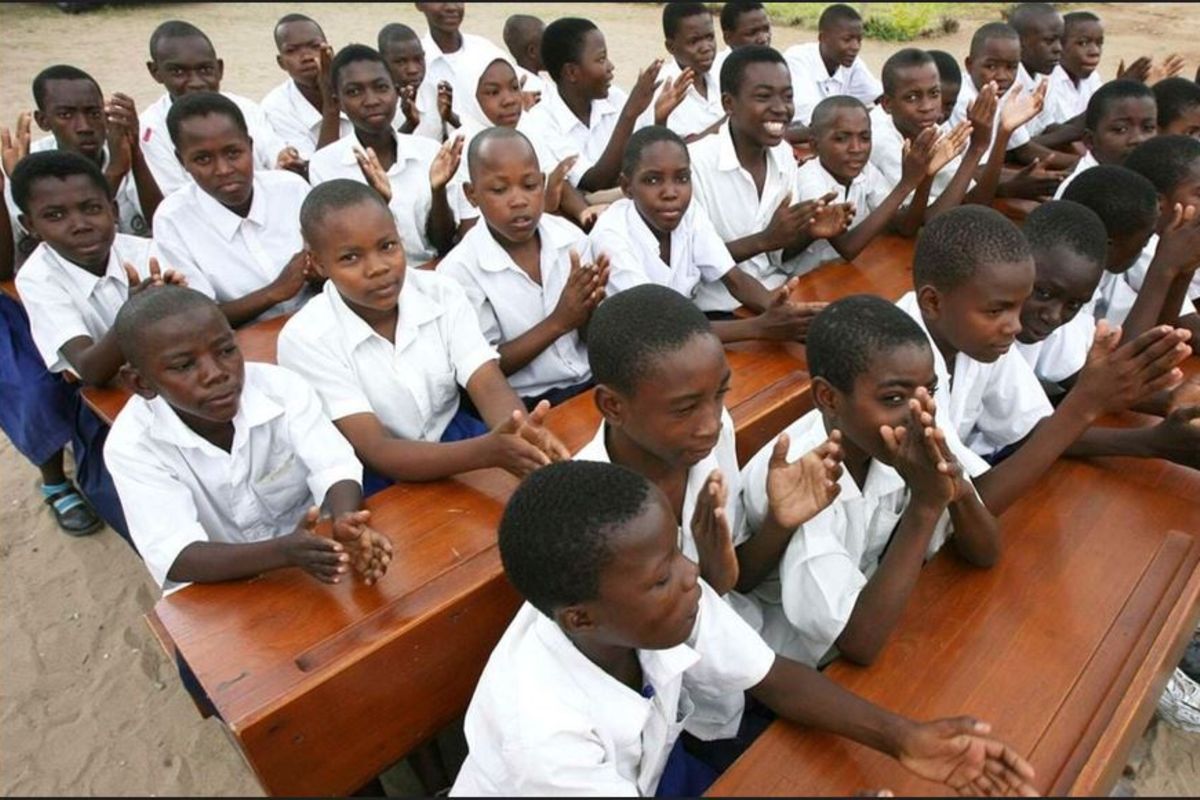
Debate sessions play an important role in the development of primary school students, helping them develop confidence, critical thinking skills and the ability to express themselves effectively.
In some schools in Dar es Salaam, debate sessions have become an integral part of the educational scene, empowering young minds and preparing them for a future filled with intellectual ability and meaningful contributions to society. Masu.
Salum Kunga, 10, a student at Dr Omari Ali Juma Primary School, said he has benefited a lot from participating in debates, both in terms of knowledge and skills.

“I have developed the ability to critically analyze information and construct logical arguments to support my opinions,” he reveals.
Margaret Comba, 10, a student at Atlas Primary School, says effective communication is one of the essential skills she learned through debate.
“To persuade others, you need to present your ideas clearly and methodically. By participating in debates, you will learn how to confidently articulate your case, engage an audience, and improve your skills in public. I was able to improve my speaking skills,” she says.
Margaret says her arguments are more persuasive now that she knows how to use evidence to support her claims. ”
For 11-year-old Maria Ochien from St. Therese Primary School, debate has greatly expanded her knowledge base.
Debating requires knowledge of a variety of topics, so she learned how to research material. As a result, she became more knowledgeable in various fields thanks to her extensive reading.
“Each discussion topic requires us to explore multiple perspectives and consider different angles, which helps us understand complex issues,” says Margaret.
Rebecca Michael, a student at Atlas Elementary School, said participating in the debate taught her tolerance and tolerance.
She says debating allows students to step out of their comfort zones, clarify their ideas, and be open to constructive criticism.
“By engaging with opposing arguments and counterarguments, I learned to respect different points of view and consider alternative positions.
She adds: “It has made me a more empathetic and understanding person. It has also improved my ability to construct more effective arguments by anticipating and addressing potential challenges.”
Boniventure Christian, a student at Vijibweni Primary School, said she learned the importance of teamwork through debate.
“Most debates require working in pairs or groups and require coordination, cooperation, and compromise.
In these situations, Boniventure learned to listen carefully, respect the opinions of others, and contribute constructively to group discussions.
This is a valuable skill in a debate setting, he says, and can also be applied to many aspects of life and education, such as group projects.
Since teachers also play an important role in the debate, we also acted as facilitators and asked them for their opinions.
Ms Aires Chongo, a primary school teacher in Dar es Salaam, says debate has proven to be incredibly beneficial to students in several ways.
“Participating in debate teaches important critical thinking skills. Through investigating and analyzing different points of view, students learn to evaluate evidence and construct persuasive arguments. ” she explains.
According to her, these skills are transferable to a variety of academic fields and are essential for future academic and professional life.
Charles Ngozo, another primary school teacher, agrees. He shares that participating in debates improves students’ communication skills.
“While they learn to present their ideas clearly and logically, they also practice actively listening and responding respectfully to the arguments of their peers.”
According to him, this improves children’s speaking skills and fosters empathy and understanding by exposing them to diverse perspectives.
To ensure that all students actively participate in debate, Ms. Chongo has adopted several strategies that have been effective so far.
“I establish clear guidelines that emphasize the importance of everyone’s contribution. I make it clear that all students have a voice and their opinions will be respected.”
Teachers say that encouraging an inclusive classroom environment through mutual respect and appreciation helps create a safe space for students to express their ideas.
Like Chongo, Ngodzo structures his debates to evenly distribute speaking opportunities.
“For example, you might assign roles or rotate responsibilities to ensure each student has an opportunity to present their perspective.”
He actively facilitates group discussions to ensure that quieter students have the opportunity to share their thoughts and ideas.
Ms. Ngozo uses various assessment methods, such as peer assessment, to assess student participation.
“This holds them accountable and gives them constructive feedback for improvement. By emphasizing the importance of active participation, students are encouraged to fully participate in the debate and develop their own self within the debate. “We encourage them to find their own voice,” he says.
Father Leons Maziku, a psychologist and lecturer at St. Augustine’s University of Tanzania (SAUT), believes that the idea of discussion is a good thing because not everyone is naturally confident. .
A psychologist has revealed why some children fear public speaking, saying each child is unique and their experiences and temperament influence their confidence and anxiety levels.
Father Mazik says one common reason behind this fear is fear of judgment or criticism from others. Children may worry about making mistakes, being laughed at, or being viewed negatively.
Some children may have had negative experiences in the past, such as being ridiculed or embarrassed, which can further exacerbate their fears.
To help children overcome their fear of public speaking, Father Mazik says it’s important to create a supportive environment.
It is helpful to encourage open communication and provide opportunities to practice speaking in a safe, non-threatening environment, including debate sessions.
He says that some people are naturally confident, and that a combination of what you’re born with and what you’re nurtured with influences your self-confidence.
“Some people have a more sociable and talkative nature, which makes them more comfortable around others. Positive childhood experiences and supportive social environments can help develop self-confidence.” It plays an important role,” he explains.
SAUT instructors say it is important to value and celebrate the uniqueness of each individual. Some people are naturally confident, he says, while others need extra support and guidance.
According to Father Mazik, understanding the underlying factors that cause a child’s fear or shyness and providing a nurturing environment will help the child express themselves confidently in front of others. Helps you acquire skills.