


What we currently know about the Alabama Supreme Court’s decision on IVF
The Alabama Supreme Court has ruled that frozen embryos are children, but what does this mean for couples in Alabama and other states? Here’s what we know:
The Alabama Supreme Court’s decision tore apart a long-simmering, emotionally charged debate over whether some aspects of in vitro fertilization are a form of abortion and should be prohibited on the basis of religious principles.
Christian opposition to abortion has been a driving force in the debate over reproductive rights. Opponents of abortion argue that life begins at conception and that even a handful of cells deserve the same legal protections as humans.
Republican Chief Justice Tom Parker cited similar arguments in a concurring opinion last week.
“In summary, the theologically grounded view of the sanctity of life adopted by the people of Alabama includes the following: (1) God created all people in His image; (2) Therefore, each person has a value far beyond human ability.” (3) Without incurring the wrath of a holy God who views the destruction of His images as an affront to Himself. , human life cannot be unjustly destroyed. ”
But legal scholars say it is unusual for a judge to bring up religion. And IVF advocates worry about religion infiltrating the medical decision to start a family.
“The content of the ruling is not at all surprising, but the language he used is completely over the top and unusual on an extreme level,” said University of Colorado Boulder law professor and family law expert. said Jennifer Hendricks.
IVF faces religious opposition from some Christians
It all comes down to small cluster cells.
On one side of the battle are the millions of Americans who desperately wanted children who would not have been born without IVF.
On the other side are Christian religious conservatives who argue that humans should not play God in the laboratory and that life begins at conception. The Catholic Church is particularly against IVF, but some religions, such as Buddhism and Hinduism, do not shy away from the procedure.
On Wednesday, the University of Alabama at Birmingham Health System, the state’s largest, suspended in vitro fertilization treatments while it assesses whether patients or doctors could be punished for performing or undergoing infertility treatments. And the Associated Press reported that a second IVF provider suspended parts of its program on Thursday.
Although the ruling itself only affects unborn children in Alabama, word of the ruling quickly spread across the country and is already reverberating in Washington. Opinions are very polarized.
Vice President Kamala Harris called the court’s decision “outrageous” and said it sets a dangerous precedent that “deprives women of the freedom to decide when and how to start a family.”
But Republican presidential candidate Nikki Haley said she agreed with the court’s argument that frozen embryos produced through in vitro fertilization are children. “To me, a fetus is a baby,” Haley told NBC News. “Its the life.”
Ruling puts theology at odds with reproductive rights again
Some conservative states have passed laws stating that life begins at conception, and Alabama courts relied heavily on Christian beliefs and the Bible to make their case. The court called these embryos “fetuses kept alive in cryogenic nurseries.”
Rachel Laser, president and CEO of Americans United for the Separation of Church and State, a nonprofit organization based in Washington, D.C., said quoting the Bible in this way “is a fundamental promise of our nation. “It’s like giving the middle finger to someone,” he said.
Laser said the Alabama Supreme Court’s decision on IVF is part of a larger movement to “impose a religious theology” against the Constitution’s promise of separation of church and state. It was seen as part of the Christian nationalist movement. The idea that America was created by Christians for Christians, and its laws should reflect that.
“The agenda is much more than just reproductive rights. It’s much, much bigger,” Laser said. “And that should be of concern to all Americans, because without separation of church and state, America would not be America.”
Mr Laser said the moral arguments raised by legislators and judges should be applied to everyone, including Christians and people of other faiths, who do not share the same values or do not believe they should be imposed by law. He pointed out that a single definition of morality is often imposed.
Laser said the ruling not only jeopardizes access to IVF and abortion, but also impacts access to contraception, as some products can prevent embryos from implanting in the uterus. He said it was possible.
“That could be what happens next,” she said.
IVF has been a polarizing issue from the beginning.
In 1979, a year after the world’s first IVF baby was born, a coalition of anti-abortion groups denounced the new technology as “morally repugnant” and called on the federal government to block funding for research that would destroy embryos. I persuaded you. But the number of what were then called “test tube” babies continued to grow, as desperate families turned to in vitro fertilization to conceive children. Currently, approximately 2% of babies born each year in the United States are conceived through in vitro fertilization.
“Over the years, the anti-abortion movement has gradually embraced some reproductive techniques as long as the embryos are not destroyed during use,” said Margaret Marsh, a historian and Rutgers University professor. “But the peace created by new technology has always been an unstable peace.”
Ms Marsh co-authored the 2019 History of IVF with her sister, who is a gynecologist.
Because IVF was developed after Roe became law in 1973, embryos are usually treated as private property and can be implanted, given away, or destroyed by donors without repercussions. Ta. But newly passed “personhood” laws, pushed by conservatives and some religious groups, aim to change that.
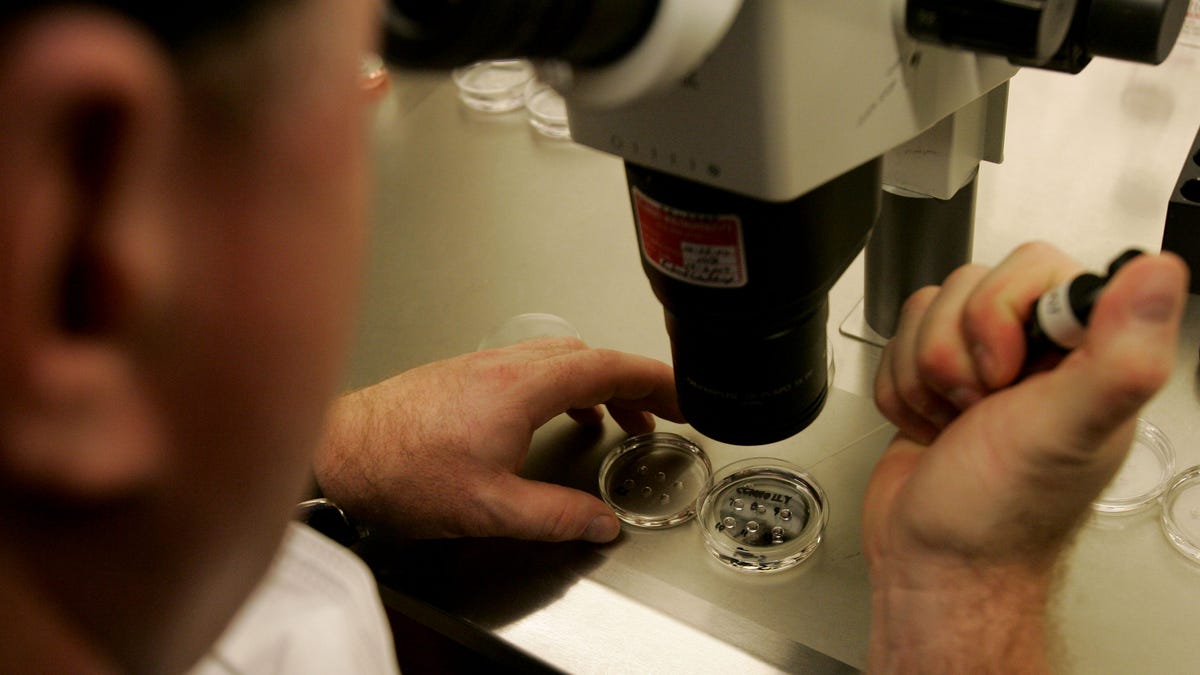
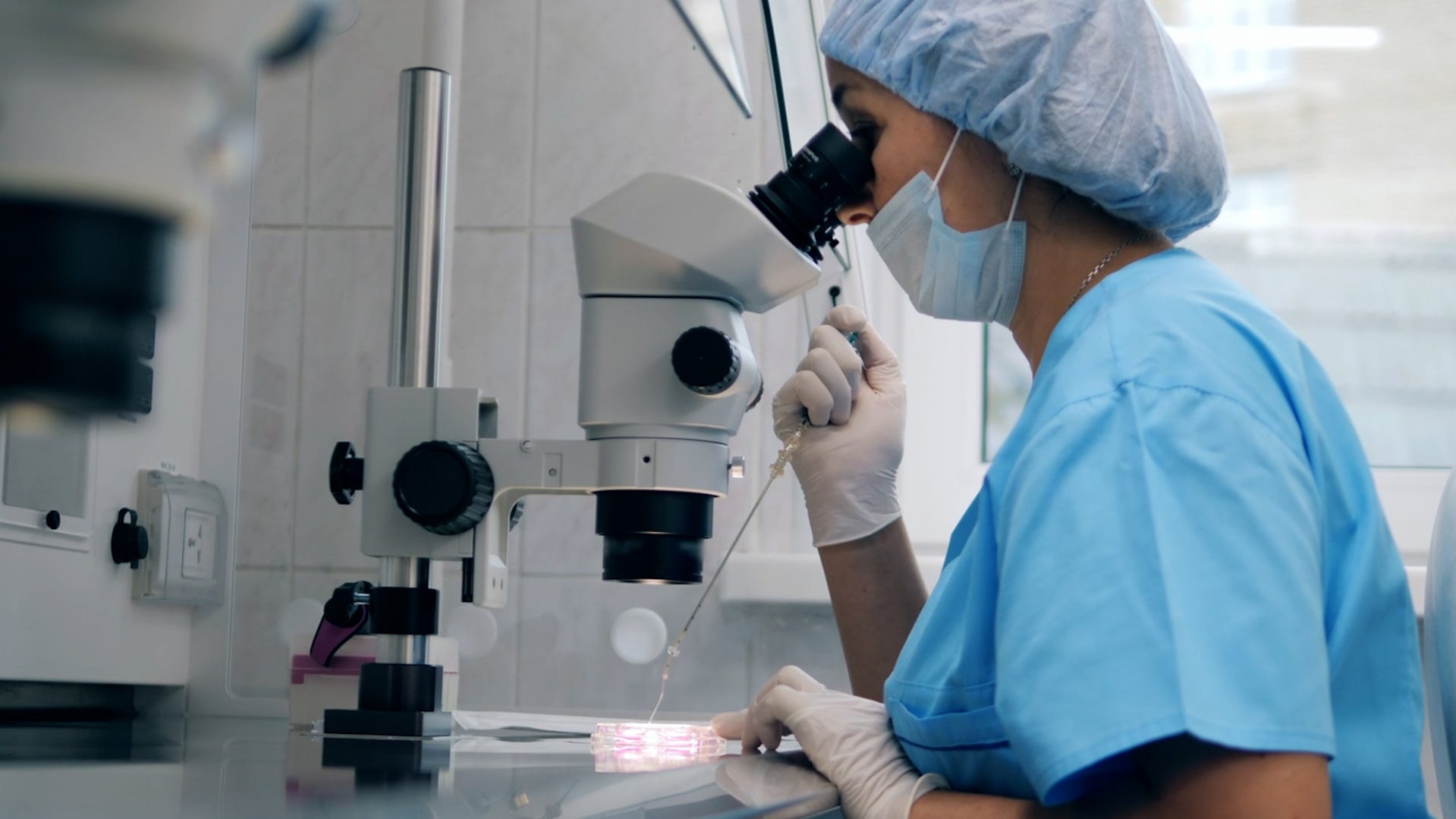
Nationally, approximately 100,000 births per year involve in vitro fertilization. In vitro fertilization is an emotionally and physically exhausting process in which multiple eggs are collected, fertilized, and implanted to result in a pregnancy. In most cases, doctors create more embryos than are transferred, and patients can store those embryos in liquid nitrogen at -321 degrees for future use, donation, or destruction.
In vitro fertilization involves implanting a 3- to 5-day-old fertilized egg, known as a blastocyst, into a woman’s uterus. At this point, it should contain between 70 and 200 cells.
These tiny clumps of cells can only develop in the womb, and authorities estimate there may be as many as 1 million frozen embryos stored across the country.
IVF families often struggle for years to conceive, and expensive IVF treatments usually require powerful ovulation-inducing drugs or invasive procedures to give them a chance at birth. medical treatment is required. People rely on IVF for a variety of reasons, including loss of fertility after cancer treatment or military personnel heading off on long-term deployments who want to delay childbearing.
Is it okay for judges to quote the Bible?
In a commentary accompanying the Alabama decision, Parker draws heavily on the religious underpinnings of American law, linking it to long-standing Christian doctrines such as the Ten Commandments’ prohibition against murder. Parker noted that other countries have adopted IVF policies that reduce the number of unnecessary embryos, and suggested that U.S. IVF regulations are a little better than in the “Wild West.”
“The Alabama Constitution’s recognition that human life is a gift from God emphasizes a fundamental principle of English common law that is expressly incorporated as part of Alabama law,” Parker wrote. .
“All three branches of government are subject to our constitutional obligation to treat the lives of unborn children with respect,” he continued. “In this case, making exceptions for people, even if they are small, is a violation of this state that has required us to treat all human beings according to the fear of a holy God who created them in his own spirit.” People won’t accept the image.”
In 1987, the Catholic Church published an opinion expressing opposition to in vitro fertilization, partially calling it immoral because it “inflicts violence on human dignity and the act of marriage” by replacing the act of pregnancy between a couple with a procedure. argued. By laboratory personnel.
“Human beings bear the image and likeness of God and should be revered as divine. They should never be used as a means to an end, even to satisfy the deepest desires of an infertile couple. “No,” the church said. “A couple’s actions are not a manufacturing process, and their children are not a product.”
Lael Weinberger, an adjunct fellow at Stanford Law School and a lawyer who clerked for U.S. Supreme Court Justice Neil Gorsuch, an appointee of former President Donald Trump, said the court’s decision was an invocation of religion. Instead, Parker said he was simply musing on the history and theology of law. his concurring opinion.
“There is no way that the First Amendment prohibits courts from addressing the history of the law,” Weinberger said.
Weinberger said the new ruling gives the couple who originally filed the lawsuit another chance to file a wrongful death lawsuit. A lower court rejected their claim, saying a fetus is not considered a child.
But Nicole Huberfeld, a law professor at Boston University School of Law, said Parker’s opinion stands out because it references Christian beliefs so heavily.
“What is unusual is how overtly this unity relies on the Christian inference of the sanctity of life,” she said.
The First Amendment’s Establishment Clause typically limits the role religion can play in government, but in 2022 the U.S. Supreme Court changed the long-standing process for reviewing conflicts between government and religion. The decision changing the process was written by Justice Gorsuch, who said the court should rely more heavily on “reference to historical practice and understanding.” Judge Parker of Alabama specifically mentioned Gorsuch in a concurrent opinion.
While past Supreme Courts may have challenged Parker’s reliance on religion, Huberfeld wondered whether the current conservative majority, which overturned abortion rights two years ago, would see it as a problem. He said he did not know.
“Judges should not rely on religious principles in their legal reasoning,” Huberfeld said. “The Alabama Constitution does use the word ‘God,’ but so does the Declaration of Independence.”
Hendricks, of the University of California, Boulder, said religion has always influenced how people interpret the law and influenced American life. However, legal standards generally prevented certain religions, such as Christianity, from imposing their values on everyone. “What many people are concerned about is that we are on the path to a theocracy here.”
Lindsay Heller, an IVF mother and attorney, said she thanks “everyone who’s out there” every day for her two children. However, she believes that IVF decisions should be made between her family and doctors, not courts and religion.
“If you follow someone’s religious values about how life is created, IVF may fall by the wayside,” she says. “Doctors are not going to risk their licenses to help people get pregnant.”
Minnah Arshad and Elizabeth Weise contributed to this report.