

[1] The dragon is the ultimate symbol of power, wealth, and prosperity in Chinese culture. That’s why the Year of the Dragon is seen by many as special and auspicious. However, it is not only Chinese culture that worships dragons.
chinese dragon
[2] The Chinese people call themselves descendants of the dragon. According to an ancient myth, a powerful serpent tribe defeated eight other tribes, and their totems (deer, camel, rabbit, clam monster, fish, eagle, tiger, and ox) replaced the statue of a dragon. claimed to be forming.
[3] China’s dragon culture reached its peak during the Qing Dynasty (1644-1911). In China’s feudal society, the dragon symbolized the power of the emperor, and the dragon motif was reserved for the royal family. The number of dragon claws could vary depending on the imperial rank, with only emperors worthy of the golden dragon motif with five claws, princes having to make do with four.
[4] Dragon motifs on different parts of the same robe had different meanings. The dragon’s head on the lapel of the emperor’s robe was pointing upwards, representing a flying dragon. It means that the emperor, like a dragon holding his head high, enjoyed the support of the people.
welsh dragon
[5] The red dragon is a symbol of victory and courage in Welsh culture. The 12th century legends of King Arthur featured his two giant dragons, one red and one white. The red ones represented the Celts of Wales, and the white ones represented the Saxons of England. The two dragons fought, and in the end the red dragon chased the white dragon away.
norse dragon
[6] Scandinavian culture has multiple legends about dragons. Dragons are usually a symbol of fear, destructiveness, and greed. One of his famous Scandinavian dragons is Fafnir. A giant dragon that appears in Norse mythology. It has sharply curved claws, wings, and scales that cannot be penetrated by normal weapons, and it can breathe fire. Fafnir was guarding a treasure trove, but was ultimately defeated by the hero Sigurd.
Japanese dragon
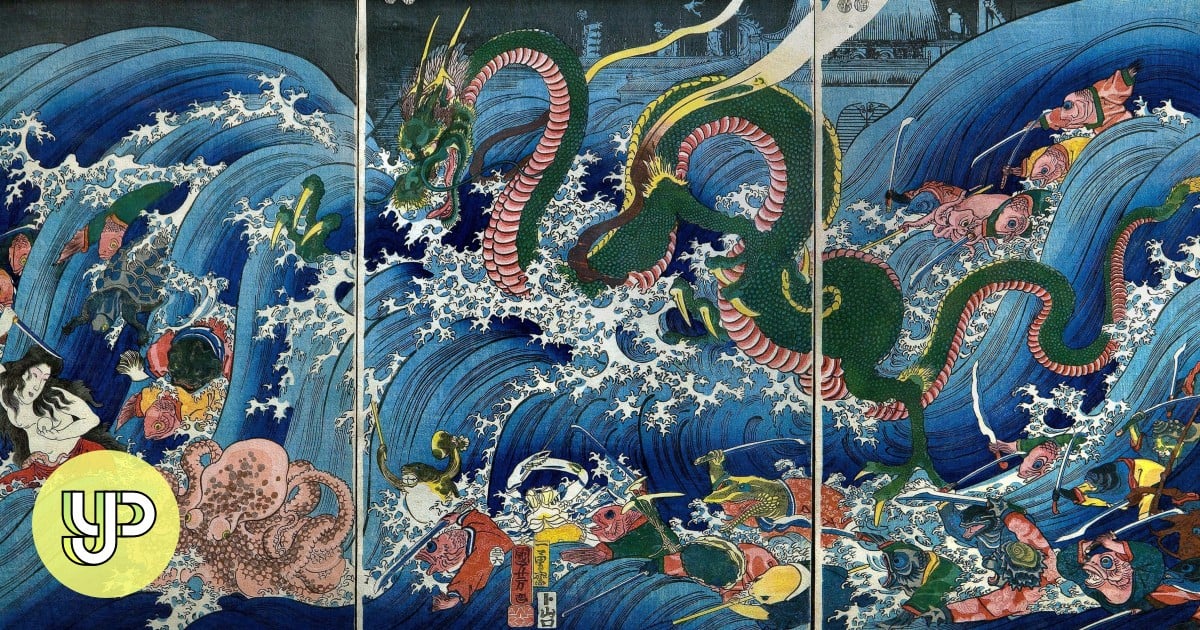
[7] Japanese dragon culture includes local beliefs and Chinese beliefs. The Japanese dragon is a god associated with rain and water, and is also depicted as a symbol of the sea, rivers, and mountains. Myths about dragons living in ponds and lakes near temples are widespread in Japan. In war, the dragon also serves as a symbol of victory and protection.
[8] In contrast to the strong ties between dragons and emperors in Chinese culture, Japanese dragons are welcomed by princesses. In Japanese mythology, many stories depict the connection between dragons and female characters. For example, Kiyohime, a “pure princess,” fell in love with a young monk. After he tricked her, she learned her magic and transformed into her dragon to kill him.
Source: South China Morning Post, December 15th
question
1. In paragraph 1, what three things are associated with dragons in Chinese culture? (3 points)
___________________________________________________
2. Which of the following is not one of the “other eight tribes” mentioned in paragraph 2?
snake
B.Cow
C.Rabbit
D. Clam Monster
3. According to paragraph 3, which group is the only group in China that can use the image of a dragon?
___________________________________________________
Four. In paragraph 3, find a phrase that means “make do with something that isn’t really enough.”
__________________________________
Five. What does “Hiryu” in paragraph 4 mean?
________________________________________________________________________________________________________________
6. Decide whether the statements in paragraphs 5 and 6 below are true, false, or provide no information. (4 points)
(I) The white dragon is considered a symbol of victory in Welsh culture.
(ii) In the 12th century, King Arthur slew the white dragon.
(iii) In Scandinavian culture, dragons are usually considered evil.
(iv) Sigurd defeated Fafnir with a magical sword that cut through his wings.
7. According to paragraph 7, where do the Japanese believe dragons live?
________________________________________________________________________________________________________________
8. According to paragraphs 5 and 7, what are the similarities between dragons in Welsh and Japanese culture?
________________________________________________________________________________________________________________
9. In the 9th paragraph, Kiyohime…
A. is a dragon’s daughter.
B. transformed into a dragon.
Mr. C fell in love with a dragon.
D. none of the above
This is a yellow dragon robe called “Jifu” with the 12 symbols of the emperor of the Qing Dynasty painted on it.Photo: Getty Images
answer
1. power, wealth, prosperity
2. a
3. royal family
Four. make it in time
Five. In other words, the Emperor had the support of the people like a dragon holding his head high.
6.(i) F; (ii) F; (iii) T; (iv) NG
7. They live in ponds and lakes near temples.
8. In both cultures, dragons are seen as a symbol of victory.
9. B