

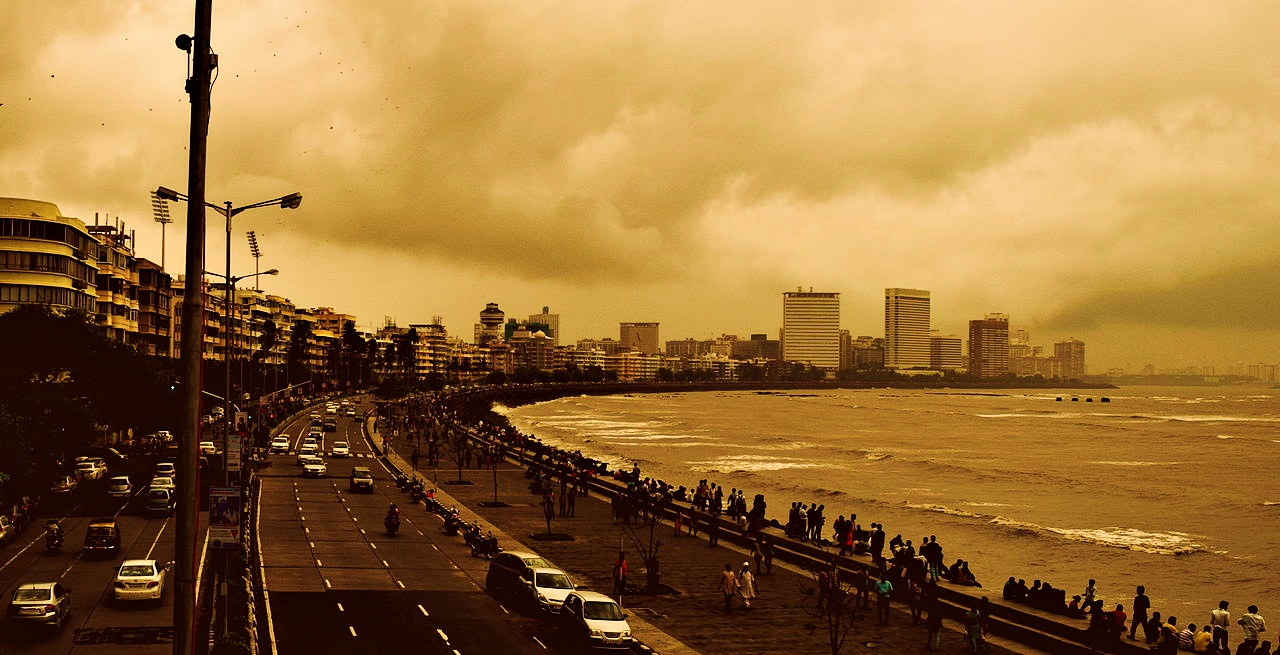
The Maharashtra government’s decision to allocate Rs 260 million for the construction of the Marathi Bhasha Bhawan on Mumbai’s Marine Drive appears laudable on the surface, but is fundamentally politically motivated. This is due to Strengthening Marathi culture requires social and intellectual planning, not cement and concrete.
In this regard, the Kerala model provides a good example. Kerala Sastra Sahitya Parishad is known for translating some of the world’s best knowledge inputs into Malayalam within his short span of 15 days from publication.
However, the situation is different in Maharashtra.
Books from the Central Library and Mantralaya Library have been thrown in the trash for years. How can we expect an outcry against such neglect when many writers are unaware of this? Instead of addressing the core issues, the government seems to be silencing critics by hosting conferences and award ceremonies for writers.
Maharashtra’s intellectual tradition is being eroded. Simply building buildings will not address the fundamental challenges.
For example, last month, the Jagatik Marathi Parishad held the World Marathi Congress at the CIDCO Exhibition Centre. It is a huge facility, and currently it is mainly used for weddings and sari exhibitions.
The conference is mainly organized as a spectacle, but the results are not good. Last month’s attendance rate was extremely low. A similar situation was witnessed at the meeting held at the dome of the National Sports Club of India in Worli. This is municipal space allocated to private clubs, depriving the public of access to public space.
For politicians, even library buildings are real estate and a source of income. As a result, the construction of the Central Library building was mired in a quagmire for many years due to allegations of financial irregularities.
On the other hand, intellectuals remain silent on this issue, and as a result, people are denied free access to the books of this library.
In addition, a new building is needed to maintain the archives, which are housed in the 19th-century Elphinstone College building in Mumbai. This appears to be a more urgent task than constructing the Bhasha Bhawan building.
When we visited the university building, we found that the archives housed valuable records dating back to the East India Company and Shivaji era. But there’s not enough space and it’s a hassle to get there. Old chairs, tables and other furniture are discarded in the walkways and adjacent areas. The visit was really depressing!
This is in contrast to the archives carefully preserved by the Rajasthan government in Bikaner. I visited there last year during a conference on archives.
The Bikaner archive also has a well-designed gallery with special emphasis on Maratha history and Shivaji’s escape from Agra with Rajput support during Aurangzeb’s reign.
Apart from this, land has been allotted for the archives of Maharashtra in the Bandra Kurla complex next to the Mumbai Cricket Association’s plush gymkhana. However, there seems to be no plans for construction yet. The site was taken over by the Mumbai Metro Railway. Remarkably, all major cities have new or improved buildings dedicated to storing archives.
If the government was serious about promoting Marathi culture, it could have easily created a Bhasha Bhavan in a six-storey building built last year behind the Ravindra Natya Mandir in Prabhadevi, Mumbai, etc. . Instead, most of the space has been given to commercial enterprises, with the exception of the Maharashtra State Literary and Cultural Commission, which is strange by any standards.
The new building on Marine Drive has PK Das as architect and may be aesthetically pleasing, but language promotion needs input to transform the building into a hub of modern knowledge and thought is. The Maharashtra government seems to have no imagination or blueprint on how to utilize the prime space. Since it is located midway between Mantralaya and Malabar Hill, which are strongholds of political power, it may have been used as a resting place for politicians and bureaucrats.
A strong foundation for promoting Marathi culture and knowledge was established in the newly created state of Maharashtra in 1960 by the then Chief Minister YB Chavan. He was deeply influenced by modern thought under the guidance of Joshi Lakshman Shastri, a scholar who followed the teachings of his MN Roy, a revolutionary and philosopher.
Chavan initiated the launch of the Maharashtra Literary and Cultural Board, which published Vishwakosh’s multi-volume Marathi encyclopedia and several important academic books at low prices. Some of the best work was done on modest premises in the sacred and picturesque riverside town of Wai in the Satara district. Therefore, you don’t need a luxurious space for such an endeavor.
Vidyadhar Date is a senior journalist, cultural critic and author of a book on the importance of public transport.