

Winter is coming to an end and many of us are preparing for spring riding. Whether you’re a show jumper, dressage athlete, eventer or casual rider, everyone can benefit from a little land training.
What is land training? Performing movements and exercises outside of the horse, giving the body time to adapt and developing muscle control and balance, without addressing the complex aspects of horse movement. Training the body in this way allows the body to develop symmetrically so that the rider is not dominated by one side.
Body dominance, or unilateral posture, is one of the many ways to create resistance in a horse. Asymmetrical dominance not only puts stress on the horse’s body, but over time it can create long-term imbalances that cause chronic biomechanical problems for both horse and rider.
If your body is not ready for riding, common injuries to your neck, upper and lower back, hips, knees, and ankles can occur.
Some exercises done under the saddle, such as forcing the rider to lunge the horse, will improve posture, but if the rider has a fundamental imbalance (and most do), dismounting the horse will help improve posture. must work in a stationary or stationary environment. Also, working out without stirrups often favors the stronger side more than it solves the problem.
Getting off the horse gives your body the proper time and focus it needs to correct this problem. As riders age, it becomes essential to prepare the body to reduce and avoid injury. If your body is not ready for riding, common injuries to your neck, upper and lower back, hips, knees, and ankles can occur. With proper exercise, most injuries caused by trauma, strains, fatigue, and muscle imbalances can be avoided or at least minimized.
As a horse coach in Canada, I see many riders struggling with posture and position. A common problem is the rider sitting with more weight on his one sit bone. Typically, people who tend to sit on their dominant leg will extend their dominant leg downwards and put more weight into that stirrup. Have you ever wondered why one stirrup looks longer than the other?
This is extremely difficult for both horse and rider. If you think of the horse’s situation in human terms, it’s like carrying the weight of a bowling ball on one side of your body while trying to perform an athletic feat. Other common abnormalities include sitting slouched and with the shoulders tilted forward, or having the shoulders tilted to one side.
If you want to become a good rider and help your horse partner do their best work, we guarantee that the following exercises will definitely help you. Please give it a try to jump-start your riding for spring.
Exercise #1: Three-point touch location
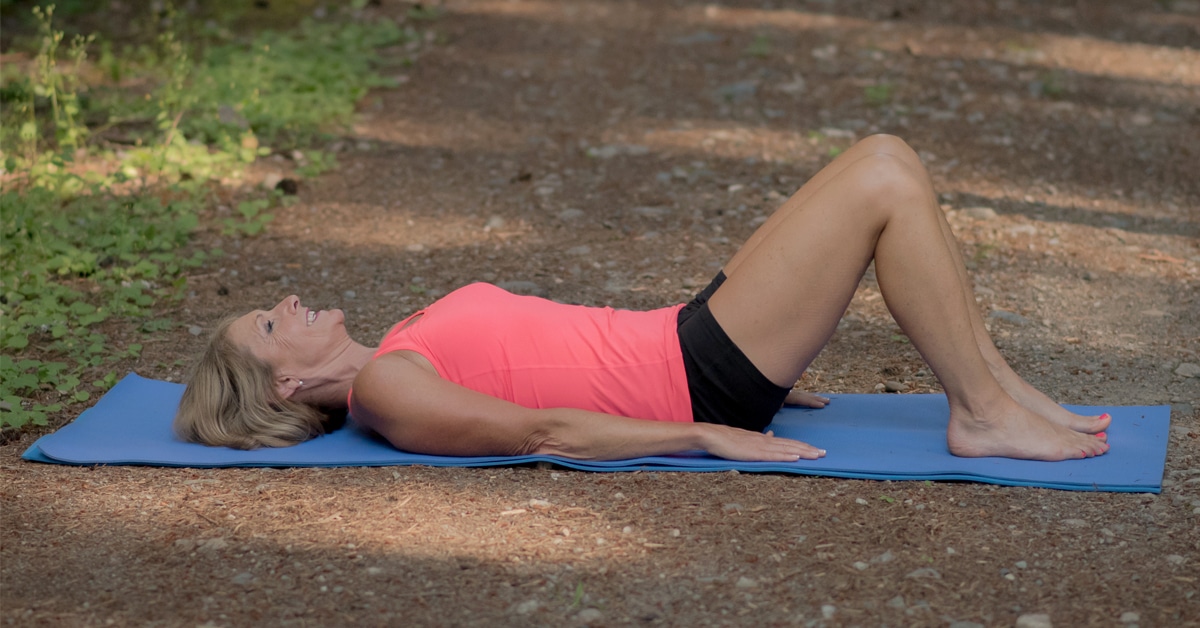
First, lie on your back on the floor in a “three-point touch” position, knees bent, and feet flat on the floor about hip-width apart (see image above). From here, find his three points of contact with the ground. The back of the head, between the shoulder blades, and the base of the pelvis. Position your hips so that your coccyx points toward your heels. Contract the base of your pelvis as if trying to stop the flow of urine, pull your belly button gently in and up toward your spine, and tuck your chin. There should be a small space about the width of your hand between the small of your back and the floor. This keeps your spine in a neutral position and allows you to exercise safely. This is the same position you should take when riding a horse.
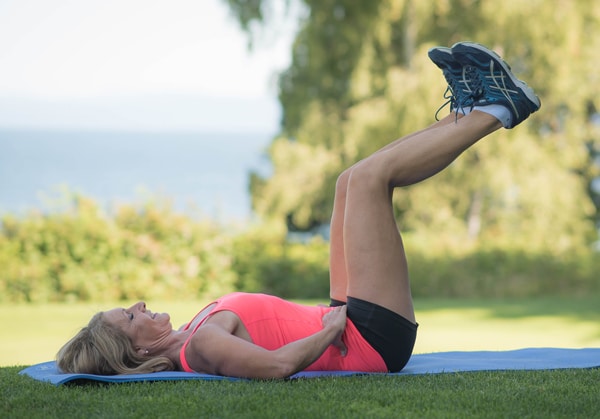
Train your oblique muscles. (Nancy Adams/Photography including hoof)
Exercise #2: Core Conditioning
Lie down on the ground in a “three-point touch” position. Place your fingers on the inside of your hips. Cough gently and feel the muscles in your lower abdomen rise. These are the oblique muscles. You want to contract these muscles and connect them with the deep muscles, the transversus abdominis. Imagine a triangle extending from your pubic bone to your hips and abdomen, making that area concave. Hold the position as if you were holding 40% of a 100% contraction. Next, lift your right leg off the ground without moving your pelvis. Repeat with the left leg. Keeping both legs at 90%, lower your right leg and tap the floor to return to the starting position. Repeat with the left leg. If your lower back is sensitive, place your hands under your lower back to stabilize your lower back. Repeat 8 to 10 times and repeat up to 2 sets of 10.
Exercise #3: Ball sit/trot/stop
The next step is to transfer this core position to the balance ball (quick note: make sure your hips are no lower than your knees when sitting on the ball).
Sit on the ball in a “three-point touch” with one hand on each side (bottom, left). Once you feel balanced, test if you can maintain that position by placing your hands on your hips. If your hips drift to one side, bring them back to the center of the ball. Try to maintain a neutral upright posture with even sitting bones. Next, work your core muscles by lowering your shoulders back and forth, keeping your hips level and your entire torso tall. While maintaining this position, bounce on the ball as if you were bouncing on a trampoline or trotting. Keeping your shoulders and hips level, tighten your hips and gently pull your belly button in and up toward your spine. Keep your sit bones slightly forward while bouncing and “pausing.” Link your core and pelvic stabilizers to prevent your hips from swinging from side to side. When bouncing and stopping, try to stay as square as possible. Repeat 10-20 times.
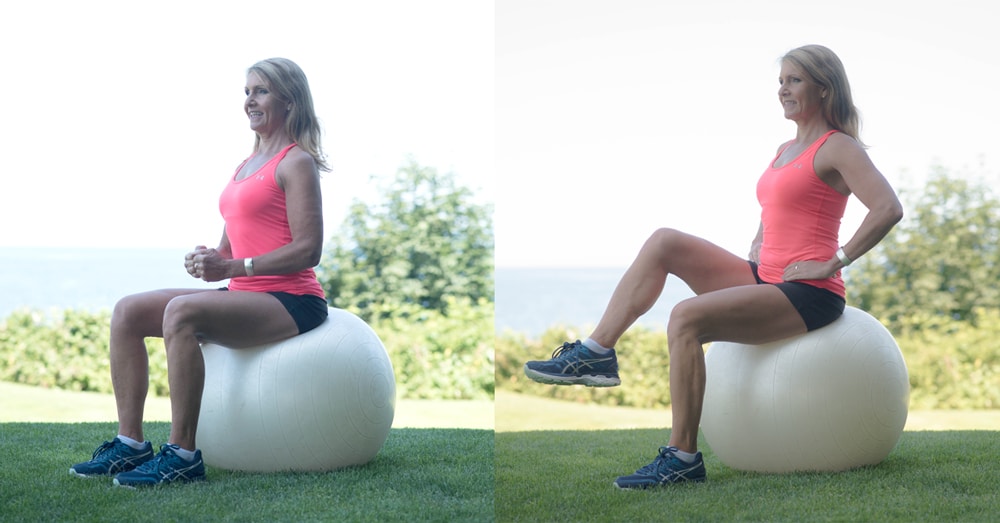
(Left) Ball bounce. (Right) Ball procession. (Nancy Adams/Photography including hoof)
Exercise #4: Ball march
As in the previous exercise, sit and lift one leg off the floor (above right). At this time, keep your hips and shoulders square and level. Your feet should be approximately 8 cm off the floor. Hold the position for a few seconds, then lower and repeat on the other side. Next, alternate legs and slowly march for 12 repetitions. Work up to 3 sets.
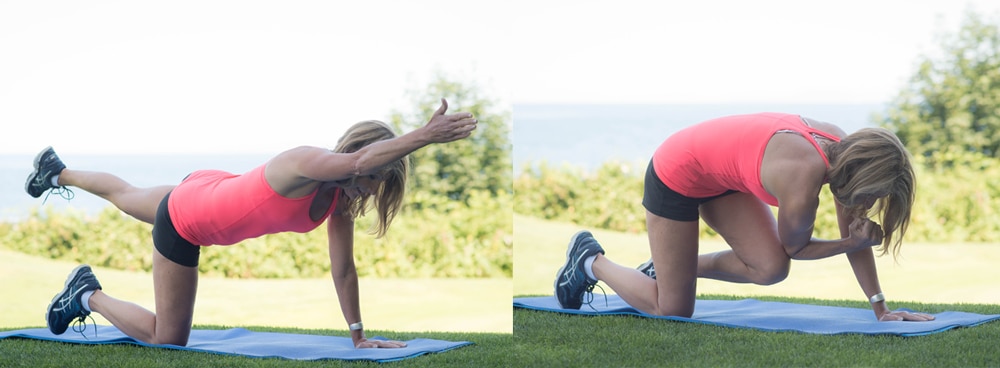
bird dog (Nancy Adams/Photography including hoof)
Exercise #5: Bird Dog
Start on your hands and knees in a tabletop position. Make sure your core is strong, your shoulders are back, and your spine is in a neutral/3-point touch position. Return to the extended position by extending your right arm and left leg, keeping your back and hips level, and bring your elbows toward your knees. Repeat 10 times and change sides.
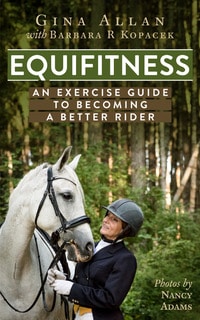 More ideas
If you feel like your weight is resting on one stirrup over the other, try using your dominant foot while brushing your teeth, waiting for the kettle to boil, or waiting in line. Try to balance on the other foot. These exercises will help you become a more balanced and stable rider. Your horse will love you too!
Happy riding!
***
gina allan He is an Equine Canada Certified Competition Coach Specialist and a book author. equalityavailable for purchase on Amazon.