

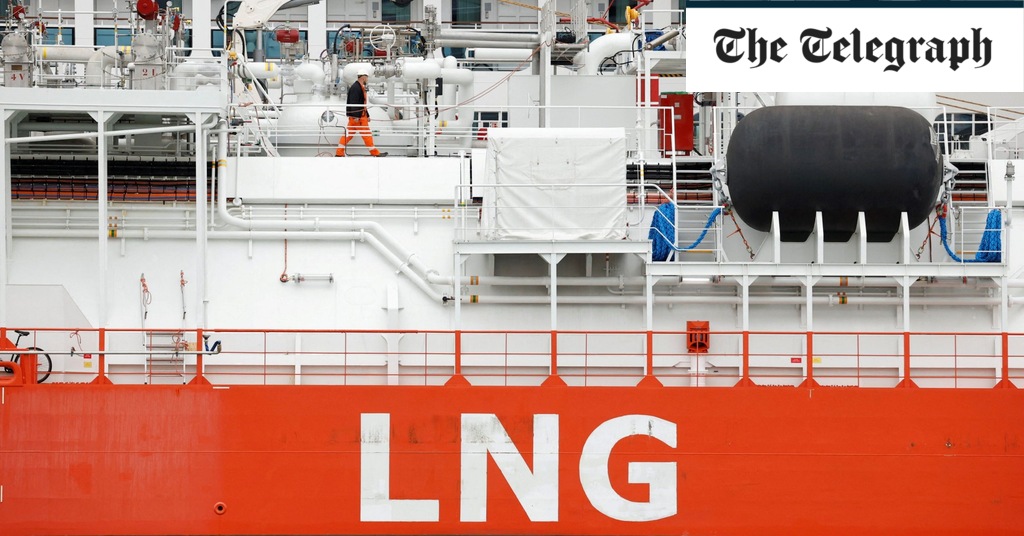
Some argue that LNG can help reduce emissions because countries can use it instead of coal, which is a much dirtier fuel.
Steve Hill, executive vice president of Shell Energy, said: “China could lead the way in LNG demand growth over the next decade as the Chinese industry looks to reduce carbon emissions by switching from coal to gas. is high,” he said.
“China’s coal-based steel sector emits more emissions than the UK, Germany and Turkey combined, and gas plays a key role in tackling regional air pollution as one of the world’s largest sources of carbon emissions. I am in charge.”
LNG also supports energy security.
“LNG will continue to play an important role in Europe’s energy security in 2023, following the weaker pipeline exports from Russia to Europe in 2022,” Shell’s report said.
“New regasification facilities will improve the security of energy supplies. Despite an overall decline in European gas demand in 2023, European LNG imports will remain at similar levels to 2022 did.
However, rising gas demand and associated trends in oil and coal suggest that UN climate change targets are currently unattainable.
Under the United Nations-brokered Paris Climate Agreement, the world agreed to limit global temperature rise to below 2 degrees Celsius and to 1.5 degrees Celsius.
Humanity currently emits the equivalent of 55 billion tons of CO2 per year, up from about 35 billion tons in 2000.
Scientists say limiting temperature rise to 2°C means emissions need to peak by 2025 and then fall by up to 50% by 2030. This would mean cutting global emissions by up to 27 billion tonnes in just six years.