

Russia’s war with Ukraine and the political turmoil that has gripped Europe since then demonstrate that more than superficial changes are needed to improve relations between the European Union and its non-EU neighbors. Brussels’ initial approach proved insufficient to ease the tensions in Eastern Europe that led to war. Russia’s ongoing war also requires a new approach to save Ukraine from destruction and the European security order from destruction.
Several multinational structures already exist linking the EU and non-EU countries in Europe, including older institutions such as the Council of Europe (CoE), the Organization for Security and Co-operation in Europe (OSCE), and the European Economic Area (EEA). , or the EU-Turkiye Customs Union, and more recent innovations such as the Black Sea Synergy, the Eastern Partnership (EaP), or the Lublin Triangle.
Some of these organizations have included Russia in the past, such as the Council of Europe, and some still include Russia, such as the OSCE. However, these proved insufficient to prevent a dramatic escalation of Russia’s war against Ukraine in 2022. A partially similar story applies in particular to the recent military conflict between CoE, OSCE, and EaP participants Armenia and Azerbaijan.
Opinion: The global implications of Russia’s war in Ukraine
Russia’s full-scale invasion of Ukraine on February 24, 2022 changed everything in Ukraine, Europe, and world politics. The world has entered a new era of conflict between great powers, where war can no longer be ruled out. Apart from the direct casualties, Russia’s aggression most concerned the EU…
A fundamental reconfiguration of EU policy toward non-EU European neighbors is already underway. The most notable developments of the past two years have been the initiation of her EU accession negotiations with Ukraine and Moldova, and the decision to grant her EU candidate status to Bosnia and Herzegovina and Georgia.
The Western Balkans have had the possibility of joining the EU for more than two decades, but the fate of the union trio of Ukraine, Moldova and Georgia remained uncertain until recently. Only after Russia’s all-out war did the European Commission take the initiative to persuade EU member states to change their attitude not only towards Kiev, but also towards Chisinau and Tbilisi.
Another significant institutional change in response to Russia’s full-scale aggression was the establishment of the European Political Community (EPC), launched in May 2022 by French President Emmanuel Macron. The EPC, which includes 47 European countries including Turkiye, will reboot relations between the EU and Europe’s non-EU states and create new common ground amid the normative, political and economic challenges posed by Moscow and its anti-Western allies. The purpose is to establish a feeling. .
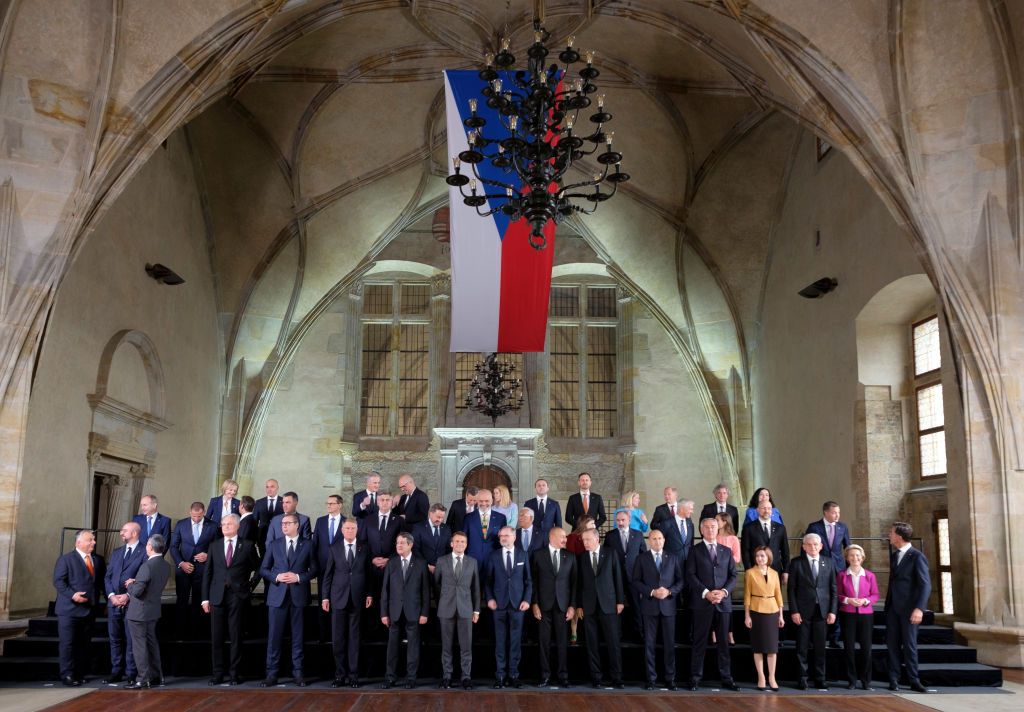
However, the impact of the EPC’s prospects in a narrower sense and the motives that led to its establishment in a broader sense remains to be seen. European countries, although not exclusively, will critically depend on the EU’s willingness, capacity and success in deepening relations and integration with non-EU countries. Since the EPC is comprised of a heterogeneous group of countries, such new general initiatives serve only as forums for discussion and networking, and are of little use for concrete plans or actual implementation of improved relations. .
The challenge today is not only to deepen cooperation with the countries most directly affected by Russian aggression. We also need to expand cooperation on security and resilience issues with other non-EU European countries, such as the UK, Azerbaijan and Turkiye. The EU must further promote exchanges on deterring and containing Russian and other anti-Western threats to Europe, whether athletic, complex, psychological, political or economic.
Furthermore, deeper and broader cooperation in areas not directly related to security and defense is also important. These range from promoting industrial innovation to improving social and environmental protection, increasing gender equality, advancing science and ensuring cultural exchange. Today, deeper integration in these fields is not simply an expression of a normative preference for transnational humanism, Europeanism, or liberalism. It became a matter of self-preservation.
Former Sen. Cory Gardner: “Russia is a terrorist state”
As Congress continues to negotiate a stalled border security deal and approval of a military aid package for key allies, U.S. President Joe Biden today announced that he would not allow Russia to commit heinous crimes against Ukraine, with or without Congress. Action could be taken to make them pay the price in some way.states of the usa
If Europe’s democracies do not work closely together, they are at risk. Russia and other anti-Western countries are looking for weak relationships, unintegrated polities and weak societies that they can undermine or attack. Russia and its allies will seek to turn the military, institutional, and social weaknesses of these states into fundamental challenges not only for the target state but also for other European countries.
An old observation by the eminent political scientist Charles Tilly maintains that not only do states make wars, but wars also create states. The current tense situation in Europe will test whether this rule applies across borders. Will Russia’s war against Ukraine strengthen or weaken the European Community of States? Next year will tell.
Editor’s note: The opinions expressed in the editorial section are those of the author and do not reflect the views of Kyiv Independent.

Andreas Umland
Analyst at the Stockholm Center for Eastern European Studies