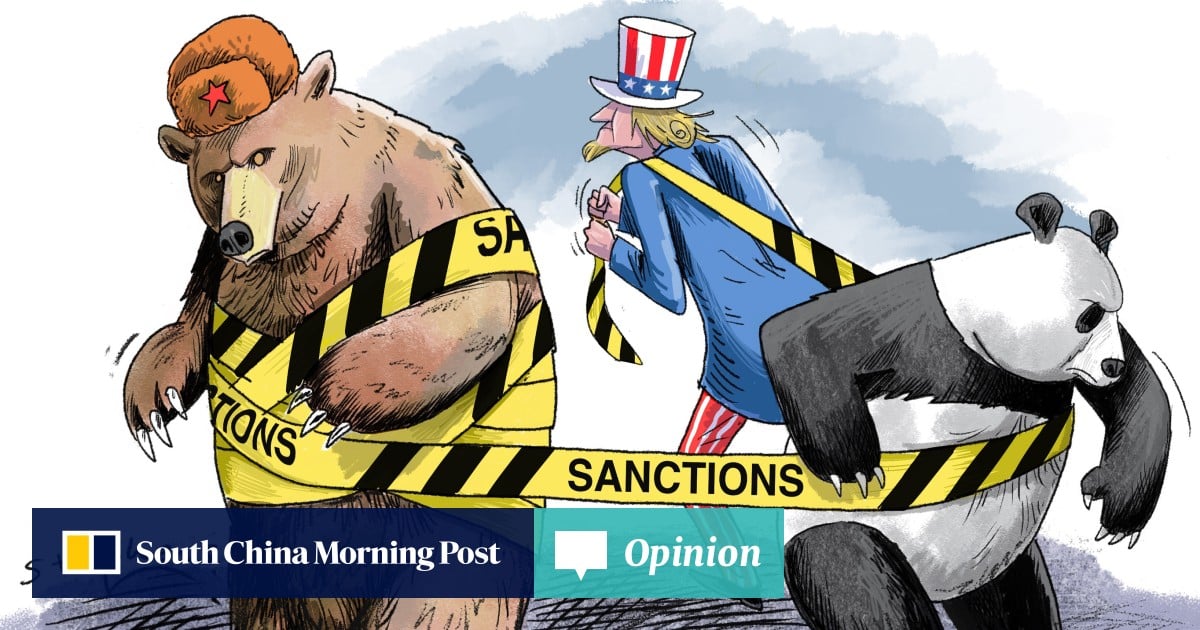
The new rules appear to have an extraterritorial scope and do not require that such financial transactions be linked to U.S. legal jurisdiction. Treasury Secretary Janet Yellen announced that the agency “will not hesitate to use the new tools it provides to take decisive surgical action against financial institutions that facilitate the supply of Russia’s war machine.” did.
Major industries eligible for international financial assistance being targeted This includes the broader manufacturing and construction sectors, as well as technology, aerospace, defense and related materials. If a transaction violates regulations, U.S. authorities can impose sweeping sanctions to prevent financial institutions from conducting services with U.S. organizations or individuals.
Chinese banks ‘refrained’ from doing business with Russia due to sanctions concerns
Since the introduction of the new rules, the US Treasury has held meetings with major Chinese state-owned banks such as Bank of China, ICBC and Bank of Communications, as well as Hong Kong financial players such as CMB Yong Lung Bank.
According to the report, the meeting took place in a cooperative atmosphere, with discussions mainly focused on preventing indirect facilitation of financial transactions for the benefit of the public. Russian arms industry. According to Bloomberg, the main outcome of the talks was that China’s state banks agreed to curb their ties to Russia’s military industrial base.
In December, the U.S. Treasury Department sanctions imposed More than 150 companies and individuals, including entities in mainland China and Hong Kong, are eligible. The measure emphasizes that Russia uses third countries “to acquire much-needed technology and equipment for its war economy.”
This comes after the Atlantic Council released a report last November explaining how China enabled Russia to evade US sanctions.
The report said: “Open source trade data suggests that a surge in imports of Chinese products with important military applications played a key role in Russia’s ability to strengthen its defenses on Ukrainian territory. “Even though arms and ammunition are flowing into Ukraine from NATO.” These countries are offset by imports from China, but it is not weapons, but supplies essential to Russia’s ability to maintain its continued stubborn efforts to hold onto Ukrainian territory. ”
The report said Russia is increasing its acquisition of critical strategic equipment from China that can be used directly for military purposes, such as integrated circuits, large drilling vehicles, and ball bearings.
The Atlantic Council report also claimed that it was used by Russian security forces. Chinese drone in the Ukraine conflict. Meanwhile, Ukraine’s KSE Institute reported that through most of 2023, about two-thirds of Russia’s non-lethal battlefield goods and critical supplies were sourced from Chinese producers.
The Chinese government’s reaction to the sanctions was fierce. The Commerce Department demanded that the United States “immediately correct its wrong practices and end its unjust oppression of Chinese companies,” and further accused Washington of “the following.”one-sided bullying”.
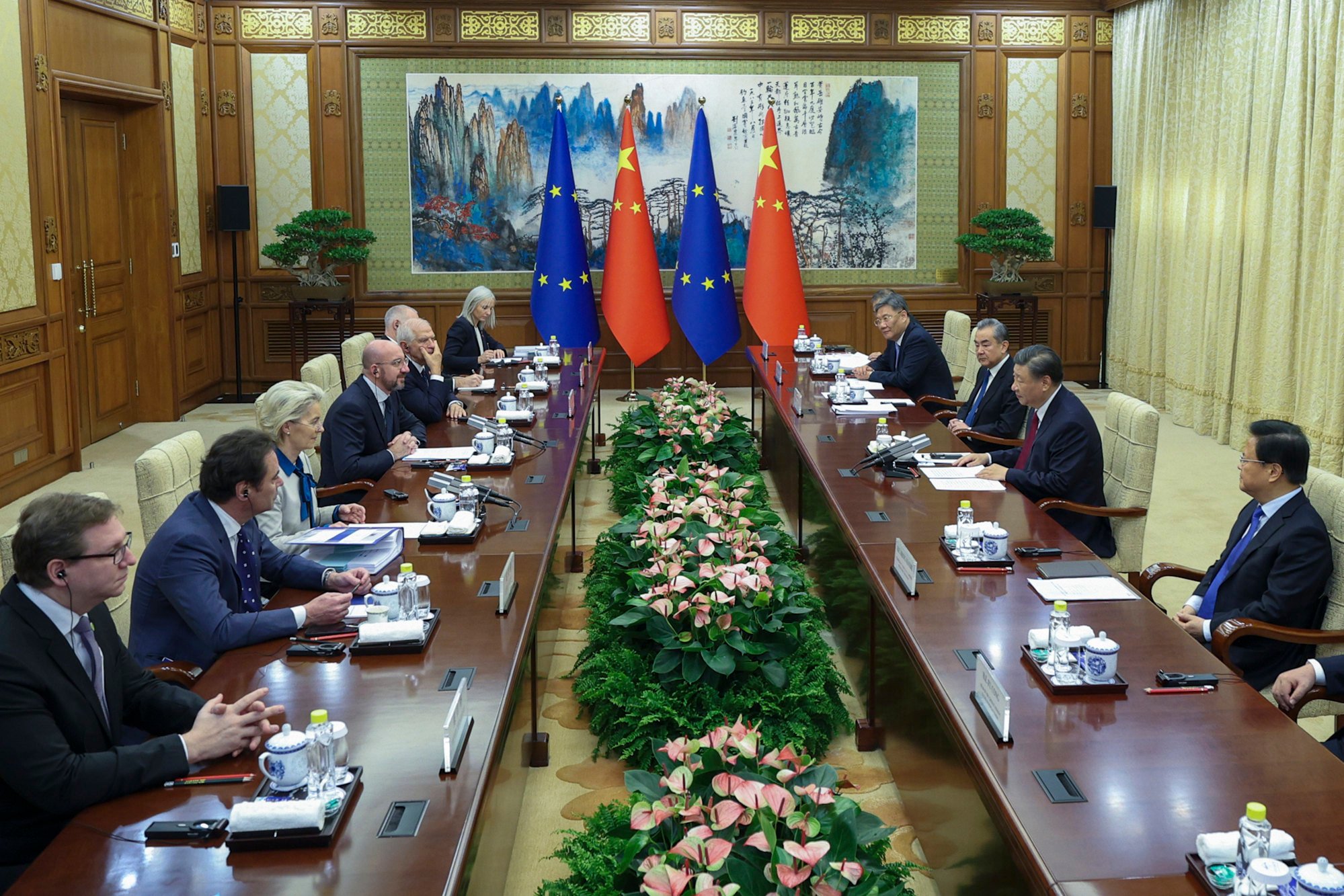
The European Union has not introduced sanctions targeting Chinese companies, but has raised the issue with Chinese leaders. This includes: China-EU summit meeting The meeting was held in December last year, with President Xi Jinping welcoming European Council President Charles Michel, European Commission President Ursula von der Leyen, and their delegations.
European Commission President Ursula von der Leyen (third left) speaks with European Council President Charles Michel (fourth left) during talks at the Diaoyutai Guest House in Beijing, December 7, 2023. President Xi Jinping (second from the right). Photo: AP
Michel gave Xi a list of Chinese companies with which the EU will discuss sanctions on supplies. dual-use items To Russia. Several Chinese companies are expected to soon be sanctioned and barred from doing business with European companies in the future.
According to Chinese state media, President Xi did not directly respond to the proposed sanctions discussed with EU leaders, saying only that the two countries “have different opinions and should not confront each other.”
Recently, however, the Chinese government has escalated its rhetoric against sanctions. Perhaps the most obvious manifestation of China’s growing anxiety about Western pressure occurred in the video conference between Dong Jun and John Jun. China’s new defense ministerand Russia’s Sergei Shoigu.
“Despite the fact that the United States and Europe continue to put pressure on the Chinese side, we have supported you on the Ukraine issue,” Dong said in a phone conversation on January 31.
Dong’s use of the word “support” has caused some consternation, as it goes against the stated policy of the Chinese government. remain neutral Foreign Ministry spokesperson Wang Wenbin later reiterated this point, adding: “This position has not changed.”
Still, the steady escalation of sanctions was at some point confused with rising security tensions around Taiwan and the Asia-Pacific region, as Western countries grow frustrated with the ineffectiveness of measures against China and Russia. There is a possibility that This could allow China to deepen not only military cooperation but also economic ties with Russia.
Bob Savitch is a Senior Research Fellow at the Global Policy Institute in London, UK, and a Visiting Professor in the School of International Relations at the University of Nottingham.