


One of the hottest places on Earth, Death Valley is the driest place in North America
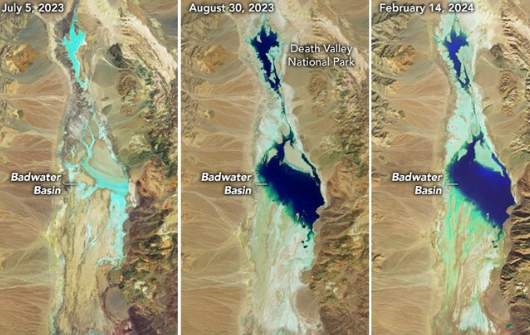
NASA has released before-and-after satellite photos showing a temporary lake that recently formed in Death Valley, USA. According to NASA Earth Observatory, the lake formed in August 2023 in the wake of Hurricane Hillary and gradually shrunk, but persisted through the fall and winter. However, in February 2024, a powerful atmospheric river backfilled it.
NASA satellite images captured Death Valley’s Badwater Basin before and after the hurricane, and even after the recent storm.
“This ephemeral lake in Death Valley is extending its stay. Rain from a powerful atmospheric river has filled the Badwater Basin this month. These color-enhanced #Landsat images include , a shallow lake several kilometers in diameter is shown, with the water highlighted in blue,” the post reads.
See post here:
This temporary lake in Death Valley is extending its stay.
Rain from a powerful atmospheric river filled the Badwater Basin this month.These enhanced colors #landsat The image shows a shallow lake several kilometers in diameter, with the water highlighted in blue. https://t.co/YXeTZT6oGGpic.twitter.com/h5vVfpQSjU
— NASA Earth (@NASAEarth) February 16, 2024
Notably, Death Valley, one of the hottest places on Earth, is also the driest place in North America, typically receiving about 2 inches (51 millimeters) of rain per year. But in the past six months alone, the park’s official weather station at Furnace Creek has seen temperatures more than double that. Debris from Hurricane Hillary and atmospheric rivers caused most of that precipitation. As the planet warms, more frequent and heavy rain is expected.
“Based on satellite imagery, the lake appears to have grown to the same size in February 2024 as it did in August 2023, thereby extending the lake’s lifetime by several months,” NASA said. Stated. As of February 14, the lake was up to a foot (about 3 meters) deep in some places, park officials said, and it was unclear how long the lake would last.
“Most of us thought the lake would be gone by October. We were shocked to see it still here almost six months later. This week’s rains meant the lake was here. ,” Death Valley National Park ranger Abby Wine said.