

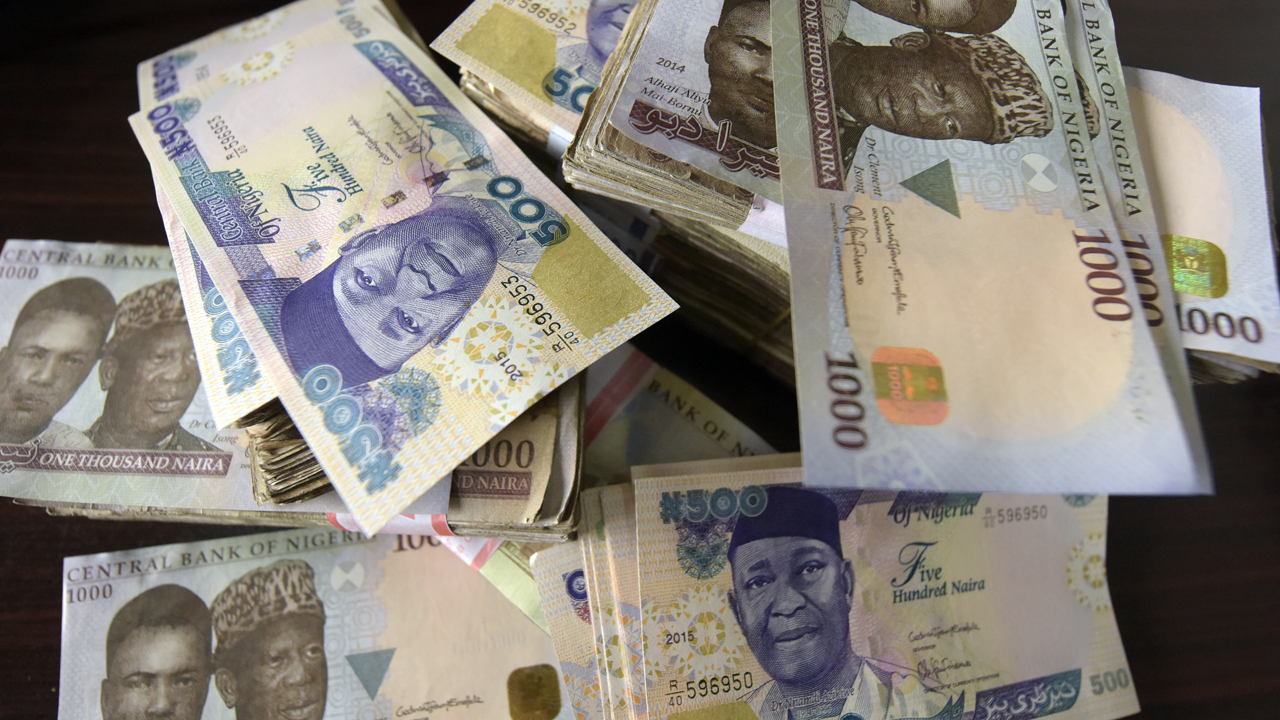
Nigeria’s naira has reversed its recent gains to emerge as the world’s worst-performing currency last month, according to a new report from Bloomberg.
Friday’s report highlighted that this development has increased pressure on Nigeria’s central bank to continue raising interest rates.
The naira depreciated to 1,466.31 naira against the dollar, its lowest since March 20th.
The decline was due to a shortage of local US currency, with only $84 million available on Thursday, half of the previous day’s supply.
CBN Governor Yemi Cardoso had previously hailed the Naira as the world’s best performing currency as of April 2024.
The naira faced difficulties in March, plummeting to 1,600 Naira/$ in the official market and 1,800 Naira/$ in the parallel market.
Cardoso attributed this achievement to a series of foreign exchange market reforms and positive sentiment from major international investment institutions.
Razia Khan, Standard Chartered’s chief economist for Africa and the Middle East, said in an interview with Bloomberg that she expects $1.3 billion in naira futures to expire at the end of this month, potentially dampening market sentiment. ing.
“This is expected to further increase demand for dollars.
“When the currency appreciated rapidly, there was profit-taking by offshore investors, which meant that the dollar-to-naira exchange rate appreciated again.
“This is completely consistent with how the market functions,” she said.
The report further highlights that the weak performance of the naira is expected to increase pressure on the CBN to implement further rate hikes after its May 21 policy meeting.
The central bank raised interest rates by a total of 600 basis points in February and March. The move helped the naira recover from a March 8 low of N1,627 to N1,072 in mid-April as investors sought high-yielding domestic assets.
The naira’s depreciation was also visible in the unofficial market, with the naira falling 0.9% on Friday to 1,468 naira to the dollar due to increased demand from individuals and small businesses, according to the Forward Marketing Bureau, which tracks naira exchange rates. – Abubakar Muhamed, CEO of De Change, said: Data for commercial capital Lagos.
The naira’s weakness was also evident in the unofficial market, where it fell 0.9% against the dollar to 1,468 naira on Friday.
According to the report, Abubakar Muhamed, chief executive officer of the Forward Marketing Bureau de Change, which monitors the data in Lagos, said the decline was due to increased demand from individuals and small and medium-sized enterprises. Ta.
Two other African countries ranked among the four worst-performing currencies last month.
The Zambian kwacha hit an all-time low of 27.3969 to the dollar on Friday. Meanwhile, Ghana’s cedi depreciated to 13.99 cedi against the dollar on the same day, its lowest level since 2022. Both countries are currently undergoing debt restructuring procedures.
Ayodele Salami, chief investment officer at UK-based Emerging Markets Investment Management, told Bloomberg: “Delays in debt restructuring agreements with private creditors are weighing on capital flows for Ghana and Zambia. There is a high possibility that it has become.”
“Both countries are unlikely to attract new capital inflows until the ongoing debt restructuring negotiations are concluded,” Salami said.
Salami added that the naira, along with other African currencies, is facing pressure from increased domestic demand for dollars to cover the cost of importing raw materials and goods, especially crude oil.