

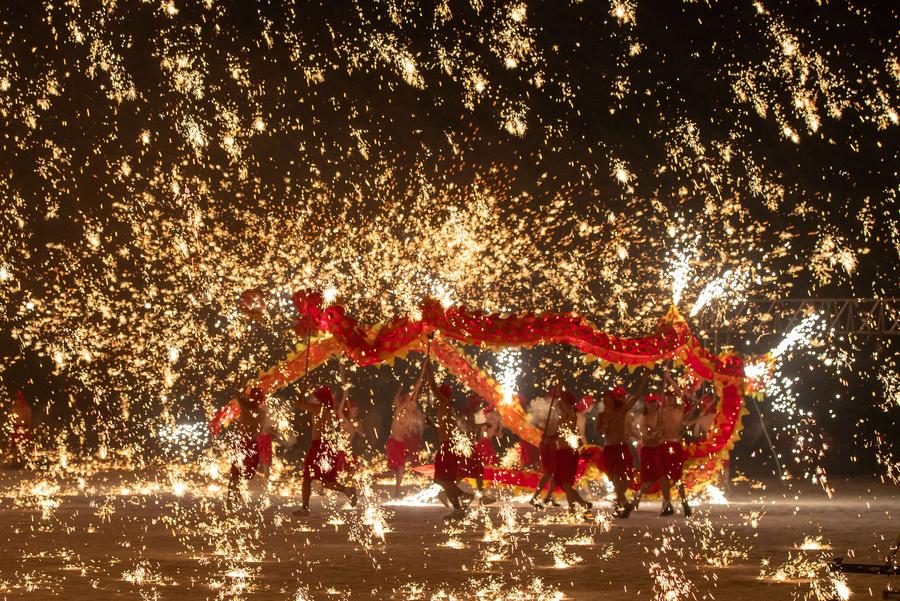
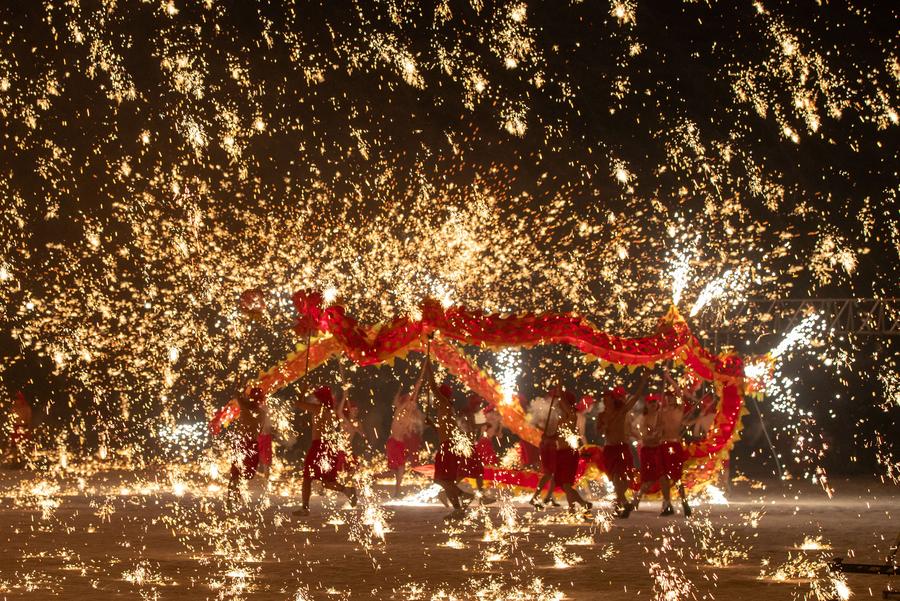
BEIJING, Feb. 17 (Xinhua) – On February 14, during the Lunar New Year holiday, the Panlongcheng Ruins Museum in Wuhan, central China’s Hubei province, welcomed a steady stream of visitors.
One of the exhibits that caught the attention of tourists was a golden ornament inlaid with turquoise embossed with an intricate Chinese dragon design. The artifacts serve as convincing evidence of the spiritual beliefs held by Chinese ancestors during the Shang Dynasty (1600 B.C.-1046 B.C.).
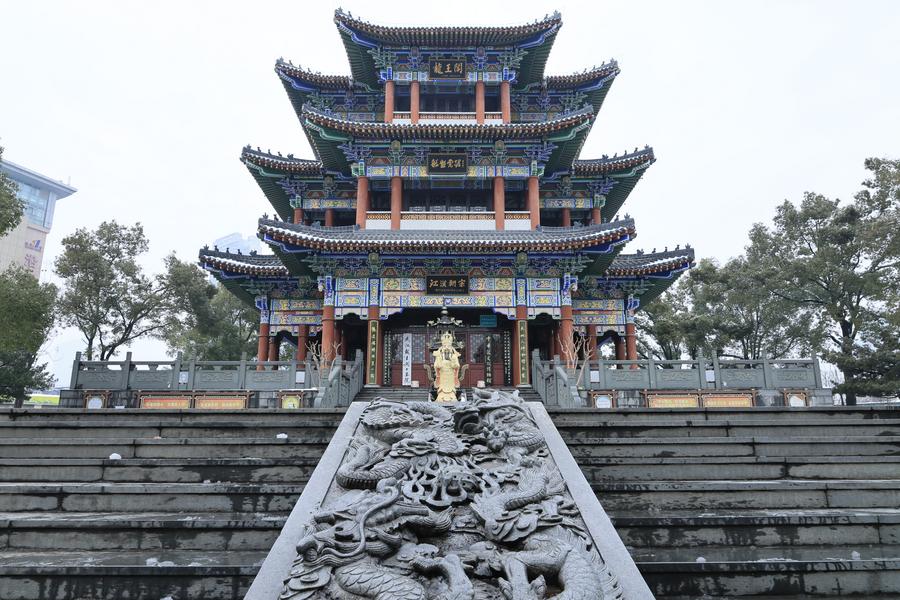
Dating back some 3,500 years, the Panlongcheng ruins are home to a wealth of archaeological discoveries, including a walled palace, royal burial grounds, and craft workshops. Considered the roots of today’s Wuhan, it was a center of early Bronze Age civilization along the middle reaches of the Yangtze River.
Panlong City, an important cultural heritage site, provides physical evidence that both the Yellow River and the Yangtze River belong to the same Chinese civilization.
Throughout Chinese history, the image of the dragon, or Chinese dragon, has constantly evolved, but its essence has been passed down through generations of Chinese people.
The current exhibition at the National Museum of China in Beijing features more than 200 collections and collectibles, telling the story and importance of Ron as a totem of Chinese culture. Titled ‘New Year Protected by Dragons: Chinese New Year Exhibition’, the exhibition delves into different perspectives across customs, rituals, history, culture, art and lifestyle.
Xie Zhaoliang is an inheritor of the Tongzhou canal dragon lantern craft and dance, leading a team in street parades and performing the Double Dragon Dance. A majestic Chinese dragon rises and coils to bestow Lunar New Year blessings on local villagers, amidst the lively sounds of drums and gongs.
“Reviving the nearly 200-year-old Tongzhou Canal dragon lantern tradition during Chinese New Year will not only enhance the New Year’s atmosphere, but also introduce this important tradition to the younger generation,” Xie said. .
The art of dragon dancing in Beijing’s Tongzhou district, also known as the “Tongzhou Canal Dragon Lantern” dance, is performed in schools and exhibited in museums.
The newly opened museum dedicated to the Grand Canal Dragon Dance has carefully selected New Year’s photos, stamps, and postcards with the theme of domestic and international dragon dances. Visitors can learn about the tradition of praying for safety and prosperity through dragon dances, while also learning about the influence of Chinese dragons on the world.
Images of dragons decorate the streets of Beijing and Wuhan, and many international brands adorn their store windows with Chinese dragons. A poster for the movie “Wish Dragon” was discovered at a shopping mall in Wuhan. Directed by a foreign filmmaker, the film is inspired by the story of a Chinese friend and depicts a heartwarming story of personal growth and friendship.
In Beijing, dragon and lion dance flash mob performances adorn many cultural institutions along the Central Axis. These revitalized dances run through the streets, enriching the Spring Festival celebrations for both locals and tourists, while striving to preserve local traditions.
Long-themed exhibitions, carnivals and creative cultural products attract tourists from all over the country, providing strong momentum to China’s recovering cultural and tourism market. From February 10 to 13, Beijing’s 174 major tourist attractions collectively attracted more than 9.6 million tourists, an astonishing 80.4 percent increase over the previous year.
In Beihai Park, creative cultural products inspired by the Kowloon Folding Screen have drawn enthusiastic responses from tourists. These products convey good wishes, with the rising dragon symbolizing a prosperous career and vitality, and the coiled dragon representing universal happiness.
Zhang Mian, director of the Beihai Park Research Office, pointed out that tourists can not only enjoy the presence of loons in the park, but also immerse themselves in China’s dragon culture by appreciating creative cultural products. ■