

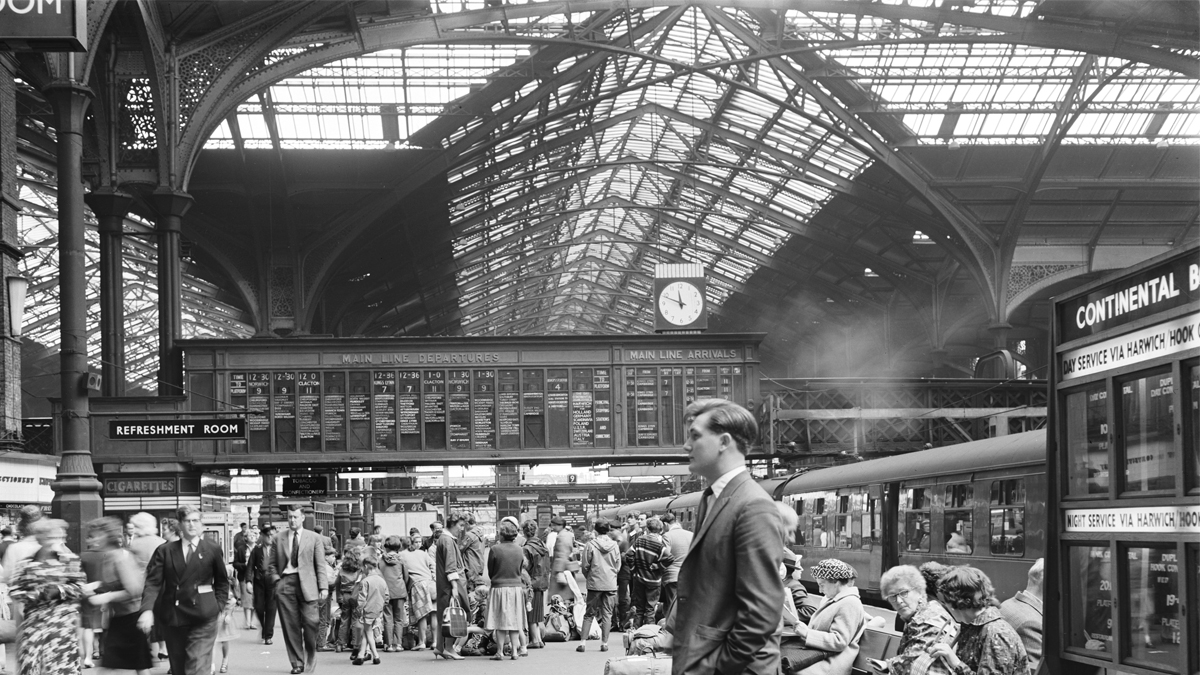
London’s Liverpool Street Station is celebrating its 150th anniversary this year.
To commemorate this, we’re sharing a series of photos that reveal lesser-known moments in its history. So take a look below and step back in time to a very different Liverpool Street in London.
arrival and departure
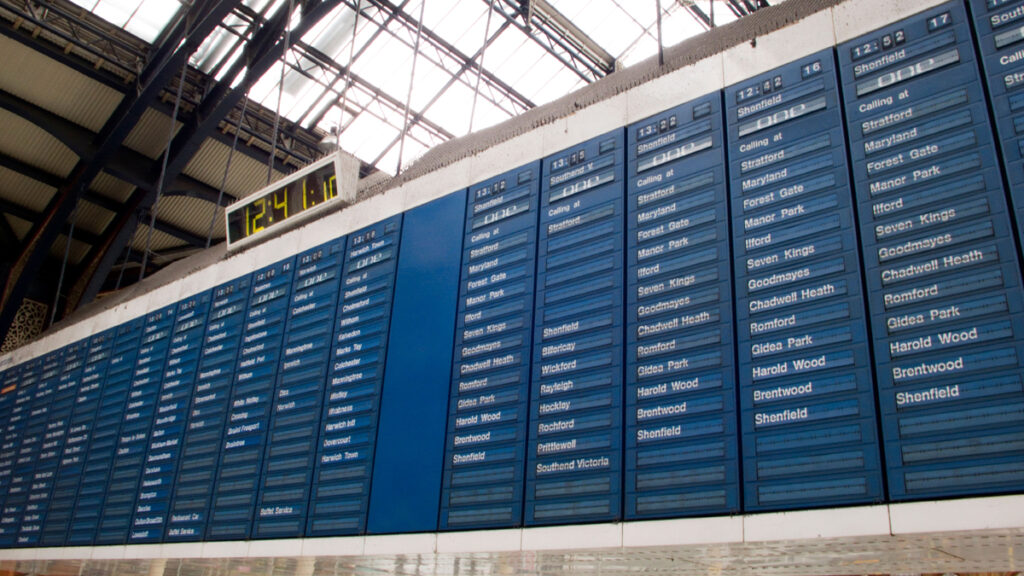
Liverpool Street has had iconic arrival and departure boards for many years.
The photo above was taken in 1962 on Platform 9 and shows the traditional signage.
The photo below shows a more recent system known as a flapper board, with white text on a blue background. This Liverpool Street flapper board was the last one in operation at a London mainline station until it was replaced by today’s modern LED screens in 2007.

The Great Eastern Hotel
The Great Eastern Hotel was built next to Liverpool Street and welcomed its first guests in 1884, ten years after the station opened. Built and fully equipped to the highest standards. Initially aimed at passengers needing to stay overnight in London, the quality of the food and rooms soon attracted large groups for dinners and city functions. The hotel is still here today and is known as Andaz London Liverpool Street.
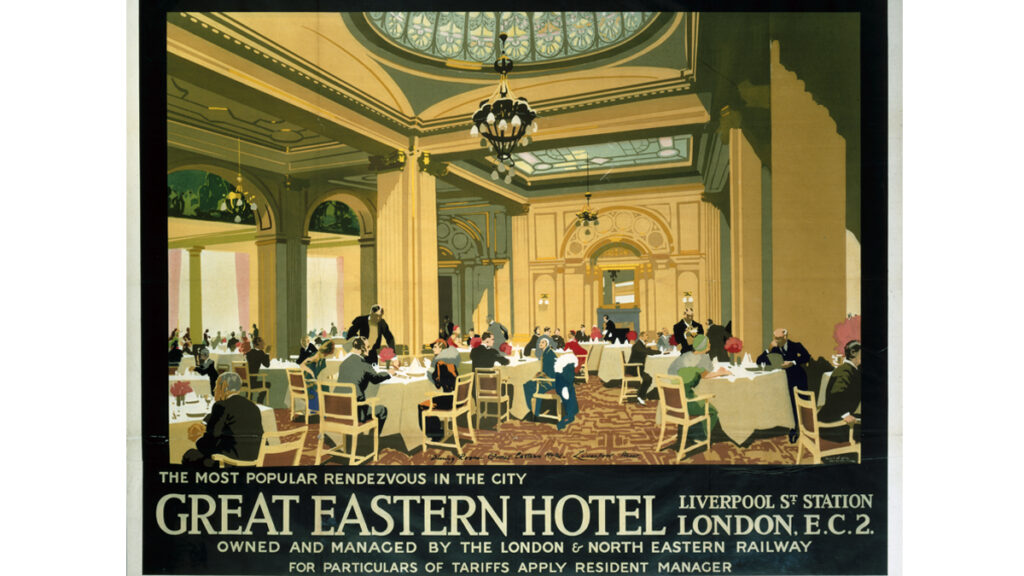
The poster shown above was used sometime between 1927 and 1943. The beautiful illustrations depict guests dining in the luxurious setting of the hotel.
overseas trip
Liverpool Street has a long history of international travel.
The Great Eastern Railway carried 96,000 passengers overseas in 1893, which rose to 131,000 in 1900.
Passengers could catch a train from Liverpool Street to Harwich Parkston Quay, from where they could take a ferry across the North Sea and quickly travel throughout the rest of Europe. This arrangement continues in various forms to this day.
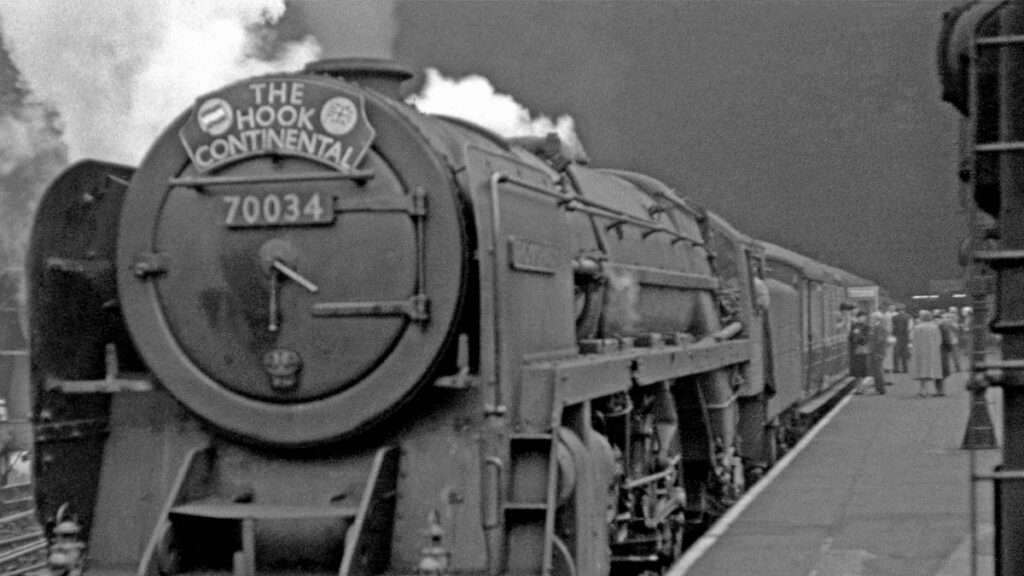
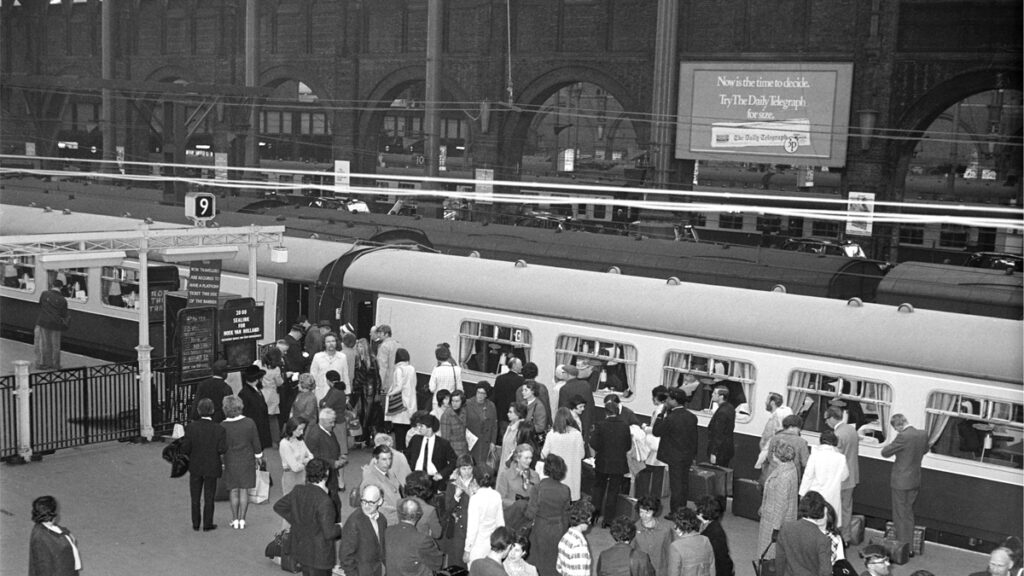
The image above shows a Hook Continental train waiting to depart on Liverpool Street in 1955. This train she was operated as a named train in 1927 and was connected to the ferry service between Harwich and Hook in Holland.
The image below shows passengers aboard the Hook Continental train in 1971. The passengers were members of the Bach Choir and were traveling to the Netherlands to perform.
Eating and drinking on board
Food and drink are always an important part of trains traveling to and from Liverpool Street.
The 1910 Norfolk Coast Express dining car kitchen is shown in the image below.
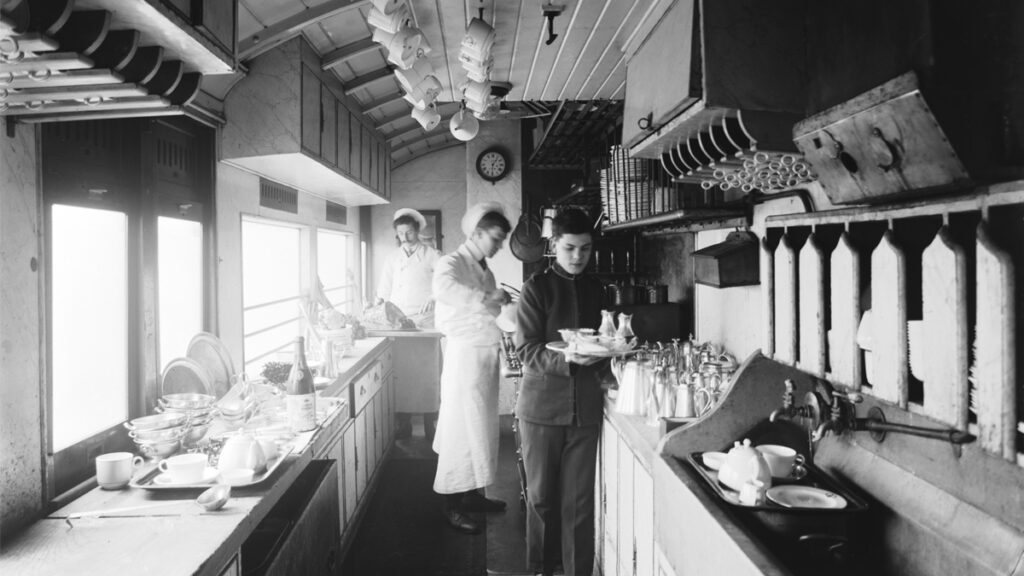
Cooks had to work in confined spaces. There was a sink, drainer, cupboard, and gas stove. Plates were placed on wooden racks and cups hung from the ceiling. In the photo, one of the cooks is preparing a meat binder, and a waiter is preparing a tray with silver pots for tea and coffee. Lunch cost 2 shillings and 6 pence, about £10 today. The Norfolk Coast Express ran between Liverpool Street and Cromer in Norfolk during his seven years from 1907 to 1914.
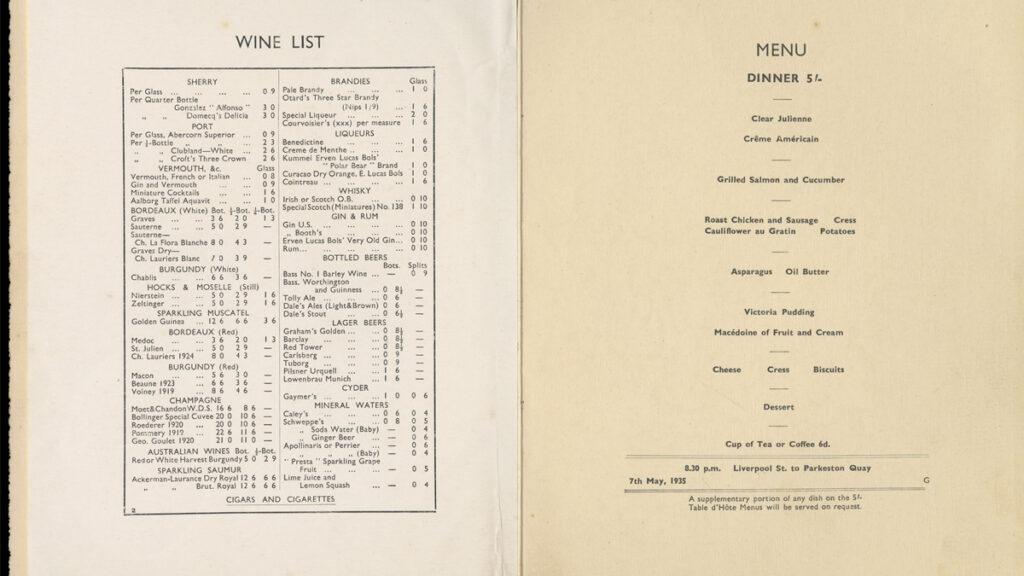
The image below shows the menu for the journey between Liverpool Street and Harwich Parkston Quay in May 1935.
cargo
Over the years, hundreds of millions of passengers have not only started and ended their journeys on Liverpool Street. All kinds of food, parcels and packages have passed through the platform.
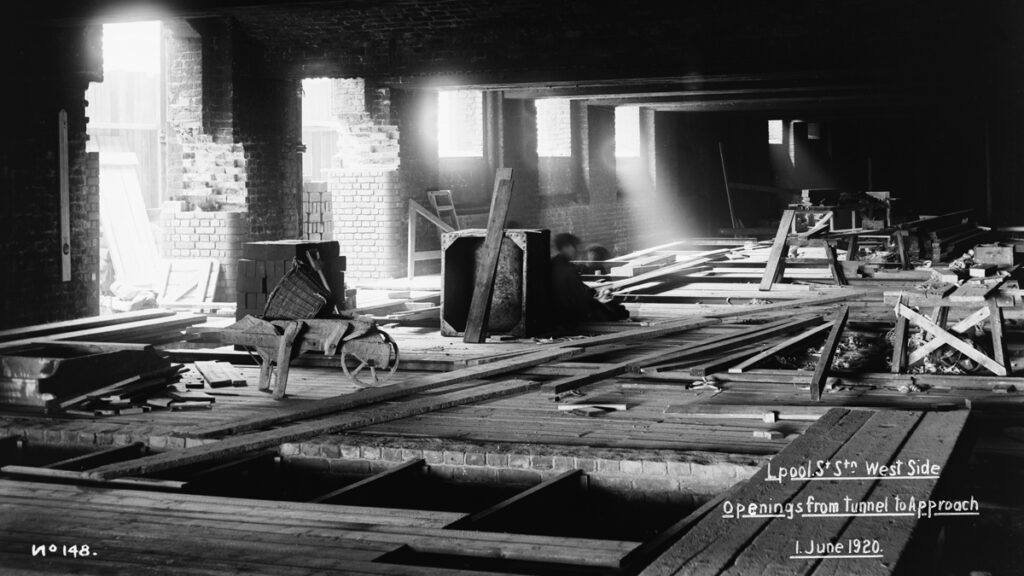
The image above shows construction work on the Post Office Underground below Liverpool Street station in June 1920. The Underground opened seven years later and carried mail from Paddington Station to Whitechapel, but it was finally closed in 2003. The Liverpool Street Post Office railway station is connected by conveyors to the main line station’s platforms 10 and 11.
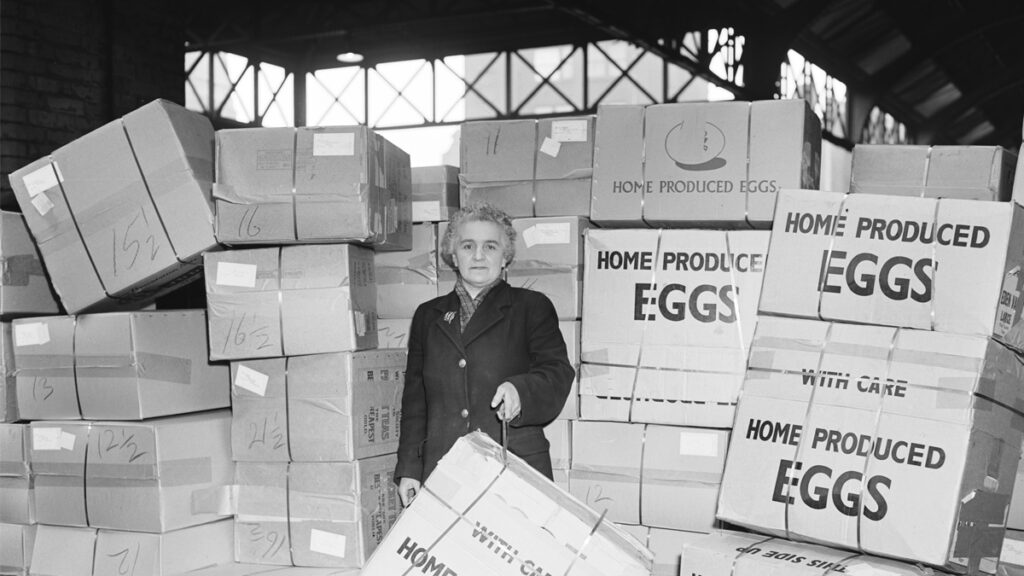
The image above shows a box of eggs at the station in 1958. The eggs were transported in sealed containers and kept refrigerated.
Rescue mission from Nazi Europe
Between 1938 and 1939, around 10,000 mainly Jewish children were brought to Britain from Nazi Europe to save them from persecution. This was part of an organized rescue operation known as the Kindertransport. Most of the children arrived by boat and then took the train to Liverpool Street, so our station was the end of a long journey to safety. Today, two monuments are erected at the station in memory of the rescued children, those who helped them, and those left behind.
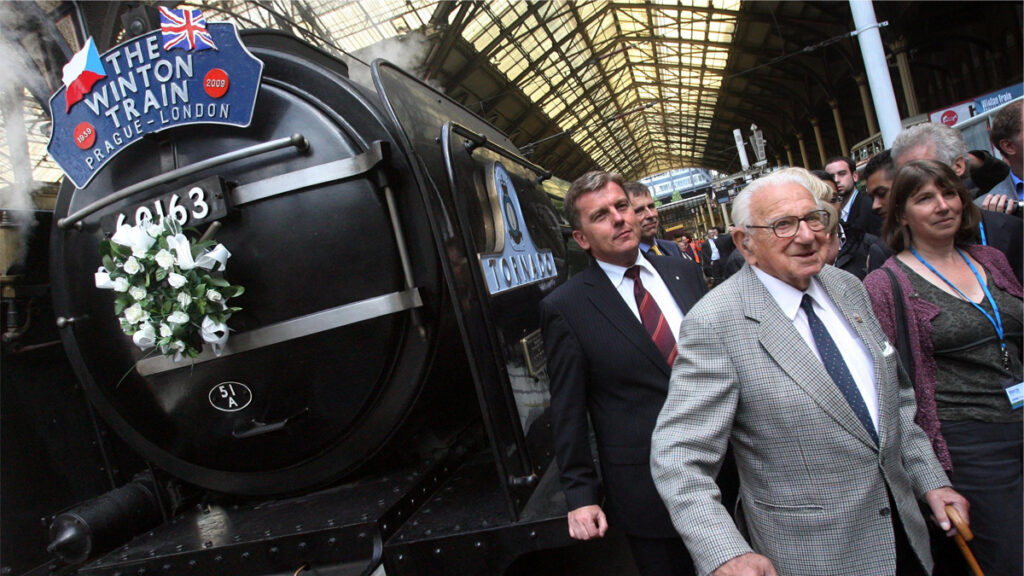
This photo shows the Winton train arriving at platform 10 on September 4, 2009, as part of a commemorative Kindertransport train trip from the Czech Republic. It was organized in honor of Sir Nicholas Winton (front), who oversaw the rescue of 669 children.