

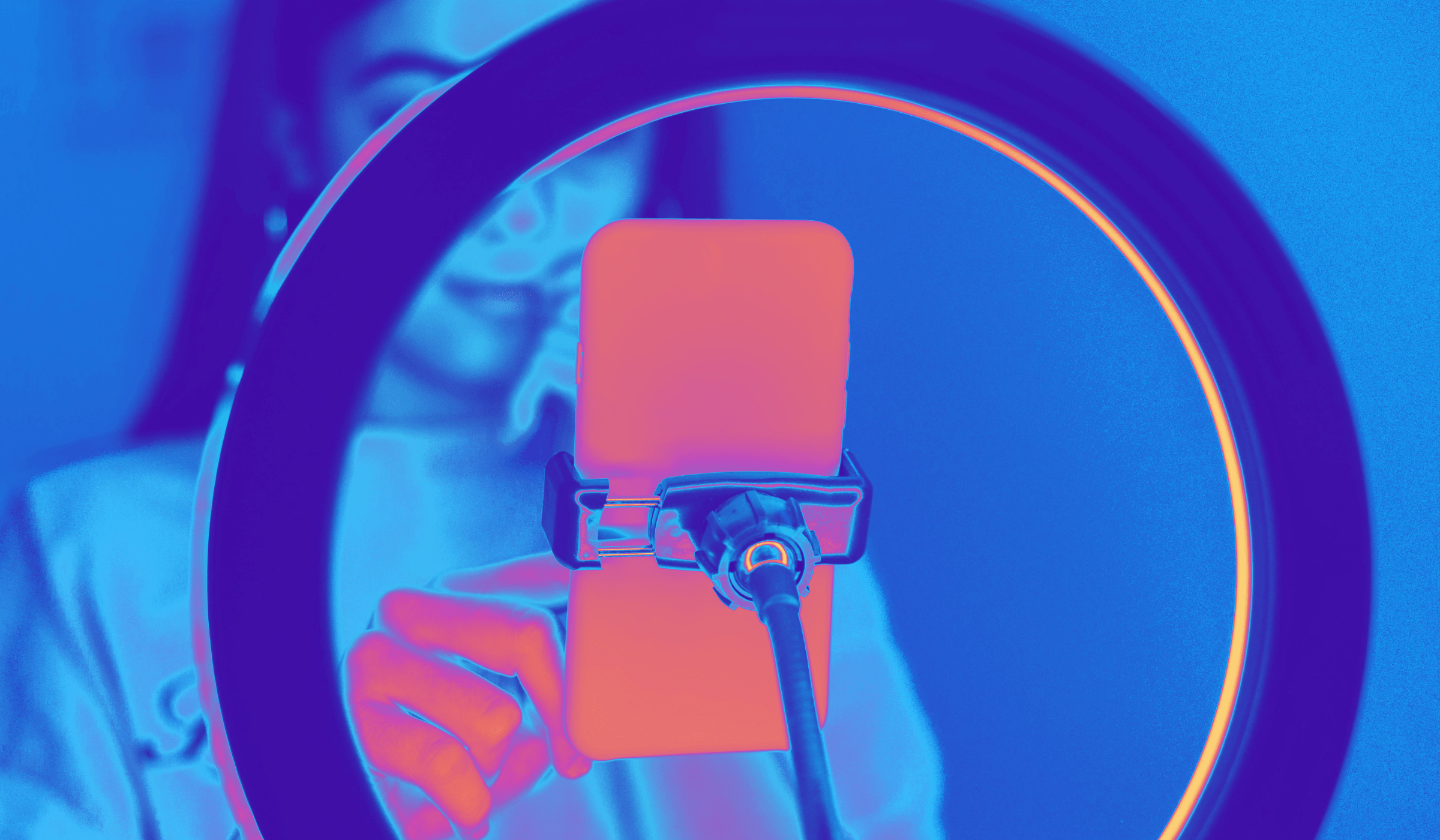
It’s impossible to scroll through TikTok without hearing the word “girl.” Last year, there was the hot girl walk (San. Pellegrino, AirPods Max, Alo skirts) and the girls dinner (Diet Coke, truffles, Lesser Evil Himalayan pink salt organic popcorn). There was the clean-cut girl (TIGI wax sticks, gua sha, Glossier You perfume) and the rock star girlfriend (red bomber jacket, Dr. Martens, Valentino liquid liner). There were larger-than-life personalities like the tube girl who rocks on the subway and the interview girl who’s known for being painfully dry. And there were adjectives of their own: vanilla girl, coconut girl, Akubi girl, K girl, the girl who bought the pickle sweatshirt, the girl who bought the Skims dummy jumpsuit, white swan girl, black swan girl, girlie girl.
But one thing remains constant through every iteration of the internet girl: the list of products you can buy to become that girl. Hot girl walks require HOKA shoes and a matching athleisure set. Chains serve girl-only dinners. Clean girls follow branded skincare routines. And even Tube Girls have started selling lipstick. You can’t be any type of girl without monetizing it, and you can’t follow trends and creators without buying what they’re selling.
These girls—the epitome of online popularity, but above all, relentless consumption—are constructed in such a way that material goods are as central to their identities as their actual interests. We read about “17 Products to Help You Achieve the Clean Girl Aesthetic,” and we buy “Wellness Girl” probiotics, hot pilates subscriptions, and sea moss (instead of going to bed earlier). We invest in products because we’re told we can buy an identity. Online and offline, we can be that girl.
But why is the internet targeting these advertisements at girls? Why does online girlhood make consumerism a gaudy joke, inviting Amazon storefronts, product placements, aspirational wish lists, and slang terms like “girl math”? Is retail therapy a distraction from bigger things? These articles may not give us definitive answers, but they can start a conversation about what girlhood looks like on the internet today and the price tag we place on it.
Here’s what we know about the Dyson Airwrap: It’s a tool for curling hair. It was released in 2018. It costs $600. And along with its Supersonic hair dryer, cordless curling iron, and other hairstyling appliances, the Airwrap accounts for a third of Dyson’s sales in the US market.
The Airwrap belongs to a specific group of gadgets targeted at girls and women, writes reporter Amanda Mull. These gadgets are all designed to simplify tasks: the Airwrap simplifies haircare, the electric scrubber simplifies cleaning, the red light therapy simplifies anti-aging (or skin care, if you want to call it that). But what do these gadgets actually promise?
Most of these new gadgets marketed to women make something, to some extent, easier, usually meeting certain beauty or household standards. By reducing the time and skill required to style a perfect hairstyle or the effort required to keep bathroom fixtures sparkling, potential buyers have the possibility of finally getting it all done. Perhaps most importantly, these gadgets offer the possibility of relief, if not from the standards themselves, then from the feeling that meeting them all is impossible.
Gadgets do make our lives easier, or at least, they help us flaunt it. When the girls on our screens have sparkling clean kitchens with influencer-approved cleaning gadgets and perfect curls with the latest beauty tools, you can’t blame us for adding these items to our carts. But clean and perfect become the norm, and our gadgets get more and more advanced, and what we expect from them and from ourselves—newer, better versions—becomes an unreachable standard.
Could there ever be a better example of packaging the idea of a girl into something that can be bought and sold than a primetime show in 2023? BarbieWriter Delia Cai doesn’t think so: We’re all obsessed with an idealization of girlhood—the sleek, shiny, perfect Barbie doll and the commercial means by which it is achieved (pink clothes, TikTok filters).
At least some of this enthusiasm is due to the fact that the reality of girlhood is a far cry from Barbie: There’s very little bravery or innocence about it, very little empowerment that isn’t tied to the volatile impulses of the internet.
The irony, of course, is that while such ignorance is the appeal of this fantasy of girlhood, it is the kind of enforced ignorance that actual adolescent girls face in real life. … At the moment, the “girl power” tenets of a generation ago have withered into the reality of widespread depression among teenage girls whose lives revolve around the whims of complex algorithms, and whose digital selves more or less depend on them to perform their girlhood the right way.
If our status as girls were relegated to arbitrary digital standards that dictate how well we can do as girls, Kai says, there would be no Barbie Dreamland left, so we benefit from an on-screen Barbie.
In her column, Freya India has written about the “Instagram face,” a filter- and editing-driven take on social media beauty standards. But India says it’s not just about looks: Personality It is slowly converging into a mass-commercialized destination: a marketable girl who buys into a subculture and dutifully peddles its wares.
E-girls, for example, have the same blush, freckles, eyeliner and mannerisms. Trad wives behave and look the same online, wearing the same clothes from the same brands and promoting the same product lines. So do cottagecore influencers, woke people and edgy creators. Our “personalities and interests,” India argues, trap us in internet subcultures, giving us memes, videos, TikToks, tweets and ads that are nearly identical to the next user’s.
It’s as if every vestige of individuality has been codified, mainstreamed and assimilated into online identities like “cottagecore,” “Instabuddies,” or “tradwives,” each with their own list of products, outfits, and personality traits. Our subcultures are neither organic nor subversive; they’re commodified and marketed.
But these apps and algorithms are increasingly shaping how we look and think, inseparably linking our personality to the content we consume, the products we buy, and the identity we see on our For You pages. The marketplace is so ingrained in our lives that it no longer just determines what we like or what we should buy, but who we are.
How are girls feeling these days? Journalist Jessica Bennett reminds us that the status quo is… bleak. 2023 could have been the year of the girl. Beyoncé, Barbie, Taylor Swift. “Girls’ dinners” subverting expectations of a full-course meal at home. “Rat girls” running wild independently of the patriarchy. But Bennett suggests that it might all have been superficial.
Of course, the idea of girls’ generation was probably just a fantasy all along… but they’re insecure. On platforms that have proven toxic to them and where they’re frequently harassed, they’re constantly bombarded with conflicting messages about how they should dress, look, act, and be. In the real world, even as so-called body positivity is celebrated and constant reminders (usually in the form of product placement) that you’re enough, girls face eating disorders and body dysmorphia at record rates. They wear anti-aging products designed for middle age.
Bennett argues that celebrating girlhood is a safe solution. It’s much easier to highlight online connections than to acknowledge that girls are lonelier and more isolated than ever. It’s less painful to buy skin care products than to face up to the fact that internet filters have warped our notions of beauty to the point of body dysmorphia. But when girls sway to the beat of the Eras Tour, BarbieThey can believe for just a moment that they can become the girl in the content they consume.
What do Strawberry Girl, Cherry Girl, Vanilla Girl, Tomato Girl, Coconut Girl, Coastal Cowgirl, Rat Girl, and Downtown Girl have in common? Maybe they’re all girl trends, but writer Rebecca Jennings thinks they’re something else entirely: marketing campaigns.
The concept of girlhood, Jennings writes, is easy to sell because being a girl is fun. Girls are free from the requirements of being wives and mothers — that is, women. Girls’ stories are their own.
If being spouse- and child-free is a requirement of being a girl, it’s no wonder so many modern women refer to themselves as such. More and more are freeing themselves from the assumption that traditional femininity is something to aspire to. “Ladies’ dinners” are sad. The phrase conjures up images of a tired woman, after feeding her spouse and kids, eating the last remaining morsel of food before shoving the plate in the dishwasher. Nobody wants to eat “ladies’ dinners.” “Girls’ dinners” are decidedly fun.
Women on TikTok know what they’re doing when they call their dishes “girl dinners” or coin terms like “hot girl walks.” They know what trends have been popular in the past — VSCO girl, e-girl, “soft girl” — and they know that clickable, easily understood names have everything to do with why people care. They know that the highest-grossing movie of the year and a music tour that may become the highest-grossing of all time are focused on the very challenge of 30-something women experiencing their own version of girlhood. They know people will always be interested in what girls do, because girls are less likely to be looked down upon because they’re not yet women. Girls are more available for consumption, and there’s more available to them.
Zoe Yu is a writer from Texas. Find her on Twitter here.
Editor: Carolyn Wells
Copy Editor: Krista Stevens