

The woman appeared upset in the Instagram video. Her face was swollen and bruised. Sitting next to her husband, she began narrating her ordeal.
“Something happened to us that I wouldn’t wish on anyone,” she said in Spanish, with English subtitles. “Seven men raped me, beat us and robbed us.”
In a since-deleted video, the woman said the assault on her and her Brazilian partner, a travel blogger, happened late Friday in a forest in eastern Jharkhand’s Dumka district where they were camping on their way to neighboring Nepal. said. She said seven men held a knife to her throat and took turns sexually assaulting her.
The couple, who documented their trip for more than 200,000 followers on their Instagram account, were spotted by a police patrol car and taken to hospital, where the woman told doctors she had been raped.
Jharkhand police confirmed the incident and arrested three men over the weekend. On Monday, police announced they were searching for four more suspects.
The Associated Press typically does not identify victims of sexual assault.
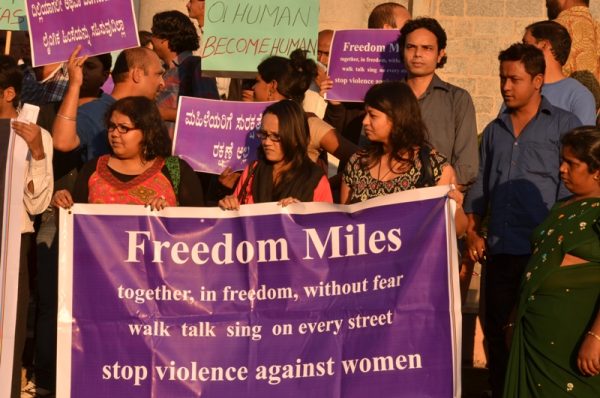
The incident triggered nationwide protests against a decades-long struggle to curb one of India’s most prevalent problems: the rise in sexual violence against women.
Reports of horrific sexual assaults against women have become commonplace in India, with 31,516 rape cases recorded by police in 2022, an increase of 20% from 2021, according to the National Crime Records Bureau.
The actual number is believed to be much higher due to stigma against sexual violence and victims’ distrust of police. Women’s rights activists say the problem is particularly acute in rural areas, where victims of sexual assault can be shamed by their communities and their families worry about their social status. It says that there are.
“Victims are often further victimized by the insults and it becomes very difficult for them to report the crime to the police. In these cases, women find it best to remain silent.” said Maryam Dhawale, a rights activist and general secretary of the All India Democratic Women’s Association.
Rape and sexual violence have been in the spotlight since the brutal gang rape and murder of a 23-year-old student on a bus in New Delhi in 2012. The attack sparked mass protests and prompted lawmakers to order the creation of fast-track courts for rape cases and tougher penalties.
The rape law was amended in 2013, making stalking and secretly filming crimes and lowering the age at which a person can be tried as an adult from 18 to 16.
Despite strict laws, human rights activists say the government still does not do enough to protect women or punish attackers.
“In many cases, rape case investigations are messed up by the police and timely evidence is not collected. These cases go on for too long without a conviction and the perpetrators go free,” Dawale said. Ta. He said convictions remain rare in India’s gridlocked criminal justice system, and cases often languish for years.
According to several government reports, the conviction rate in rape cases has remained below 30 percent in recent years.
A rape incident committed by a foreign tourist has garnered attention, and the issue is attracting international attention. In 2022, a British tourist was raped in Goa in front of her partner. Earlier this year, an Indian-American woman said she was raped in a New Delhi hotel.
In January, the Supreme Court reinstated life sentences for 11 Hindu men who raped Muslim women in deadly religious riots two decades ago. They were released in 2022, when they were placed with flowers by their families and members of Prime Minister Narendra Modi’s Bharatiya Janata Party.
Last year, female wrestlers staged a protest demonstration against the president of the wrestling federation, accusing him of repeatedly molesting women. After months of protests, Brij Bhushan Sharan Singh, a prominent member of Modi’s party, has been charged in court with charges of stalking, harassment and intimidation. Mr. Singh denies the charges.
Dwale said that despite the media attention that high-profile rape cases receive, a culture of neglecting sexual harassment and violence against women remains prevalent in India.
“We are continuously protesting and sometimes working to register a single case. That can’t be the case,” she said.