

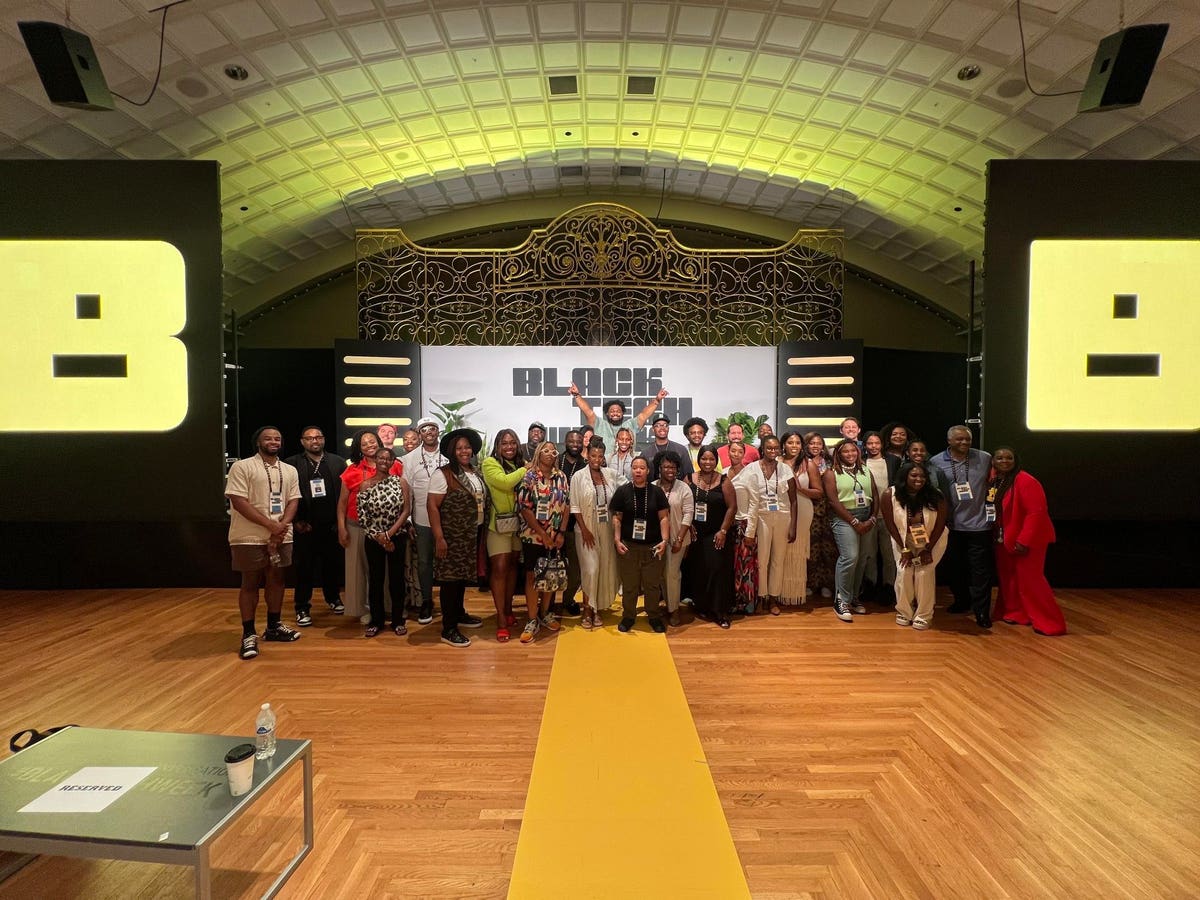
Black Tech Week 2023 in Cincinnati, Ohio
black tech week
Black Tech Week brought its networking event for entrepreneurs, investors, tech talent, and creators to Detroit for the first time last fall for a weekend of learning and bonding.
The conference also highlighted overlooked strategies in human resource development. The industry often focuses on people working for established companies that invest in recruitment and retention strategies to fill short-term gaps in the local economy. However, entrepreneurs are also a source of new ideas, products, and services that lead to job creation and economic growth. Most entrepreneurs start out as owner-managers, co-founders, or small businesses (10 or fewer employees). These small businesses have created nearly 13 million net new jobs over the past 25 years, accounting for two-thirds of the jobs added to the U.S. economy.
Governments have an important role to play in fostering entrepreneurship and creating an environment that supports and encourages it. The need is urgent, as the 2010s were in many ways one of the least entrepreneurial periods in the country’s recent history, according to the Economic Innovation Group.
The nonpartisan public policy organization reached this conclusion after analyzing the U.S. Census Bureau’s Business Dynamics Statistics, which provide annual indicators of business start-ups and closures and job creation in the economy. According to the study, the country’s entry rate in 2019 was 8.2%, almost unchanged from 2010 and well below the 10.1% in 2006, before the 2007-2008 global financial crisis.
One of the biggest challenges entrepreneurs face is access to capital. Start-up companies founded by women and people of color tend to have an even harder time finding funding. As of 2020, only 1% of venture-backed startups in the United States had black founders, according to a report by RateMyInvestor, a website where founders evaluate venture companies.
The Cincinnati-based Lightship Foundation is trying to change that. A year ago, the foundation, which aims to foster growth for minorities within the innovation economy, acquired Black Tech Week, which has been building a minority tech ecosystem by hosting a festival in Miami since 2013.
Black Tech Week is all about inclusion, building community, and embracing diverse perspectives. One of the co-founders compared a holistic approach to eating from the garden, rather than just getting a piece of the pie, as is often said in business. The pie will eventually run out, she said, but the garden is ripe for growth through seeds planted for others.
Candice Matthews Brackeen, founder and CEO of the foundation, said Lightship moved Black Tech Week to Cincinnati because it was an opportunity for Black technologists in the Midwest to get involved. He said it was because he wanted to give. Black Tech Week is establishing a presence in other mid-sized cities like Detroit, as the venture industry has long overlooked underrepresented founders in the Midwest. she says.
Building on the success of Black Tech Week, Cincinnati is building an innovation ecosystem where clusters of businesses, startups, and academics drive new development and job creation. The City of Bracken recently announced that Cincinnati will remain the conference’s host city for the next three years.
Even before Black Tech Week took place in Detroit, a community-driven movement led by entrepreneurs Johnny and Alexa Turnage had begun to increase Black tech representation in the metropolitan area. Earlier this year, the Detroit couple met with several other Black tech founders. What started as a group of about five people turned into a weekly gathering of hundreds of people and became known as “Black Tech Saturday.” The opportunities this presents for Black tech founders are gaining national attention, and Black Tech Saturday is expanding its model to diverse cities like Baltimore and Miami.
This popularity shows that Black and Brown entrepreneurs are eager to better represent themselves and their distinct needs within the existing entrepreneurial ecosystem. The Turnages invites guest speakers, hosts workshops, and connects people with mentors. A growing ecosystem of Black founders in Detroit and across the Midwest is seeing success in securing funding. For example, JustAir Solutions received his $33,000 from the Michigan Central Scale Fund, a public-private partnership. JustAir is installing air quality monitors in metro Detroit to track pollution and provide real-time data to residents.
State and local government and business leaders should pay attention to these community-based movements if they want to grow entrepreneurial activity in their cities. They provide entrepreneurs with a structure with the consistency of weekly or monthly meetings, and the mutual support and networks they build are the foundation of a successful business.
follow me twitter Or LinkedIn.