


aAccording to DuraPlas’ 2024 Workplace Safety Culture Report, nearly half of American workers would consider taking a pay cut to work for an employer with a better safety culture. DuraPlas used third-party research platform Pollfish to survey 1,000 U.S. workers ages 18 and older on whether they incorporate safety culture into new job evaluations.

After identifying themselves as either blue-collar workers or white-collar workers, participants were asked the following questions:
- If you are willing to take a pay cut to move to an employer with a better safety culture.
- Whether safety culture is considered when considering new job opportunities.
- Whether you have ever turned down a job because of workplace safety concerns.
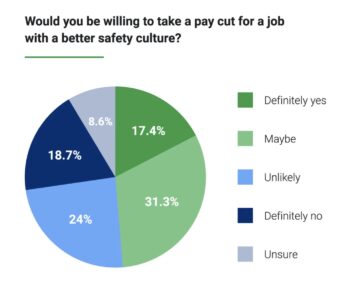
Based on our findings, American workers are willing to pay less to work for employers that embrace a culture of safety.
Key findings from the survey include:
- While 34% of blue-collar job seekers are very likely to ask about safety practices during an interview, only 26% of white-collar job seekers expressed the same likelihood.
- For both blue-collar and white-collar workers, nearly half (48%) of respondents said they would consider taking a pay cut for a job with a better safety culture.
- There are significant gender differences. 56% of men surveyed are more likely to take a pay cut compared to 42% of women.
- The majority of workers say they feel more satisfied (82%) and more productive (79%) in jobs with a strong culture of safety.
- Of those who said safety was important when taking a new job, only 39% had actually turned down a job due to safety concerns.

Obviously, prospective employees want to make sure they are safe in their new workplace. If the company or organization you hire hasn’t made it clear that they value safety, they should do so, advises Paul Phillips, president of DuraPlas.
“Culture is conveyed through actions as well as words,” Phillips said. “In other words, if you are an organization with a true safety culture, it will come across as more than a poster in the break room or a whiteboard counting down safety days on the manufacturing floor. This is communicated through the maintenance you perform and the equipment you provide to your employees.
What are the most common causes of workplace fatalities?
Investigations into serious injuries and fatalities have focused on risks to transportation, oil and gas, manufacturing, mining, and utility workers. read more…
“Our research shows that employees are paying attention to these things, asking about them during the job search process, and are willing to sacrifice pay for a workplace that prioritizes safety. “We found that the
You can read the full report here.