


Caroline Johnson, Head of Projects and Facilities at Hampshire Cultural Trust, talks about how the organization’s work to improve climate literacy has created a movement for holistic sustainable change. She believes that by fostering internal engagement at all levels of teams, cultural institutions can fulfill both their individual and team commitments to protect the planet.
Caroline joined Hampshire Cultural Trust in 2019 with a lifelong passion for sustainability and many years of experience. One of her first tasks after joining the organization was to offer to rewrite the trust’s environmental policy. She admits the job was harder than she expected. .
“We expected it to take a few days, but a steering group comprising representatives from all departments across the trust contributed to the development, which turned out to be an approximately 18-month project. That included developing an environmental action plan. I am currently responsible for projects and facilities, overseeing the implementation of our environmental strategy.”
One of the key outcomes of these efforts is the introduction of the Carbon Literacy Project’s Roots and Branches toolkit, which aims to accelerate the museum sector’s ability to respond to the climate crisis.

Carbon Literacy Project: Making sustainability a team effort
Despite early commitment to sustainability by both the board and management, progress within the trust has been slower than initially expected.
All this has changed with the Carbon Literacy Project, which coordinates climate action and education at organizational, sectoral and individual levels. Caroline explains:
“The Carbon Literacy Project has advanced our efforts internally. It has spread across the organization and created conversations across all disciplines and departments about what steps we can take to improve sustainability. Ta.”
The success of this project highlights a common problem in commercial environmental planning: a top-down approach alone is not enough.
“Sustainability is a united effort. It’s everyone’s actions that create change, so a top-down approach alone won’t cut it. Communication is one of the most difficult areas in any project. We use it to get people on the ground involved in venues, because they are the ones who close them down, switch them off, plant them and encourage visitors to think about biodiversity. ”

knowledge is power
Our first staff survey in 2020 found that the majority of staff and volunteers wanted the Trust to do more to tackle climate change, so Caroline and her team set their direction and focus on the cause. I started on that.
“The vast majority of people understand that there is a climate crisis and want to help, but they don’t know where to start. Our climate literacy course addresses this, , and provide a thorough understanding of how to bring about change.”
Although the sustainability journey is still in its early stages, the steps taken by the Trust are already having a positive impact.
“Knowledge is power, and climate literacy helps us understand which actions will make the biggest difference. It’s about empowering people, and that’s the best way to engage people.”
Carbon Literacy Action: Going for the Gold
The Carbon Literacy Project creates courses for a variety of sectors, from local government to the NHS. One such project, Roots and Branches, was aimed specifically at the museum sector and provided the Trust with a solid foundation for its sustainability efforts.
“We had a core team trained through the Southeast Museum Development Program deliver the training. From there, we ran the course in-house. The course is updated regularly and tailored to our unique case studies. You can also customize it.”
The team’s internal training team began delivering courses to external department colleagues on the 4th.th December: Carbon Literacy Action Day. The Trust has already won a bronze medal in the course’s ranking system and is aiming for even greater heights.
Caroline said: “While we believe we meet the criteria for silver, we would like to continue toward gold. We will make a decision in the coming weeks.”
Our training is now open to others in the museum sector. If you are interested, we encourage you to get in touch to find out more about the online and face-to-face courses we offer.
contact [email protected] To find out more.
Switch off: Make personal and team commitments
Carbon literacy projects come with homework for relevant agencies. Users are asked to pledge sustainable behavior both individually and as a team. After implementing all the pledges, the project will reveal how much of an impact all the pledges combined could have on the environment.
“We are tracking our own pledges so that we can support people if they are hitting a wall. We are also identifying where some people are making similar pledges and linking them to Link and enable collaboration. This helps create a sense of empowerment and can generate action within different areas of the organization that could not be achieved with a top-down-only approach. can.
“You haven’t forgotten your vows. It definitely gives you the motivation to make a change.”
The team is already realizing significant benefits as a direct result of these pledges, particularly in the switch-off campaign launched in May 2023.
“Recyclable ‘switch off’ stickers are placed on things like electrical outlets and light switches. In the first three months of the project, electricity usage was reduced by 17% compared to the previous year. It was just him pushing for a week and then letting the team work on their own.
“Seeing the results for each venue creates a sense of competition. Some people have reduced their electricity consumption by as much as 38% as a result of the switch-off campaign.”

Green Team: Advocating for climate action
The team was established in 2022 as a starting point to encourage staff to implement similar plans. The aim of this Green Team was to improve and improve sustainability and biodiversity by enabling change and action across the Trust.
The team’s work forms part of the Trust’s environmental action plan to engage stakeholders in climate change advocacy.
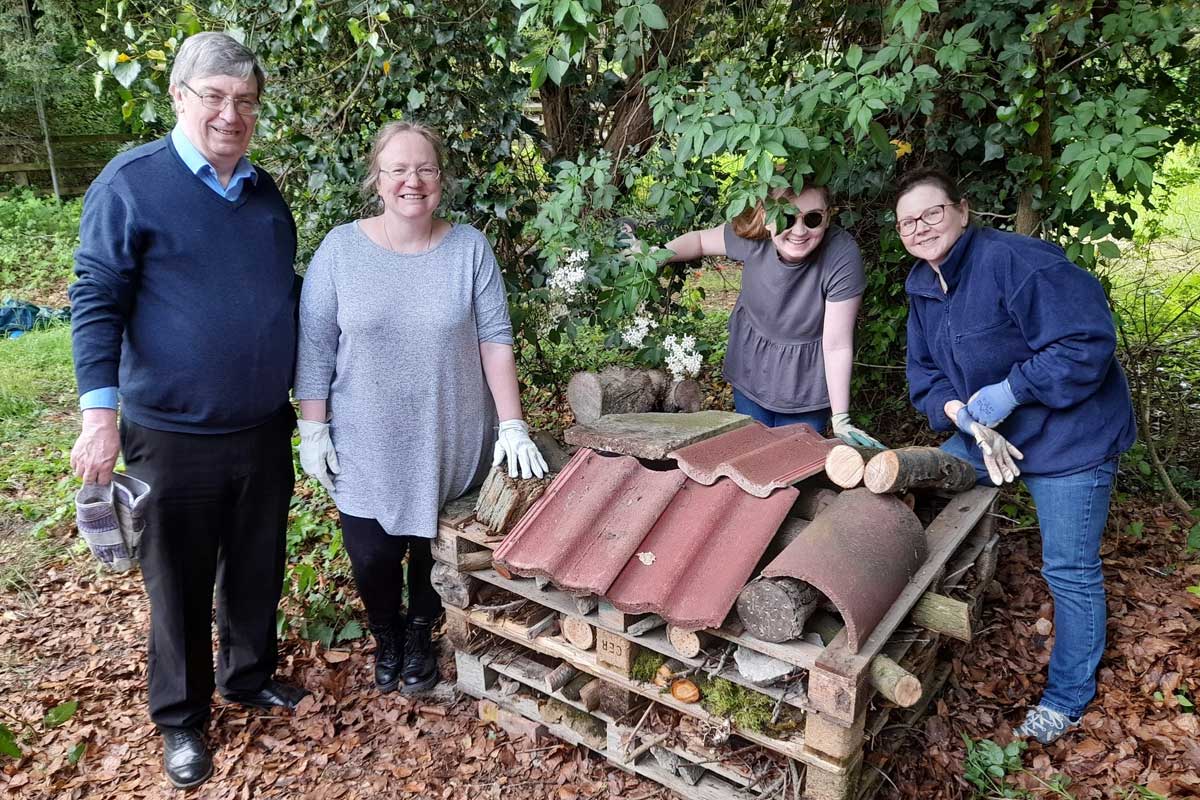
Caroline said: “The team is now starting to go to venues and network in order to build more green teams across the organization. What started as a team of five at our headquarters has grown into a much larger group. They have led many initiatives, from EV bikes to gardening.”
Roadmap to net zero
Despite the government’s aim to reach net zero by 2050, the trust has set its own more ambitious target of net zero by 2030. Although Caroline said funding was a “major challenge” to the net zero roadmap, the results look promising. Just last year, the trust received sufficient funding from the University of Sussex to work with leading carbon accounting platform Greenly.
“It’s really hard to invest huge amounts of money in-house. We inevitably need to raise capital. But while the roadmap isn’t direct, we’re making great progress.”
Do you have any advice for other museums?structure is everything
By making climate action a team effort, the Trust embeds environmental sustainability into its mission and purpose, from board level to every job description. According to Caroline, this requires a strong structure.
“Structure is essential to implementing an environmental action plan. Initially, we had one environmental sustainability manager, but it was difficult to get everyone’s input.
“We now have departmental representatives instead, and everyone in the action planning group spends half a day a week, or two days a month, implementing the environmental action plan. It’s a great way to diversify. Sustainability is a team sport.”
Museum Next Green Museum Summit will be held from the 26thth – 27th It will take place in February 2024 and will feature inspiring ideas and case studies from sustainability champions in museums and art galleries. click here Book your tickets now so you don’t miss out.