

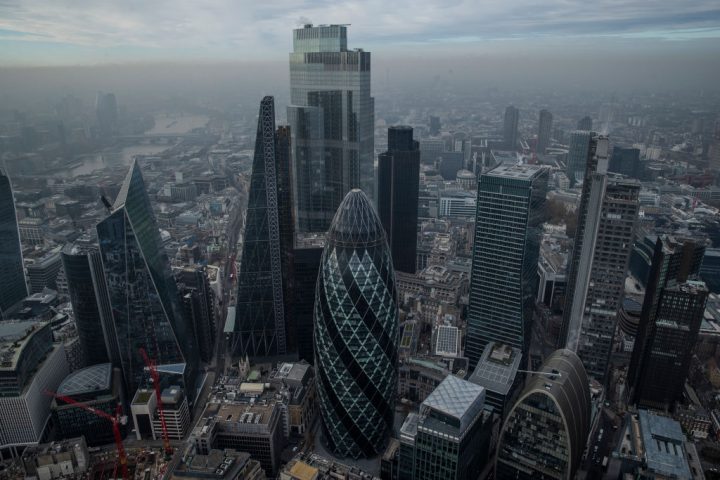
The city of London will be hollowed out. Bankers will have to retrain as hamburger chefs. Paris and Frankfurt will emerge as the twin centers of European financial markets, and London will become little more than a backwater. Of all the predictions made by some Remainers during Brexit, there was one that kept resurfacing. It meant that financial transactions would inevitably move to the other side of the English Channel.
However, an agreement was finally reached between EU leaders and member states that, surprisingly, will keep the City of London open for the next few years. Under pressure from France, the EU will force European banks to continue “clearing” in the UK, the complex but important process of settling financial market transactions in a way everyone trusts, according to Politico. It is said that he gave permission to do so. The process of “liquidation” was mandated after the 2008 financial crisis. London’s clearinghouse quickly became the most popular, as banks from all over the world sought to conduct transactions from start to finish in one place.
Even helping Britain was better than allowing Germany to assert power over the bloc’s clearinghouses
The EU could have used its regulatory powers to move operations within its own borders and eliminate some of the city’s lucrative businesses. Even better, if “clearing” moves to another city, there is a strong incentive for banks and brokers to quickly follow suit.
But ultimately, while some trades will have to be transferred to EU clearinghouses, most will be allowed to remain in London. France, somewhat unexpectedly, sided with Britain, fearing that if the business were relocated it would be in Frankfurt rather than Paris. That would make the German city, already home to the European Central Bank, a key hub for the entire continent.