

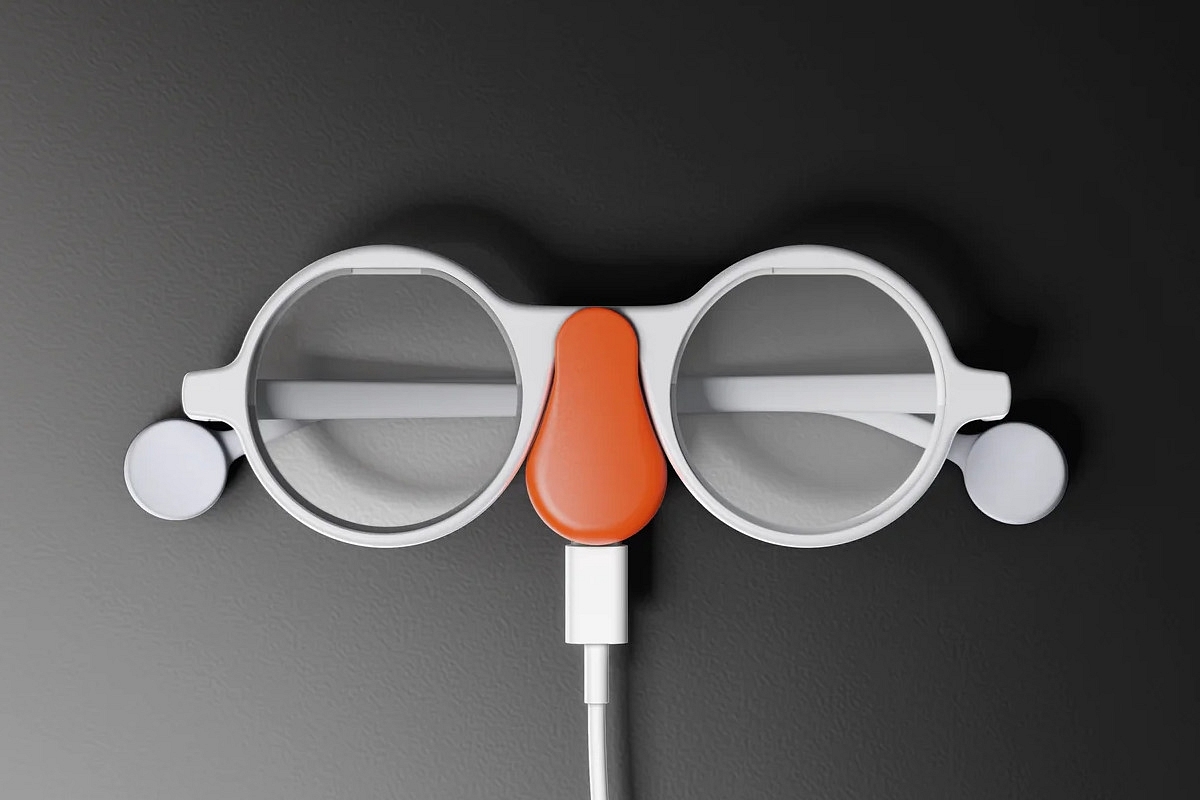
In recent months, a number of devices that combine artificial intelligence (AI) and new forms of consumer electronics have been introduced to the market.
While large companies are still perfecting their products, a significant number of open source hobby projects also show that open source and cheap electronics can still give big companies a run for their money.
“Open Source” refers to software or projects whose original source code is freely available and may be redistributed and modified. This allows anyone to see, use, and improve your code. That means you can improve the code and share your versions with others, just like a recipe that’s open to everyone. This collaborative approach often results in high-quality software that is free for everyone to use.
1. Amazing “frame” AI glasses
Turning glasses into a powerful AI gadget is genius. Brilliant Labs’ Frame is just that. The Singapore-based startup, led by former Apple employee Bobak Tavangar, describes its innovation as “reinventing glasses for the age of AI.” The frame was released on February 8th.
“Multimodal” AI glasses mean they can accommodate different types of input and output, such as text, visual, and audio, allowing them to identify, characterize, and reimagine visual objects, and translate text from one language to another. , which can run AI-based languages. Web search. See frame ad:
The completely open-source wearable technology features augmented reality (AR) optics with an organic light-emitting diode (OLED) display. Visual recognition and analysis is powered by ChatGPT maker OpenAI, translation is powered by OpenAI’s Whisper automatic speech recognition system, and web search is powered by AI startup Perplexity’s conversational search engine. All elements are combined by his Noa app after it is paired with the glasses.
Given the open source nature of its AI devices, Brilliant Labs welcomes anyone to “hack, build, and modify” them. Frame is open source under the MIT license.
Another product from Brilliant is a device that attaches to glasses. It’s described as a “pocket-sized AR device for imaginative hackers.”
Software developer Adam Cohen Hillel has put together an open source AI wearable device that is completely wearable. Adeus captures what you say and hear, transcribes it, and stores it on its own servers. You can then use the app to have a conversation and be able to respond based on what you’ve heard so far.
This wearable technology is a personal AI in the vein of Avi Schiffman’s , Rewind , and Humane , but with a focus on owning your own data.
“In the coming world, personal AI will be integrated into our daily lives, will be with us all the time, and will know us well as our closest friends. Together with Adeus, we’re working to ensure that’s what happens: ‘It’s completely open source and you own your data,’ Hillel said.
Adeus hardware consists of three elements: a mobile or web app, a hardware device, and a superbase.
Apps are a way for users to interact with personal AI and data through chats, and hardware devices are wearable gadgets that record everything said and heard and send it to the backend for processing. is. Supabase is the backend and database. This is where your data is processed and stored, and your chosen large-scale language model (LLM) is leveraged.
Hillel says Adeus “can be set up today rather than within months (oh, and it’s cheaper!).” This is a device by the manufacturer itself.
Hillel is also the maker of , an AI self-care companion that helps with mental health.
3. Humanoid robot for housework
Although this type of imitative learning is not new in robotics, it has rarely led to beneficial results due to limitations in mobility and dexterity. But the project team of Zipeng Fu, Tony Z Zhao, and advisor Chelsea Finn took imitation learning to a whole new level.
The result is a system called Mobile Aloha that mimics mobile interaction tasks that require two-handed, full-body control. Mobile Aloha is a low-cost, whole-body remote control system for data collection. “We use the data collected with Mobile ALOHA to perform cloning of the observed behavior…” the researchers wrote.
Demonstrating a particular task to a robot 50 times can increase its success rate by up to 90%. Examples of complex mobile operation tasks that Mobile Aloha can perform autonomously include cooking, using cabinets to store cooking containers, pushing chairs, calling elevators to enter, and using kitchen faucets to remove used food. This includes rinsing the pot.
That’s impressive. Watch for yourself various training videos. Have fun and watch your robot fail.
Mobile Aloha is as fast as a human, at 1.42 meters per second, and can carry a weight of 100 kg. The robot can reach vertically from 65 cm to 200 cm and 100 cm from the base.
Moreover, all its hardware and software are .
4. Set your car on autopilot using your phone
Imagine downloading software onto your phone and having it drive your car for you. This is possible thanks to Flowpilot.
Flowpilot runs on Linux, Windows, and Android-powered machines such as smartphones. The software was developed by Mankaran Singh, who works at Ola Electric and runs his FlowDrive.AI on the side, building advanced driver assistance systems with other engineers.
Mr. Singh published an article on X in May 2023 that attracted a lot of attention (990.2K views as of this writing). It shows him driving his Alto K10 car using his second-hand Xiaomi Redmi Note 9 Pro running Flowpilot.
FlowDrive provides industry-ready solutions for the market and is seeking collaborations with startups.
To learn how to run Flowpilot in your car.