

Some of us have obsessively long memories, and I am one of them, so I would like to cite two stories from the not-too-distant past that have some bearing on our unfortunate present.
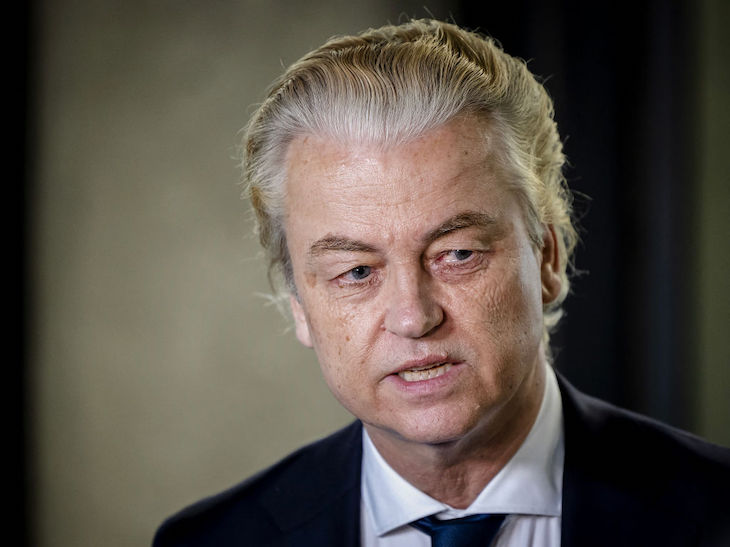
In 2009, Dutch politician Geert Wilders was banned from entering the UK by then Labour Home Secretary Jacqui Smith. In a letter explaining her decision, Smith (or rather her Home Office lawyer) wrote that Wilders’ “statements about Muslims and their faith threaten community harmony in the UK and therefore public safety.” Perhaps Smith was partly influenced by the possibility that the UK could violate Muslim rights if Wilders were to come to Parliament to speak (at which point he was expected to screen a film). Fitna) Thousands of angry Muslims might take to the streets of Westminster. Of course, that hasn’t happened since.
The continent is already full of leaders who say the left should have nothing to do with it.
This was a minor but significant diplomatic incident, with the then Dutch ambassador turning up at Heathrow airport to greet Wilders after he had been refused entry at the border and announcing that this was a serious affront to his country and to the principles of freedom of speech.
I was involved in this a little bit, and I remember Wilders being vilified in the British media as “far-right” and so on, but as I said to Smith and some of his allies at the time, “What would Wilders do if he became prime minister? Would he ban prime ministers and opposition leaders of European allies from entering the UK?”
Since then, Smith has disappeared into the world of podcasts, where her talents are much better suited than high-ranking office. But what of Wilders? He has gone from strength to strength. In last November’s Dutch election, his Freedom Party topped the polls and won the most seats in parliament. His centre-right rivals joined a coalition government and agreed to appoint a non-politician as prime minister (weird, I know), but Wilders is king of the Dutch political system.
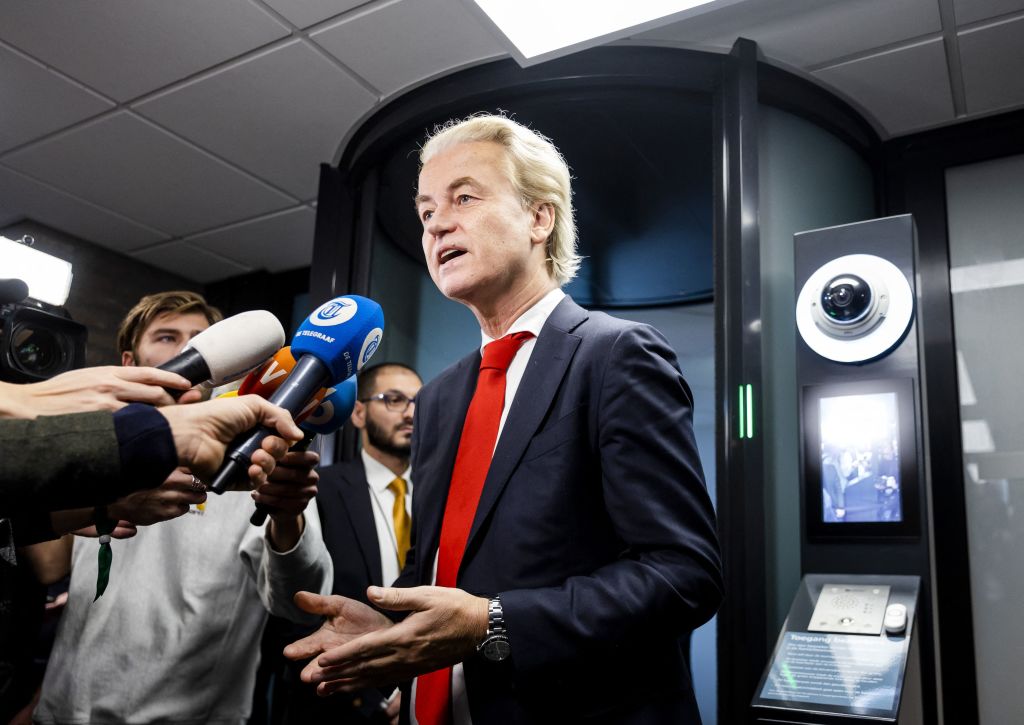
It wasn’t unpredictable. It happened because entirely predictable trends occurred: immigration continued out of control; Moroccan gangs continued to be a disproportionate source of crime; centre-right figures like Mark Rutte promised but failed to deliver; and there was a growing sense among the Dutch that they were being taken advantage of.
Let me take another glimpse into the distant past. In February 2020, the Israeli political theorist and academic Yoram Hazony organized a national conservatism conference, this time in Rome. Among the participants were Giorgia Meloni, Viktor Orbán and me. Matteo Salvini was also due to attend but could not make it. The only official from the UK to attend was the Conservative MP Daniel Kawczynski. And it caused an uproar back home.
During the conference, fellow Conservative MPs called for the party to investigate Kawczynski. Margaret Hodge and others called for Kawczynski to be stripped of his position as Conservative leader. Hodge, who appears to know a thing or two about European politics, said the conference he attended was “full of racists, homophobes and Islamophobes”.
Once again, I asked the candidates for Police Commissioner in Westminster: What would you do if these people were in power across the European continent? Mr Orbán is the elected leader of Hungary and has been for many years. Should a British politician be punished for simply attending a meeting that also includes the prime ministers of our European allies? If so, why?
There was no need to bring up Orbán to make this point: In 2022, Meloni surpassed Salvini in the polls to become Italy’s prime minister. Six months later, Meloni had risen to 10th place and met with Rishi Sunak, where the two praised the “strong friendship” between the two countries.
Fast forward a fair bit. In 2020, Conservative MPs are at risk of being stripped of their party leadership for being in the same room as Ms Meloni. Three years later, she is being welcomed into Downing Street. There is a lesson here that I have been trying to convey for years.
As this week’s EU elections seem likely to make clear, our continent is moving to the right – but not dangerously so. Guardian And the BBC needs to start writing its favourite piece about the “far right” being “on the march”. (Note, by the way, that the far left is never “on the march”, because of course they are a perfectly benevolent force.)
Already the continent is full of leaders who, those who would break the boundaries of the left, say we should not have anything to do with them. This demand will become harder to maintain, because there is a big joke of cosmic proportions that Labour will soon win a landslide victory. Keir Starmer would no doubt dream of doing business with left-of-centre politicians around the world, but there will be fewer and fewer people with whom he can do business. The funniest thing of all is that the latest opinion polls show that Donald Trump is the front-runner to take back the White House in November. This means that a bright Labour frontbencher like David Lammy, who has gone out of his way to insult the 45th President, will have to try to work with him, because if Labour pursued a so-called far-left pure politics, it would soon have no one to talk to.
The joy is already spreading. It was reported last week, for example, that Nigel Farage is already acting as a go-between for Lammy and Trump. How can the Labour Party unite its base in such a world? It needs Nigel Farage. Perhaps it will simply decide that its members must not be seen talking to foreigners under any circumstances.
The rest of the world is shifting to the right. Thanks to the historic incompetence of the Conservative Party, this country alone will give the left another chance. It will then be a monstrous anachronism, but it will be painfully entertaining to watch.