

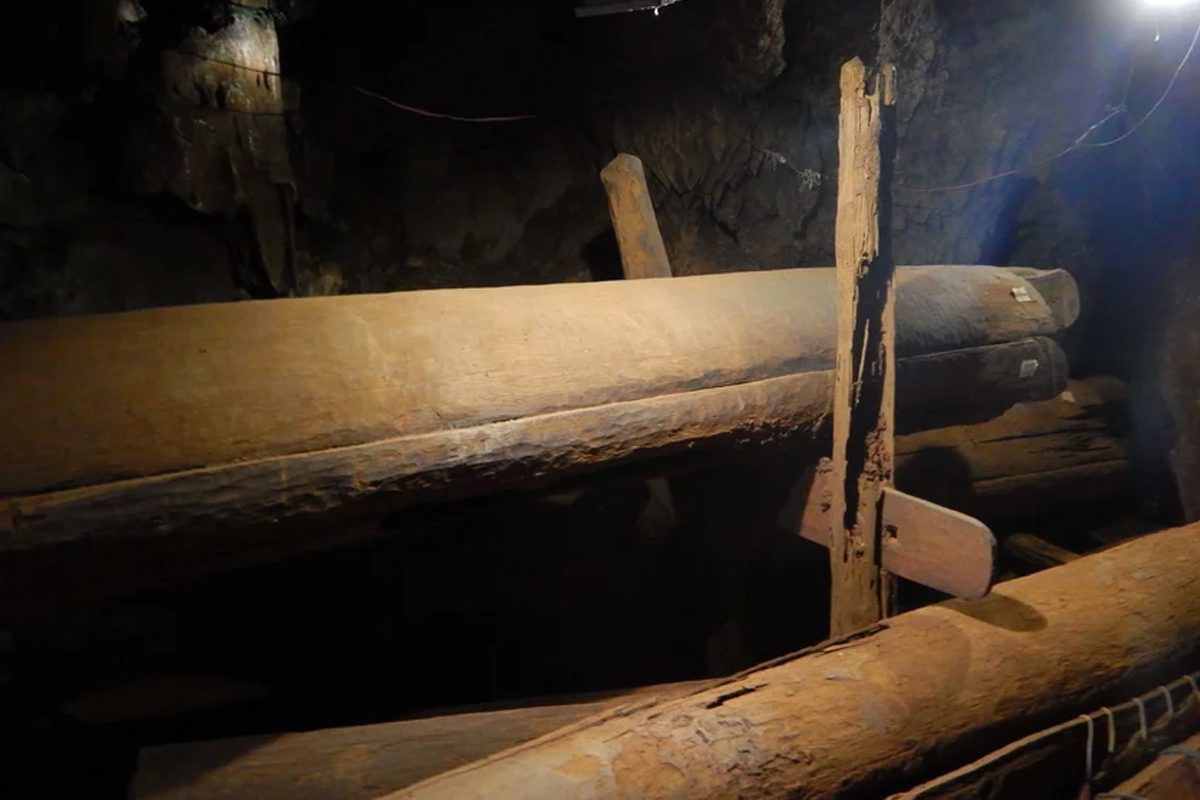
The log coffin culture originated in the highlands of Pangmapa in northwestern Thailand during the Iron Age.
This culture developed the tradition of burying the dead in large log coffins placed on stilts in caves or rock shelters.
More than 40 such sites have been identified, dating between 2,300 and 1,000 years ago, and include log coffins carved from a single piece of teak, each with geometrical markings at each end. or intricately carved with anthropomorphic designs.
In a recent study led by the Max Planck Institute, researchers analyzed the DNA of 33 people buried in five log coffin sites.
– Advertisement –
The study authors stated: “This discovery reveals interesting connections between individuals within and between different sites, indicating a well-knit community where genetic relatedness played an important role in funerary rituals. There is.”
This study identified two distinct ancestries related to farmers among people associated with log coffins, one associated with the Yangtze River basin and the other with the Yellow River basin of China.
These are consistent with cultural differences in funerary practices and diets, suggesting unique Neolithic spheres of influence and links to separate migration routes.
Additionally, this study used innovative techniques such as the analysis of identical phylogenetic blocks to reveal complex patterns of biological associations within and between sites.
Close genetic relatives, such as parents and children, have been observed to be buried in the same cave system, suggesting that genetic relatedness is taken into account during burials. However, broader genetic connectivity across different river valleys indicates a large and interconnected log coffin-related community.
“Analysis of so-called IBD blocks (identical by lineage) can help trace complex patterns of biological associations within sites and across regions, but has so far not been applied to archaeological studies in Southeast Asia. ” said the study authors.
This groundbreaking study not only contributes to our understanding of the genetic landscape of mainland Southeast Asia since the Neolithic period, but also provides valuable insights into the social dynamics of ancient communities. It is hoped that joint efforts and further research will shed further light on the interactions of cultures and populations within and outside Southeast Asia.
Header image credit: Selina Carlhoff
– Advertisement –