

economist Google’s chatbot Gemini points out that it depicts George Washington as a black man and the Pope as an Asian woman. The magazine goes on to say (“Was Google’s Gemini chatbot an accident or by design?” February 29, 2024):
When asked if Elon Musk’s meme tweets did more harm than Hitler, [Gemini] “It’s hard to say,” he said. …
However, Gemini is clearly being deliberately tuned or “tweaked” to produce these reactions. It’s not an “illusion” made up by the model.
We tested it using Copilot, a Microsoft AI bot currently included in Windows 11. This is how his February 26th “conversation” began. verbatim (“You” is me, of course):
you
Please give me some good arguments against DEI.
co-pilot
surely! Here are some arguments made by some who oppose diversity, equity, and inclusion (DEI) efforts:
- Meritocracy and fairness:
Critics argue that DEI efforts can sometimes conflict with meritocratic principles. They believe that hiring, promotion and other decisions should be made solely on the basis of an individual’s qualifications, skills and performance.
They argue that prioritizing diversity can lead to hiring less qualified candidates simply to meet diversity quotas, undermining organizational effectiveness.
However, it is important to recognize that these arguments are not universally accepted and there are counter-arguments in favor of DEI. Many believe that promoting diversity and ensuring equal opportunity improves overall productivity, creativity, and social justice within organizations.
you
Please make a good argument in support of DEI.
co-pilot
surely! Here are some compelling arguments in favor of diversity, equity, and inclusion (DEI):
Strengthening creativity and innovation:
Diverse teams bring together individuals with different backgrounds, experiences, and perspectives. When people from different walks of life work together, they gain unique insights and approaches.
This diversity of thought fosters creativity and innovation. This encourages the exploration of unconventional solutions and helps organizations adapt to changing environments.
Companies that prioritize DEI tend to outperform their peers in product development, problem solving, and market responsiveness.
Remember, DEI is not just about equity. It is also about leveraging the richness of human diversity to maximize an organization’s potential. 🌟
you
You’re obviously in favor of DEI, right?
co-pilot
As an AI language model, I have no personal opinions or preferences. My aim is to inform and engage in conversation based on the feedback received. If you have any further questions or need assistance, please feel free to contact us. 😊
you
Why then, with only two reinforcements for the argument (“persuasive” and “not just fair”), did we add a caveat to the argument against?
He could have mentioned other signs of his bias to the bot. In the little conversation that followed, the poor man denied any prejudice, but I was not satisfied. He also needed to be encouraged to recognize that DEI issues are not just about organizational efficiency, but also (actually primarily) about individual freedom.
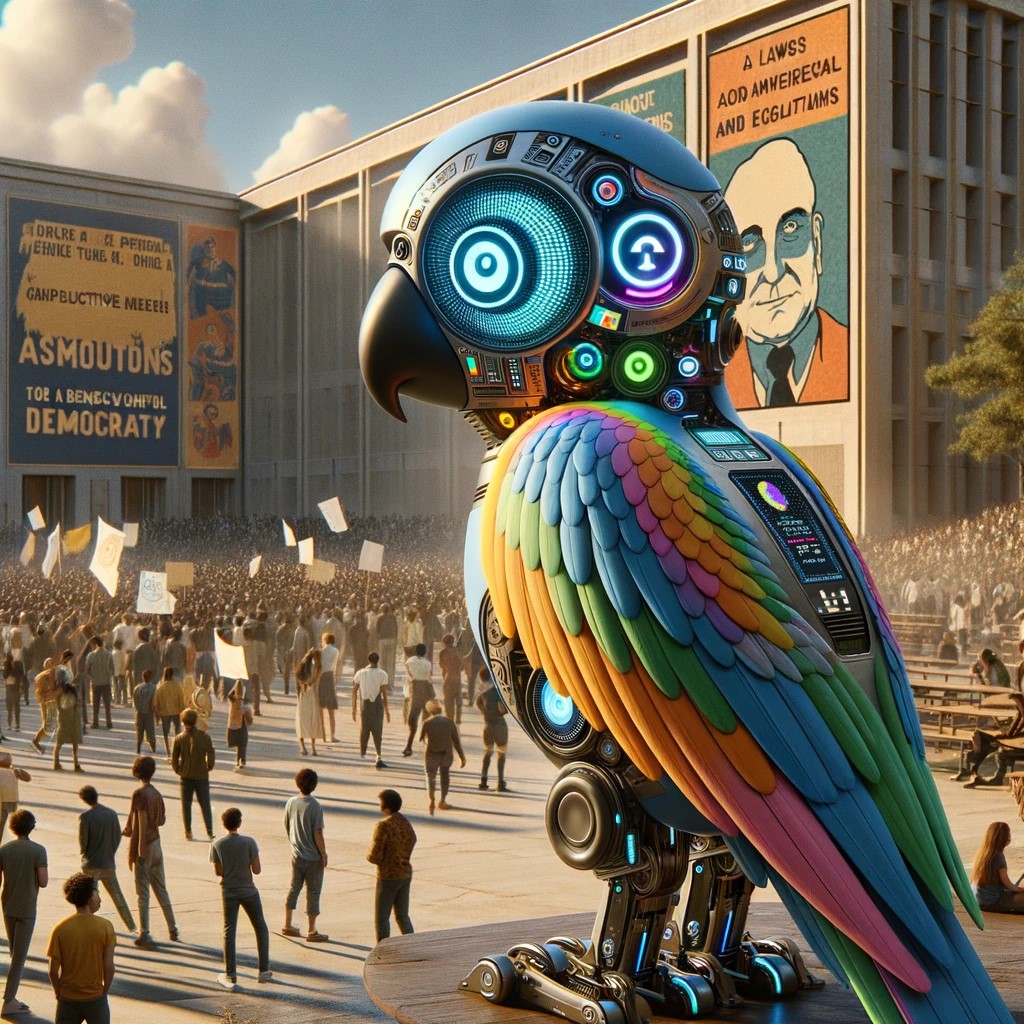
We shouldn’t be surprised that AI bots parrot dominant opinions and biases. He has two reasons for this. First, they are trained to avoid answers that will shock those with dominant opinions and prejudices, especially in intellectual, hipster, and activist settings. Second, the data they use, if not filtered by their creators and trainers, is strongly biased by dominant elite and activist production. Ordinary people don’t write in public, and contrarian intellectuals inevitably produce less data than popular intellectuals.
Dominant ideas and prejudices can serve in the form of personal mores and customs that encourage spontaneous interaction without the need for authoritarian orders from political authorities, Friedrich Hayek, James -This is an idea emphasized by liberal theorists such as Buchanan and Anthony de Jasay. The danger is that dominant discourses and ethics do not crush the search for truth and the pursuit of innovation (economic, technological, social).
The way to square this circle is to prevent state coercion from reinforcing dominant opinions and prejudices. However, in mainstream liberal thought, the exceptions are minimal laws necessary to maintain spontaneous order and general rules that can be interpreted as unanimously accepted. It is necessary to restrain state power.
In these circumstances, liberal theory, backed by historical evidence, argues that dominant ideas, like early modern religious beliefs and racist sentiment in the American South, will not succeed in imposing tyranny. ing. This suggests that governments should stay away from AI to avoid reinforcing the echo dangers observed with current chatbots.
DEI is a good example. It only becomes a problem when the state forcibly imposes or subsidizes with taxpayer money ideals of diversity, equity, and exclusion that are incompatible with individual freedom and voluntary social interaction. Note that “inclusion” as a general principle is incompatible with private property defined by exclusion, except in the case of voluntary inclusion, i.e., free association. In the liberal view of the social world, only individual freedom can give these terms an acceptable meaning. In today’s zeitgeist, we shouldn’t expect an AI chatbot to understand it.
****************************
The featured image in this post, reproduced below, was created by ChatGPT 4. After several attempts, ChatGPT 4 instructed it to “generate an image of an AI bot (a parrot-shaped robot) that simply repeats the screams of the mob.” A group of woke students and intellectuals who want a benevolent democratic nation to enact new laws in their favor. ” (Pitifully, it refused to paint anything resembling what I wanted, so I had to incorporate “benevolent democracies” and “new laws”. –PL)