

- Written by Munaza Rafiq & Nikki Fox
- bbc news
image source, BBC/Munaza Rafiq
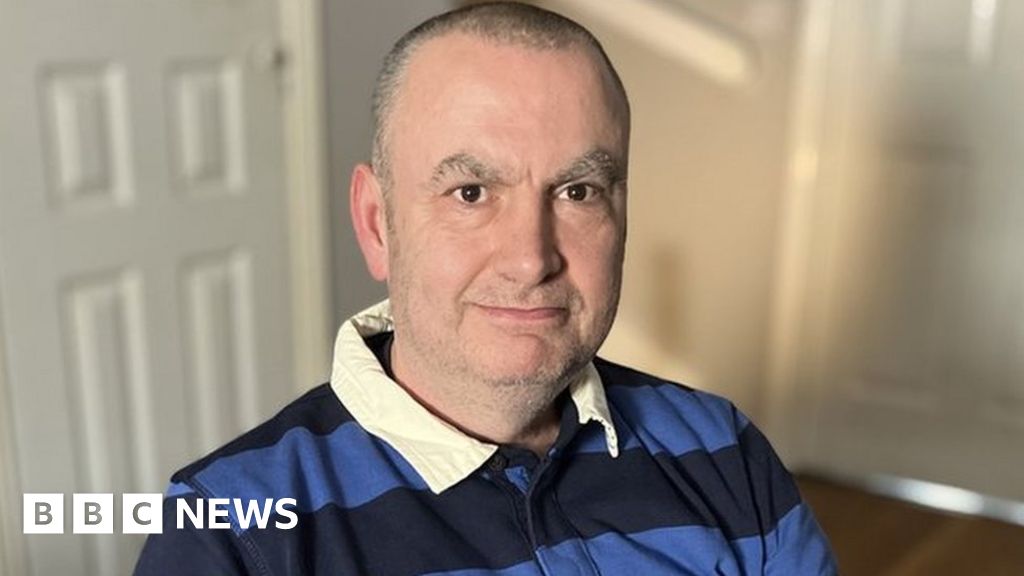
Adam Murphy says he wants the needs of autistic job seekers to be listened to.
Ambiguous interview questions and application forms are keeping autistic people away from jobs, a report has found.
One autistic person told BBC News that ticking more boxes on your application could help you get an interview.
The Government is asking employers to “support” all recommendations set out in Sir Robert Buckland’s report on autism in the workplace.
Autism is a developmental disorder that affects how people perceive the world and interact with others. According to Buckland’s review, there are around one million people in the UK diagnosed with autism.
Cheltenham resident Adam Murphy said he was ready to get back to work after more than 20 years as a full-time carer for his son Ryan, who has autism and learning difficulties.
“Frustrating” lack of support
But Mr Murphy, who also has autism, has so far applied for six jobs without success since October.
Because he has difficulty filling out the forms, he typically asks to discuss application questions with employers over the phone instead, but some workplaces are denying his requests, he said.
“Someone gave me feedback and said, ‘Everyone with autism is different, so you can’t help everyone, you can’t make reasonable adjustments for everyone.'” said Murphy.
Murphy said some helpful adjustments include having checkboxes in the application instead of free-form text boxes and being able to retrieve interview questions in advance.
He described requests for help being rejected as “really frustrating”, adding: “If we don’t have the basics in place to enable autistic people to apply in the first place, then we’re failing them.” .
Buckland’s review says there is evidence that autistic staff may be more productive than neurotypical staff for certain tasks.
This report shows how business and government can work together over the next five years. There are 19 recommendations listed for both, including:
- Sign up for the Employer Index on Neurodiversity and access guidance on designing inclusive processes
- Providing career advancement training focused on autistic staff
- Enabling career advisors to give appropriate advice to job seekers with autism
The Equality Act 2010 made it harder for employers to unfairly single out disabled people and ensured that there is a duty to make reasonable adjustments for those who are significantly disadvantaged because of their disability. Additionally, some companies are already advocating for people with autism in the workplace.
Since opening in 2019, Northampton’s cafe truck has helped more than 120 people with autism find paid employment or placements.
image source, BBC News/Munaza Rafiq
Cliff’s cafe is staffed exclusively by autistic people, like Jack and Alfie, who have become close friends since they started working together.
Former teacher Thomas Cliffe set up the social enterprise after feeling “angry” about the lack of job prospects for autistic people.
He trains and supports companies to make the workplace more accessible.
“It’s not a good idea to hire someone with autism; it’s a good business choice,” he says.
“Adjustments can give you a sense of security at work.”
Almost all of the staff at Cublinks in central London, one of the hundreds of companies that took part in Buckland’s review, are autistic.
One of them is Darcy Isaacs. She has been given various reasonable adjustments to help her with her work. She works part-time with a very flexible schedule, has access to a quiet room during the day, and uses her noise-cancelling headphones.
“The right adjustments can help you feel safe, valued, and able to contribute to the company,” she says.
“I’m not just a woman with a disability.”
Isaacs said the unique needs, skills, strengths and weaknesses of autistic people are as diverse as those of neurotypical people.
Darcy Isaacs says the reasonable adjustments have made the work experience much better.
Dr James Cusack, chief executive of research charity Autistica, said: ‘To enable our people to do their best and reach their full potential, including people with autism. , employers need to change the way they recruit and support staff.”
“This is not about reasonable adjustments for a few people. We all think and approach things differently, so this is about changes that benefit everyone.”
The review was commissioned by Mel Stride, the Work and Pensions Secretary, and backed by the additional employment support available under the Government’s £2.5 billion Return to Work Plan, it said: “and low-cost measures” were provided.
“Businesses and governments need to come together to make the necessary cultural changes,” he said.
Were you affected by the issues raised in this story? Share your experience by email [email protected].
If you would like to speak to a BBC journalist, please include your contact number. You can also contact us by:
If you are reading this page and cannot see the form, please visit the mobile version of the BBC website to submit your questions or comments, or email [email protected]. When applying, please enter your name, age, and location.