

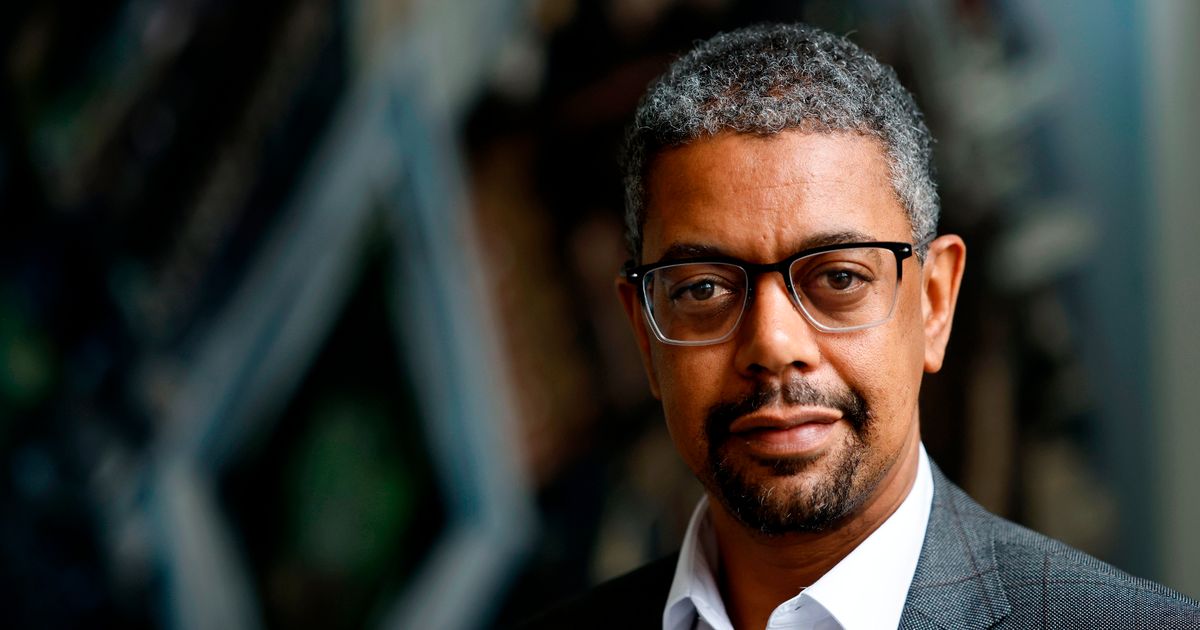
At times, Vaughan Gething’s rise in politics has seemed unstoppable. From student politics at Aberystwyth, where he was president of the guild of students, through working life as a trade union lawyer, a council seat in Cardiff, a seat in the National Assembly for Wales (as it was then called), then one of the most high profile roles in the cabinet, he has seemed to glide onwards and upwards.
The next step though, to the top job in Wales, is the hardest to achieve and his bid succeed Mark Drakeford as Welsh Labour leader and almost certainly the First Minister is the second time he has tried it. He also stood in 2018, coming second in the race to succeed Carwyn Jones. You can read the profile we wrote on him then here.
Yet, despite the inexorable rise, there have also been controversies. He’s currently embroiled in a row about donations to his campaign; he was heard swearing about a colleague in the Senedd chamber; and there was “chipgate” during the pandemic.
READ MORE: What the two men who want to be Wales’ next First Minister are promising
READ MORE: What questions would you like to ask the next First Minister of Wales?
Controversies perhaps come with the profile and history of a man who, as health minister during the pandemic, became a household name. And while his experience of being involved in a campaign is something he has that Jeremy Miles doesn’t have, it comes at that price.
Next week, the Covid-19 public inquiry will be in Wales, just weeks before the ballot closes for Labour members to decide who will be their next leader and Mr Gething is highly likely to be one of those facing the most questions from barristers.
From his point of view, the pandemic means he is better prepared than his rival to deal with the big job. He told the audience at his campaign launch in Newport. “I am the candidate who has been tested in the eye of the storm. Working alongside Mark, leading Wales through the pandemic was the hardest challenge of my professional life.”
But for others, his decisions in the pandemic are the reason he should not be First Minister. Just days before the pandemic was officially declared he stood and told a Welsh Government press conference he would go the Six Nations clash between Wales and Scotland, only for it to be called off, with hours to go.
After the incident with the chips, Mr Gething released a statement after that on social media saying he was out for his daily exercise, and said The Sun’s story was “really disappointing”. “Our five-year-old was hungry and we bought some chips – all within the rules”, he said.
Guidance at the time had stated that picnics for a “prolonged period” on a park bench were not allowed and the Welsh Government cabinet did not update that until after the story about Mr Gething. The backlash was immediate, and fed into the feeling that politicians weren’t following rules they expected others to follow.
As a parent, I tell him I can picture it unfolding almost second by second, a child tired of scooting demanding a snack, parents relenting, but as a parent what it also brought home to me was that the rules that were being made in a cabinet meeting weren’t being thought through about how they translated from theory to practice.
He says: “Actually there were parents who were there at the time, some of who messaged me, including someone who is in another political party who was saying, ‘I don’t see what you’re doing wrong, it’s quite refreshing to see you out with your family and knowing you’re doing the same stuff as us’. Lots of people that directly contacted me were people who said, ‘what is the matter with those people?’.
“In the end most of the people that came back were really positive. And there were people saying, ‘there’s a guy who swears in his chips, he’s almost normal’,” he laughs.
The backlash to the incident had a huge impact on his family. “It was really hard and it affected my wife was like ‘are we being watched all the time? Can we go out? Can we just be a normal family? Can we not have space to do that?,” he recalls.
When he turned to taking his son cycling in the empty car parks near the international pool in Cardiff, that was, partly, because it was an anonymous activity, they were just another a dad and his son out and about, with cycling helmets and sunglasses able to hide his face.
At the start of the pandemic his son was four, and with a wife as a senior member in a law firm, the parenting duties were split His day would start with early morning media rounds and end much later than usual, with some semblance of family life in the middle.
“The day was obviously much longer with probably lots more difficulty in it because the decisions you’re making have an almost immediate consequence. You don’t normally make a decision and think ‘in three to four weeks time, I will know whether there are more people who are still alive or more people in hospital, I will know whether there are more of our staff who are fit and well and able to do the extraordinary job we require with it’. And in all of this, you’ve got the consequence of your decisions are so much more significant and so much more immediate and it’s a real strain on all your normal relationships.”
The couple split the home-schooling teacher role between them. “The split was that I would do the math side and my wife would do the creative and the writing side,” he said. Asked if he was any good at maths, he replies: “I was good at maths and I do think I am good at math”.
“I was going out and getting coins from a money jar to go through what the coins means, to make it visual but it’s difficult there’s a real difference between at home, you’re someone else and it’s great to read a book with your child but actually that’s not who you are, you’re not supposed to be the person who’s substituting for the classroom teacher and it was hard. It was really hard for him to get used to the adjustment and [for] children of all ages, it was really difficult because it’s hard to understate how much that social interaction matters,” he said.
“That phase of homeschooling from January 2021 onwards. I was definitely doing all the homeschooling and there’s still really difficult choices. The amount of time I was spending in my son’s bedroom on calls at the start of the vaccination programme, in particular calls on the weekends.”
Explaining to a young child while you’re on your phone or locked in a study must have been tense, I say. “He was annoyed about ‘stupid Covid’ and ‘why can’t it be over’ but he sort of understood that I had a job to do but there was a frustration of, why can’t dad do this?. Why does he have to have a job.”
His son is now nine, and will soon be going into secondary school with his dad hopes, him as First Minister. “It is a balance,” he says. When I ask if his son’s feelings were thought of before opting the job, he repeats a piece of advice he mentioned last time we did an interview like this, ahead of his last leadership bid, that when he first entered politics, another Labour councillor told him he had to make sure he found a balance between work and family life.
To really add to the mix they also got a pandemic puppy, Sybil, a Scottish terrier.
When the rules were lessened to allow travel within Wales they went on holiday to Llyn peninsula and Ynys Mon “We got to see lots of fabulous places but you’re never just the three of us.”
READ MORE: The date Wales will have a new First Minister
READ MORE: How the race to become Wales’ next First Minister will now work as tensions build within Labour
On a break to Criccieth in August 2020 the family were aware “everyone is watching you”. “There are people on the beach, and nudging and pointing, people coming to say hello to you. Everyone was really polite but we’d had the experience with the chips, so actually there was a bit of ‘we need to be careful about what we’re saying and doing because someone could be taking a picture’.”
For the next year or so everyone who spoke to them was “really lovely, really polite”. On a trip to Nefyn he recalls being with family and a car passed them, and turned round to come back. “You wonder if that person is going to be unpleasant, but actually they were Plaid Cymru supporters and they wanted to say ‘you and Mr Drakeford have done a great job’.”
And he has reason for that hesitation. He has recalled a number of incidents where his race has led to threats, sometimes passive, sometimes active.
When his parents moved to Britain in 1976, his dad applied for work and was offered a job as a vet in Abergavenny, but once he turned up, the job offer was withdrawn. He returned the cheque he was given for his travel expenses.
Later in life, he shared with his children what had happened. The family went to Dorset instead where they were “literally the only black children in the village”. He returned to Wales, to go to university in Aberstwyth.
A racist incident towards him made the front page – more of that later – and he can tell the story of when out for dinner with his wife for Valentine’s Day when he was confused with a waiter.
The incidents have only stopped as his profile has become bigger and he’s recognised. But online it continues. The abuse to anything online will be “racist tropes disguised with polite language”. His motives and nationality questions and people will ask ‘why am I “playing the race card”.’
It is impossible for him, and his family to avoid that abuse online because it is “so pervading” but he says his son is still more interested in whether his dad will play football or cricket with him or play a game.
He will keep talking about race, he says, until there is equality. He believes the only reason he is not directly in the firing line of racist abuse or profiling any more is that people recognise him. But that wasn’t always the case.
I showed him an article I was sent from the Cambrian News, from October 1997, headlined “Aber student leader abused by racists” which details an incident which occurred in the town. In that, he is quoted as saying “the Welsh seem to have the idea that they have to hate the English simply because they are Welsh. I have been told that I cannot understand these feelings because I’m not Welsh, but it is the same as any other kind of racism. What they are saying is abusive because of somebody’s background”.
In turn, UCMC published a pamphlet which translates as “the truth about our president”, accusing him having described Welsh speakers as a “small cosy club”, the “totally racist remark” in the Cambrian News, and accusations he had stopped the NUS having a stall at the Urdd Eisteddfod. “If he treats the Welsh in this way in Aberystwyth, what will he do to students across the whole of Wales”.
He clearly remembers the row, whether he is even slightly surprised a copy of the offending article has landed in my lap isn’t clear, but that statement is, he tells me, a misquote. It should start “some Welsh…”
He chose, he says, to live in Pantycelyn, the Welsh speaking halls at Aberystwyth university because he wanted to learn Welsh. But “There were parts of university and that experience which were really difficult because there was a huge level of unpleasantness directed at me.” For the latest politics news in Wales sign up to our newsletter here.
I ask if that was because he wasn’t Welsh speaking, because of his policies or because he was black. “All of that,” he said. “And part of it was there were some people who couldn’t forgive me for winning the election”.
Once he won he says it, “got much more contested and much more difficult. And that was hard because, you know, there was a kind of constant organised unpleasantness”.
“There was a students union meeting with a motion criticising me and in the criticism, I thought it was all ridiculous but I thought ‘I’ll stand up and confirm what actually happened’.
“I was sat in the front row and they had like a top table and the chair of the meeting said they couldn’t see me. I’m in the front row, there’s a motion about me. I don’t think it matters what colour I am, you’d have thought they’d look for the person, recognise where they are, but I think on that night, I think I was pretty much the only black person in the room as well.
“The idea you’re talking about a black person in a room full of white people. It was all ridiculous. It was like ; and you can’t. And it was it was all ridiculous. So it was all that stuff and how at this point, you’re not even pretending to be fair. But all that stuff that you learn about, you learn about that and you think about that and I had loads of friends who were on all political sides as well, people who didn’t vote for me in that election. People who did.
“I actually get on with loads of people. I like people and I like talking. I like to laugh and that’s genuinely who I am. “
He remembers every detail of those incidents, and who did what and when, despite them being more than 25 years ago. So have they defined him or hardened his resolve?
“I think the point about resilience is it’s still about who you are and why you want to be there. So after that year, I was the president of the NUS, it didn’t stop me from wanting to carry on and be successful, or to think that it was important to have different perspectives.
“I’m still learning Welsh and what happened there never put me off my view about the language and the culture. I always thought Pantycelyn was a missed trick because it was basically like a big bolted door saying, ‘don’t come in’, rather than a big open door saying ‘come in and see Welsh language and culture’.”
For those who have been keeping a close eye on this campaign, it’s been obvious how little there is between the two candidates. Their manifestos both have policy crossover, and although in the current financial situation this is no surprise, neither are planning big projects in the current climate.
And maybe, just that’s the kicker for Vaughan Gething. This is a job he clearly been aiming for, and believes he will do well, but how much he will be able to do that’s any different to his predecessors is hard to tell.
See our interview with Jeremy Miles here.