

Last December, when I was in Moscow, people who had just served on Ukraine’s brutal front lines told me stories about how members of the same family were often seen fighting each other from dueling trenches. . They threw explosives in the same language—Russian—in the same desolate no-man’s land, but in opposite directions.
It seemed a cruel travesty how one could look at this situation and get a triumphalist idea of the grandeur of war rather than a deep recognition of an avoidable tragedy. Therefore, that is exactly the sentiment that I conveyed to the Russian organizers of the conference that I attended, some of whom certainly harbored such triumphalist thoughts (some of the attendees (including high-ranking Kremlin officials).
The meeting had “Chatham House” rules that prohibited me from disclosing the identities of the participants or what specifically anyone else said. But what I said can certainly be made clear. The Ukraine war was clearly a disaster for everyone involved. The brutal World War I-style trench warfare that became a gruesome feature of the war could guarantee no other conclusion. It was a message that I was happy to convey in Kiev, and just as I had previously wanted to convey in Washington, D.C., so I was glad to convey it in Moscow.
I explained to my hosts that when the opportunity came to come to Russia, I accepted it without hesitation because bilateral relations between the world’s leading nuclear powers had deteriorated dangerously since the invasion of Ukraine. The grand cosmological theses articulated by some of the conference participants about how Russia is waging a sacred war of civilizational cleansing are both highly exaggerated and miss the point. , I argued. Given that “a huge man-made disaster is unfolding in real time” and the risk of escalation is always present, the situation could always worsen exponentially.
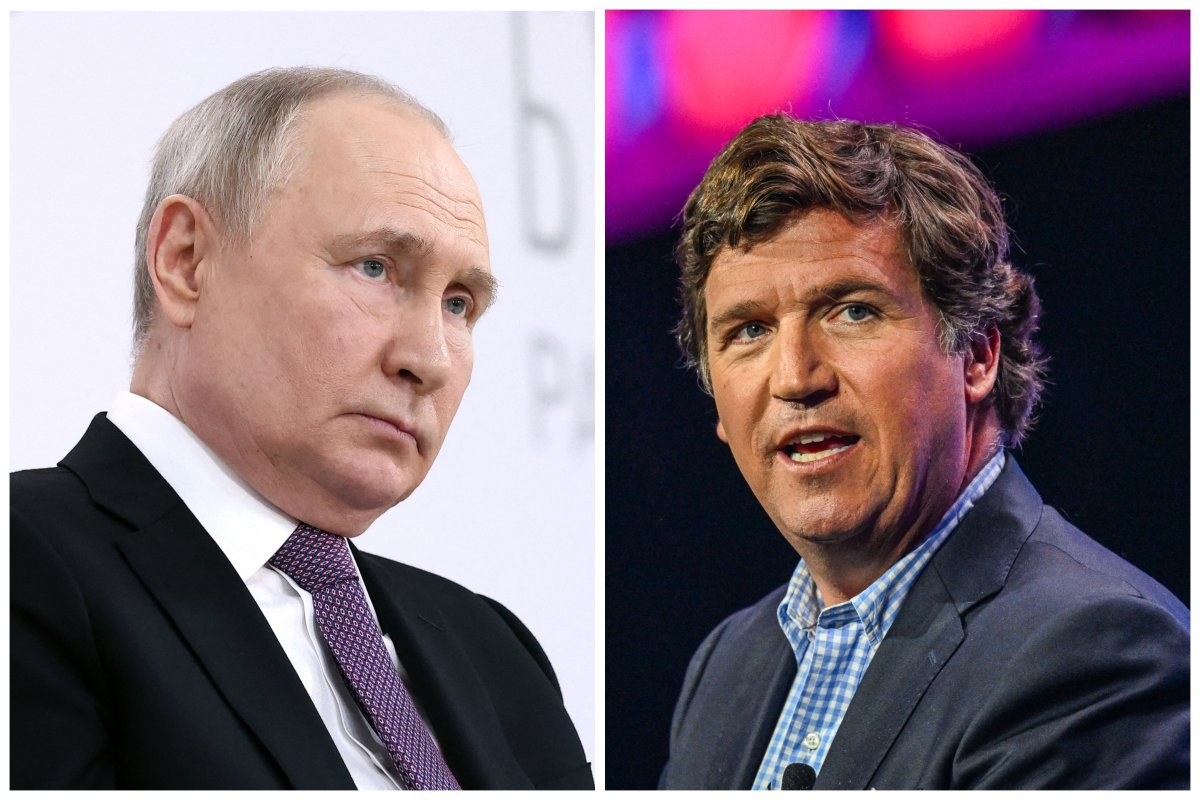
Getty Images
Clearly, Russia, as the aggressor, bore a large part of the blame for this disaster. But sadly for those who long for comforting moral simplicity, the Russia/Ukraine war is not the first war in world history with a single cause or single culprit.
Getting to Russia in the first place required a special trip to the Russian embassy in Washington, D.C., where I obtained a “humanitarian” visa with strict restrictions on the length of my stay. It may be presumptuous to claim that I embarked on something like a “humanitarian” mission, but there were no plans to deliver medical supplies to Donbass, for example. But I felt there was some kind of humanitarian value in doing it, no matter how small the role. I was able to maintain a kind of human contact between the two countries. Let everyone remember that it maintains her two largest nuclear weapons in the world. (The last remaining mutual arms control mechanism was ominously suspended in 2023.) Russian officials say relations with the United States are worse than at any time since the founding of the Soviet Union. Even basic diplomatic communication between the two governments was ignored or rendered non-existent.
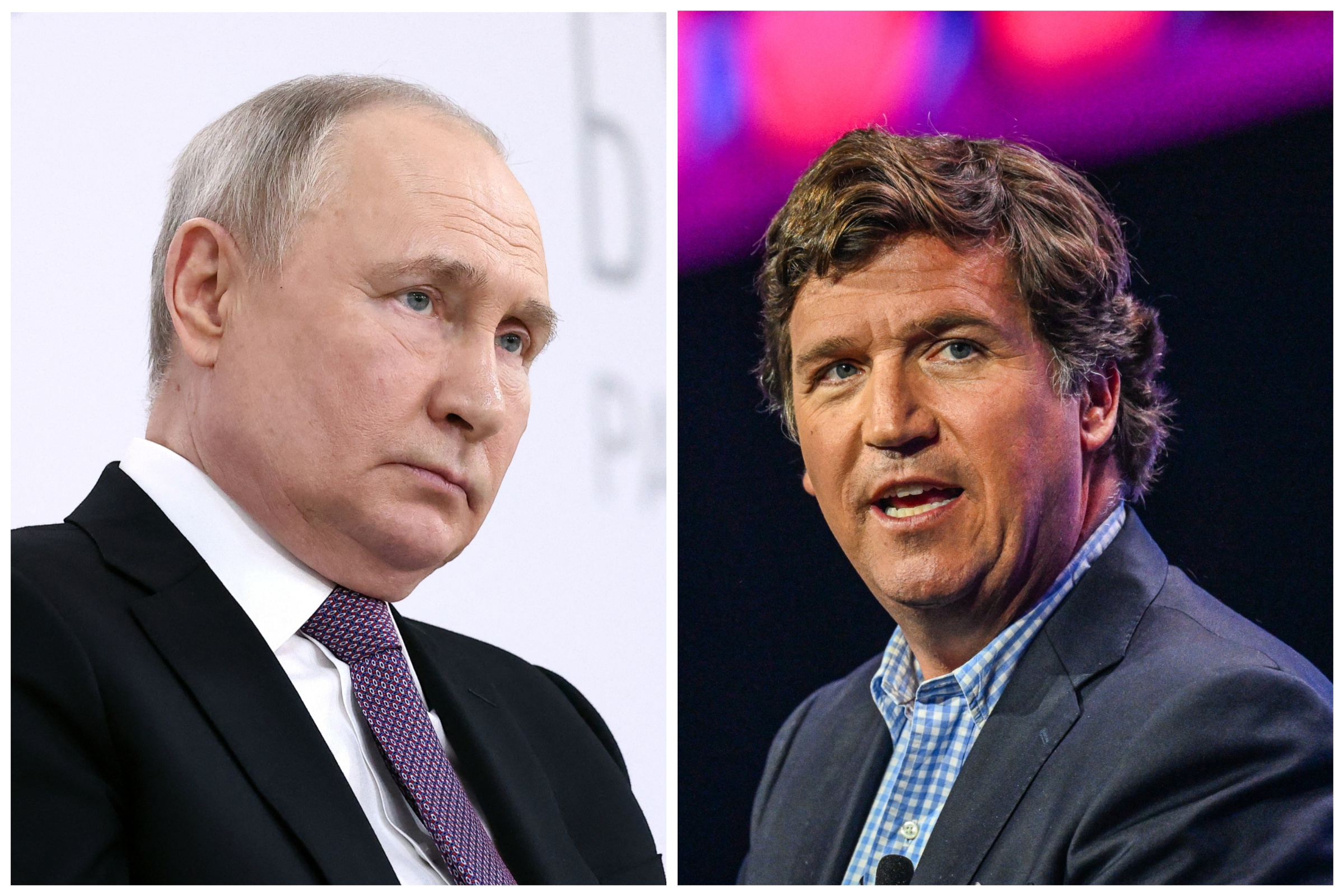
But these obstacles to regular U.S.-Russian engagement only increase the obligation for any respectable journalist to interview Russian President Vladimir Putin without a second thought, given the opportunity. It is worth remembering that President Putin had relatively easy access to American media before the Ukraine war broke out. Watch this 82-minute interview with him in 2021. NBC Newsor this similarly long 2019 interview financial times.
Who could have imagined that Joe Biden would sit for long hours for an interview with a Russian journalist, even before relations deteriorated after the invasion? He rarely gives interviews in America.
Of course, any interview that Tucker Carlson might give with President Putin would be subject to reasonable scrutiny. There is a balance that needs to be struck between overly moralizing accusations, unsubstantiated flattery, and properly probing questioning, and few journalists manage to do so. (Look at nearly all of Donald Trump’s interviews. They’re all either complete sycophants or screeches of “resistance.”)
But to claim that just because Carlson went to Russia for the purpose of interviewing President Putin, and therefore should be found guilty of treason, is boring, intolerable stupidity, and probably the current American It is the most frequently used slur in the political lexicon.
The people who spout these disgusting accusations probably haven’t had an original mind since at least the Steele dossier, and are clearly only interested in bigotedly demonizing the world leaders they wish to revile. , they do not have the information to improve the public’s understanding of important world events.
As we speak, Congress is teetering toward final passage of the largest U.S. military “aid” spending since the start of the war, which means that if Putin does not lose in Ukraine, is justified by the endlessly repeated premise that it will surely run amok in the rest of the world. Europe fulfills its destiny as the last incarnation of Hitler.
Isn’t it about time someone went directly to the source and scrutinized the proposition journalistically?
For the past two years, American media has been filled with cheap war commentary that tries to tell us what’s going on in Putin’s head or what he really “wants.” Now, ironically, many of the same commentators would be furious that journalists finally did something other than idle speculation.
Michael Tracey is an independent reporter at Substack. Follow him on Twitter @mtracey.
The views expressed in this article are the author’s own.
rare knowledge
Newsweek is committed to challenging conventional wisdom, finding common ground and finding connections.
Newsweek is committed to challenging conventional wisdom, finding common ground and finding connections.