

(Bloomberg) — The company’s stock chart resembles that of an emerging-market penny stock: In less than nine months, it has surged 1,200% and crashed more than 40% twice.
Most read articles on Bloomberg
But PT Barito Renewable Energy is Indonesia’s largest company by market capitalization, an $85 billion geothermal power company controlled by one of the country’s richest tycoons.
The volatility of Balito’s share price, the biggest 30-day volatility of any company anywhere in the world valued at more than $50 billion, has confounded professional analysts, stoked trading frenzy among retail investors and raised questions about regulators’ efforts to bring order to an increasingly volatile market.
The incident is a fresh warning to international asset managers about the lack of transparency that sometimes accompanies investing in Indonesia’s $735 billion stock market.Barito has made few statements to explain why Indonesian stocks have been so volatile, and authorities have refrained from releasing details about trading restrictions imposed in late May that critics say exacerbated share price volatility.
“The trading restrictions aimed at protecting investors have ironically eroded broader investor confidence,” said Mohit Mirpuri, a fund manager at Singapore-based SGMC Capital. “In the short term, this is likely to scare off risk-averse investors, especially if they are seen as a sign of broader market instability or regulatory challenges.”
The controversy dates back to June last year, when the stock exchange unveiled a new watch list for unstable and troubled companies.The board was conceived as a carefully crafted panacea by regulators to restore confidence in Southeast Asia’s largest stock market, which had been plagued by high volatility and dwindling liquidity.Under the exchange’s rules, companies can be added to the watch list for a number of reasons, including zero revenue growth, low liquidity and trading below 51 rupiah for three months.
In March, the exchange stepped up pressure on companies on its watchlist by holding “full call auctions.” The mechanism matches buy and sell orders, as is commonly used at the open and close of trading on major exchanges around the world. However, rather than moving to continuous trading, the auctions are held four to five times throughout the day.
The restrictions were initially met with little fanfare, but before the Indonesia Stock Exchange added Barito Renewables to its list in late May, it gave no specific reason other than citing the “significant increase” in the company’s share price.
The market reaction was swift: Over the next two weeks, the company’s shares nearly halved, wiping out about 700 trillion rupiah ($43 billion) and dragging down the benchmark Jakarta Stock Exchange Composite Index by about 5%. The move prompted FTSE Russell to postpone the company’s inclusion in its large-cap index, which would have attracted new foreign inflows.
The addition angered local traders, who said it would make the market less stable and reduce their profits. In a defiant act, they sent dozens of funeral flower arrangements to the exchange’s offices and called for an end to the auctions. A petition signed by 16,000 users on Change.org is calling for the addition to be rescinded.
The exchange has defended the rules, arguing they have boosted price discovery and increased liquidity for some penny stocks.Inarno Djajadi, capital markets regulator at the Financial Services Authority, said regulators were taking inspiration from similar rules in other countries to shape their policies.
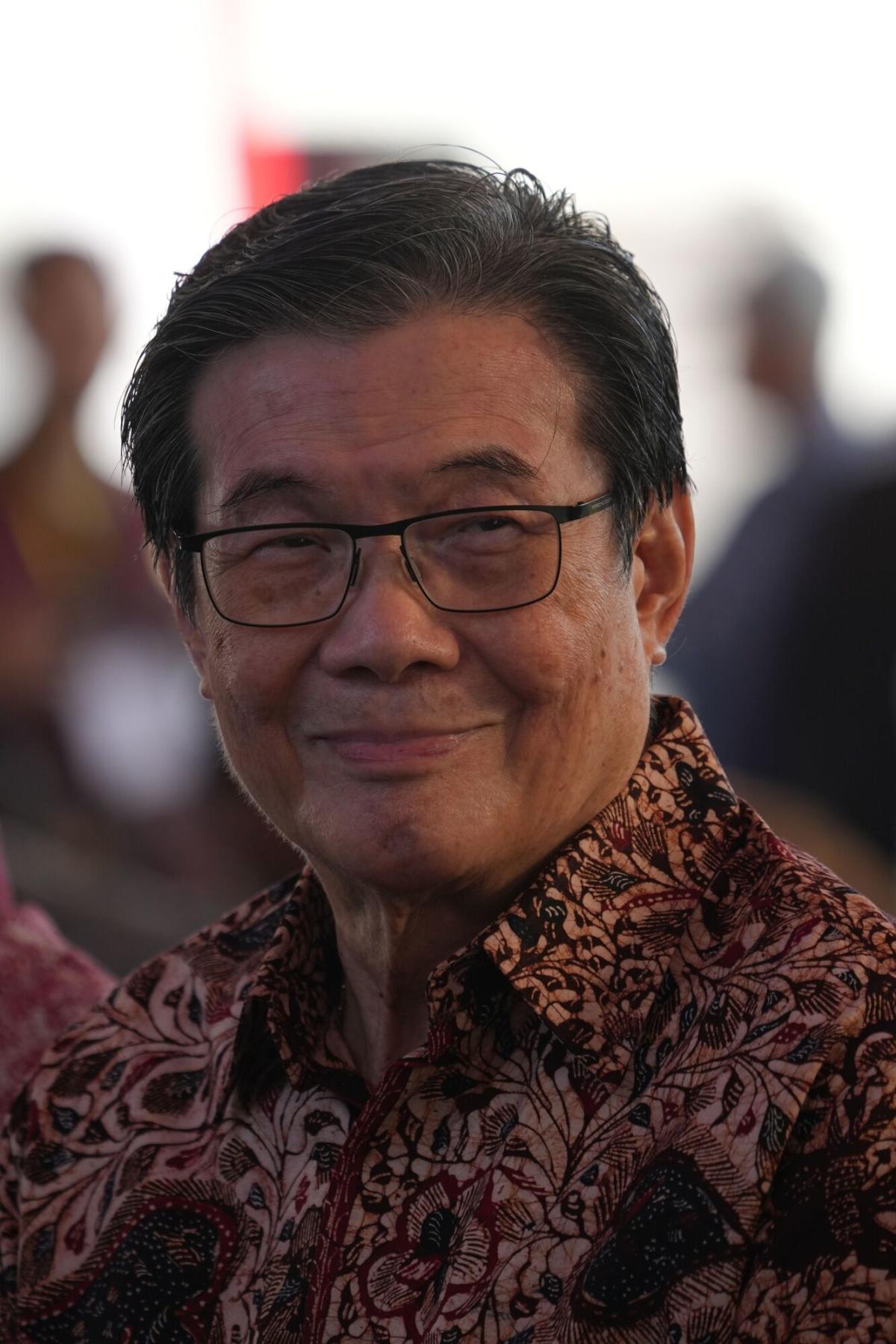
Billionaire owner Prajogo Pangestu has since bought about 48 million more shares. The stock has soared 1,342 percent since its stock market debut in October last year in one of the country’s most anticipated listings. The company’s undersecretary-general, Merly, said in a statement that Prajogo’s increased stake reflected his confidence in the company’s future prospects.
Late last month, regulators removed Ballito Renewables from their watchlist without further explanation after a massive outcry. Exchange director Jeffrey Hendrick told reporters the removal of a number of stocks from the watchlist was due to improved liquidity.
Related: Mysterious 1,000% stock surge baffles Indonesian traders
Balito Renewables has just one analyst rating, according to Bloomberg data. It is majority owned by PT Balito Pacific, which is majority owned by Prajogo. Its shares trade at 637 times expected 12-month earnings, more than three times that of Adani Green Energy. Earlier this year, the Indonesia Stock Exchange investigated whether there was share manipulation at another Prajogo-owned company whose shares have soared more than 6,000% since listing.
Investors worry that the watch list could trigger a knee-jerk reaction from traders. Four MNC Group companies were put on the watch list in late May, including PT MNC Asia Holdings. Its shares fell 60% in the two weeks after it was added. Shares in restaurant operator PT Sari Kureaci Boga PT plunged nearly 70% within three weeks of being added the same month.
“When shares go into (full call bid), people panic sell because it’s like being in a dark prison,” said Hasan Zain Mahmoud, a former director at the exchange and an investor at Sari Kurais.
Analysts say the uncertainty will fuel foreign capital outflows. Uncertainty over fiscal policy and broader macroeconomic concerns about the weakening rupiah led Morgan Stanley and HSBC Holdings Plc to downgrade their ratings on the country’s stocks last month.
“The (full call auction) rule may be beneficial for small penny stocks, but for larger caps like Balito, it may alienate investors, especially foreign funds, given the process is not transparent and market-driven,” Bloomberg Intelligence analyst Sfianti said.
–With assistance from Soraya Permatasari.
Most read articles on Bloomberg Businessweek
©2024 Bloomberg LP