

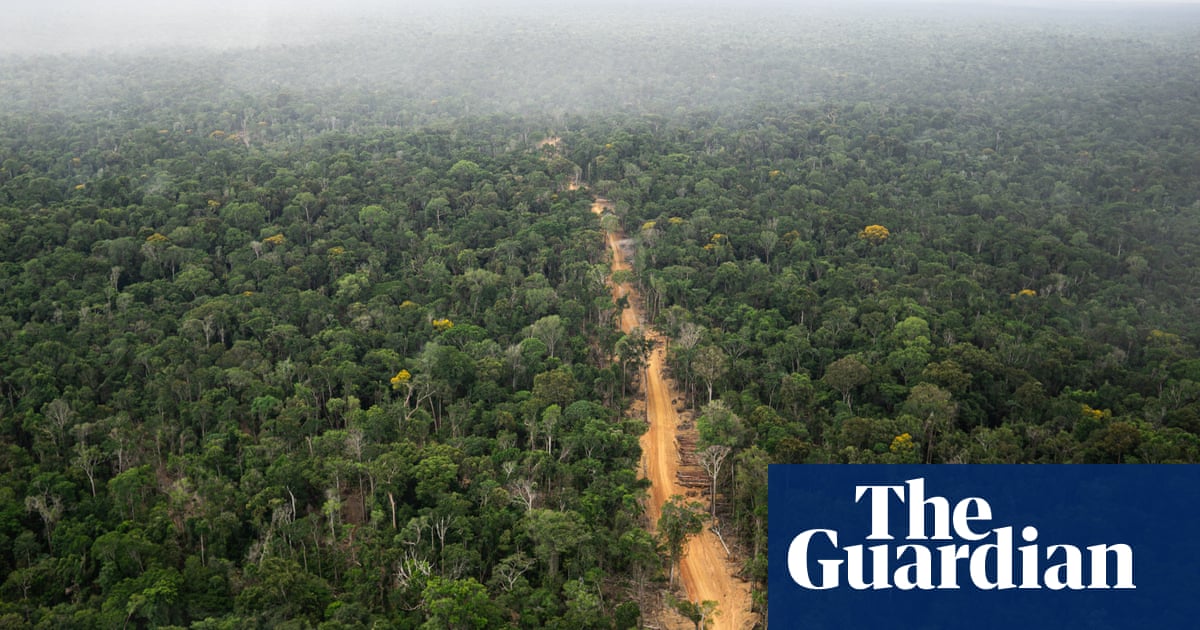
Five of the world’s largest banks are “greenwashing” their role in the destruction of the Amazon, according to a report which says their environmental and social guidelines fail to cover more than 70% of the rainforest.
These agencies have allegedly provided billions of dollars in funding to oil and gas companies involved in projects that will affect the Amazon, destabilize the climate, and threaten indigenous lands and livelihoods.
The bank claims to follow ethical policies that help protect intact forests, biodiversity hotspots, indigenous territories and nature reserves, but the review found geographic and technical limitations in its ability to monitor and achieve these goals.
The report was produced by watchdog group Stand Earth and the Coordination of Indigenous Organizations of the Amazon (COICA), which mapped the extent of environmental and social governance (ESG) commitments of the five largest financiers of fossil fuel businesses in the South American biome. These banks – Citibank, JP Morgan Chase, Itau Unibanco, Santander and Bank of America – account for more than half of all lending to companies in the sector.
The analysis found that, on average, 71 percent of the Amazon is not effectively protected by the five banks’ risk management policies on climate change, biodiversity, forest cover and indigenous and local community rights.
The gaps varied widely from company to company, starting with JPMorgan Chase, whose biodiversity protections apply only to UNESCO World Heritage sites that cover just 2 percent of the Amazon, and which wouldn’t be taken into account for oil and gas exploration anyway, according to the report’s authors.
On the positive side, the study praises British bank HSBC, once a major financier of disruptive projects in the region, but has not provided any funding since adopting a 100% exclusion policy for Amazon in December 2022.
“So far, HSBC has kept its promise,” said Angeline Robertson, the report’s lead author. “This shows that it can and has been done, even by companies with previously large stakes.”
Some banks claim to be playing a positive role by pushing extractive industries to adopt more responsible policies. But while bank loan agreements come with long-term relationships and potential influence, the report’s authors note, the majority of financing by the big five banks is in the form of syndicated general corporate purpose bonds. These bonds, which are standard practice, are for broadly defined purposes and require little or no follow-up after the deal is signed. This can make it difficult to apply due diligence guidelines on specific environmental and social issues.
Spanish bank Santander is Europe’s largest lender to Amazon oil and gas, and the fourth-largest globally, with around $1.4bn (£1.1bn) in direct lending between 2009 and 2023. It has one of the broadest exclusion policies for oil and gas, covering 16% of the Amazon, but the report said 85% of the bank’s transactions are done in the form of syndicated bonds, lacking transparency and reducing the bank’s responsibility for contributing to the negative impacts.
Using STAND’s Amazon Bank Database, the authors examined 560 oil and gas deals by 280 banks in Amazon over the past 20 years to determine whether deal structures that avoid ESG exclusions and screening are common.
Their research found that two North American banks, Citibank and JPMorgan Chase, have provided the most capital ($2.43 billion and $2.42 billion, respectively) to companies operating oil and gas projects in the Amazon. JPMorgan Chase recently withdrew from the Equator Principles Association, a common standard for managing environmental and social risks when financing projects.
The third-largest funder over the past 20 years is Brazil’s Itau Unibanco, which, according to the report, has no exemptions or screenings that apply to its oil and gas operations in the country. The company has funded projects for Eneva, Frontera, Geopark, Petrobras, Petroquímica Comodoro Rivadavia and the Peruvian Gas Transport Company, according to the database.
Coming in at number five is Bank of America: Last year, the bank was Amazon’s largest oil and gas lender, doing 99% of its transactions in the form of syndicated debt, the report said, meaning those deals weren’t necessarily subject to enhanced ESG screening.
The report calls on banks to adopt geographic exclusions covering all transactions related to the Amazon’s oil and gas sector, which the authors say is essential because the rainforest is the world’s most important terrestrial carbon sink and home to biodiversity, yet is degrading towards irreversible degradation.
“We literally live in a burning rainforest. Our rivers are polluted or dried up,” said Fanny Quill, general coordinator of COICA. “Our destiny is your destiny. The Amazon is crucial for the future of the planet. Banks try to avoid responsibility with vague policies, but they must be held accountable for the damage their money is causing to the indigenous people of the Amazon and the biodiversity of the rainforest. Not a drop of oil in the Amazon has been extracted with the consent of indigenous people. We demand that Citibank, JP Morgan Chase, Itau Unibanco, Santander and Bank of America stop financing oil and gas.”
Since Stand.earth launched its “Divest from Amazon Oil and Gas” campaign, several banks, including BNP Paribas, Natixis, ING and Credit Suisse, have committed to stop financing oil trade from ports in Ecuador and Peru, which account for much of the Amazon’s fossil fuel trade, the group said. HSBC and Barclays also have blanket geographic exclusion policies.
The authors say they want to work with remaining financiers of Amazon oil and gas to strengthen their ESG policies and remove oil projects in the rainforest from their portfolios.
After newsletter promotion
Robertson said the five banks’ policies were “very token and appear to be prioritizing reputational risks over local impact risks”, but stressed that this could change. “There are lots of opportunities for banks to get it right and build environmental risk into their portfolios, because that’s what the future holds. With climate change and biodiversity loss looming, banks need to make better decisions for their customers and their own business interests. This is a reckoning here, a call for responsibility.”
“We have been trying to raise awareness of the negative impacts on the ground, not just to expose the banks’ greenwashing, but also to give voice to those most affected in the Amazon.”
Some in the financial industry have taken issue with the report’s methodology, saying it’s inappropriate to add up multi-year loans, lines of credit, refinancings and indirect loans and then suggest the money went to specific groups. They said general corporate loans have long dominated the credit market and that the report should ask specific companies if and how the money is being spent.
Several banks said they were applying ESG guidelines to general corporate bonds.
“We have a comprehensive enterprise security risk management policy that outlines our expectations for clients and guides them to conduct enhanced due diligence on high-risk activities related to human rights, biodiversity, indigenous peoples, critical habitats, community conflicts and environmental justice,” Citibank said in a statement. “We engage directly with clients to assess their commitments, capabilities, policies, management systems and people to manage these specific environmental and social risks.” The company updated its agriculture risk policy in 2022.
JPMorgan Chase said: “We support fundamental principles of human rights, including the rights of indigenous peoples, across all of our business lines and in each region of the world in which we operate. Our 2023 ESG Report reflects our policies and practices regarding environmental and social risks and human rights, including restricted activities and sensitive business activities. Our screening of clients and transactions for our restricted activities and sensitive business activities that are subject to enhanced scrutiny includes, but is not limited to, GCP (general corporate purpose) lending activities.”
Regarding JPMorgan Chase’s decision to withdraw from the Equator Principles Association, a spokesman said EPA membership “is not necessary for our firm to maintain the highest standards of its own environmental and social risk management,” adding that the bank intends to continue to adhere to the association’s principles.
Bank of America pointed the Guardian to its environmental and social risk policy framework, which mentions “enhanced due diligence on transactions where a substantial portion of the proceeds are used for certain activities that may have adverse effects on areas used or traditionally claimed by indigenous communities.”
A Santander spokesman said: “We fully understand the importance of protecting the Amazon and supporting sustainable development in the region. All lending decisions are based on a strict policy framework approved by our Board of Directors and our activities comply with all environmental regulations in the region. We are also actively involved in industry-led efforts to protect the region and are actively working with clients, other banks, governments, regulators and other institutions to improve practices. We recognise that this is a highly complex challenge that requires a multifaceted and multilateral response.”
Itau Unibanco had not responded to the Guardian’s request for comment at the time of going to press.