

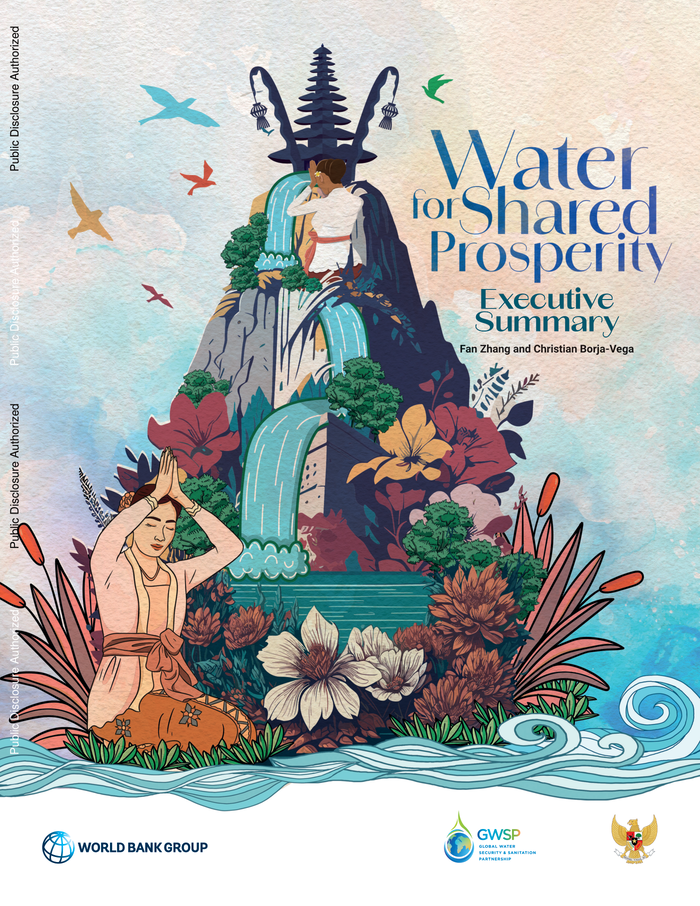
Water security is critical to poverty reduction, but billions will remain without access unless urgent action is taken
WASHINGTON, May 20, 2024 — A World Bank report released on Monday says access to safe drinking water and sanitation, reliable water supplies for agriculture and industry, and protection from drought and floods are essential for human and economic development. It has said.
Over the past 20 years, the number of people lacking safe drinking water and basic sanitation has increased by 197 million and 211 million, respectively. More than 2 billion people still lack access to safe drinking water and 3.5 billion people are deprived of safely managed sanitation facilities. The resulting infections are responsible for at least 1.4 million deaths and 50% of the world’s malnutrition annually.
Lack of access to safe water and sanitation is especially harmful during childhood. Water for shared prosperityAccording to a report released by the World Bank Group and the Indonesian government at the 10th World Water Forum in Bali, Indonesia: Inadequate and unsafe water affects early childhood development, and time spent fetching water, inadequate sanitation, droughts and floods impede learning and lead to school dropouts.
Climate change is amplifying water-related risks. Due to global emissions, developing countries are most affected by climate change. From 2000 to 2021, developing countries experienced more severe droughts and prolonged flooding than developed countries, with long-term impacts on nutrition, school attendance, and economic well-being. Developing countries are overly dependent on water-dependent sectors, especially agriculture, for employment. More than 800 million people around the world are at high risk of drought, and twice as many live in areas most at risk of flooding.
“Improving livelihoods requires significant reforms and investments to deliver efficiently managed water and sanitation services to those without access and strengthen resilience to hydroclimatic risks,” he said. Ta. World Bank Vice President (East Asia and Pacific) Manuela V. Ferroleads the World Bank team at the World Water Forum.
Water for shared prosperity It provides specific recommendations on how to improve water security in developing countries. Protecting depleted aquifers and unevenly distributed freshwater resources by implementing proven nature-based solutions such as reforestation and investing in water storage infrastructure to prevent runoff and create water. More international cooperation is needed. Available during the dry season.
Policies to upgrade housing and land-use regulations that prevent construction in flood-prone areas can reduce damage. Early warning systems and insurance can help households and farmers cope with extreme hydroclimatic shocks.
Reforming water rates and untargeted subsidies, while ensuring affordability for low-income households, will help maintain and expand services and equitably distribute scarce water resources. Service providers also need to step up their operations, reduce water loss and reduce operating costs. Supported by policies that ensure transparency and accountability, the private sector can increase efficiency and provide valuable expertise to manage complex infrastructure.
The report’s Spotlight section examines how Indonesia, host of this year’s triennial World Water Forum, is tackling water security challenges. Indonesia has made significant investments to increase its resilience to climate-related risks, including investing in 61 dams to store water and increase irrigated area. Community-based water programs provide improved water facilities to more than 24 million people. The government has prioritized reducing pollution and environmental degradation in West Java’s Citarum River basin, pioneering the treatment of peat water to make it potable through the National Urban Water Supply Project.
Read the full report here
Press release number: 2024/058/EAP
contact address
**In Washington:** Sarah Farhat
+1-202-280-4016
**In Jakarta:** Lestari Boediono Qureshi
+62-21-5299-3156