


If you’re interested in a device that will replace your smartphone in the future, you’ve probably come across the Rabbit r1.
It would be no exaggeration to say that the Rabbit r1 got off to a rocky start.
Startup Rabbit made headlines at CES 2024 by capturing the attention of many attendees with r1, a pocket-sized AI wonder. However, once users started getting their hands on the device, feedback was far from positive, with many reviewers stating that the device looked unfinished and accomplished little that a smartphone could not. . According to a report from Android Authority, r1 UI may actually be an Android app.
If you’re curious about what device caused so much fuss, you’re in the right place. Read on to learn everything you need to know about Rabbit r1.
What is rabbit r1?
The Rabbit r1 is a $199 handheld device that runs on a proprietary operating system, Rabbit OS.
Much of r1’s functionality is based on a bespoke large-scale language model called the Large Action Model (LAM). This language model does not have the same functionality as the language models behind ChatGPT and Google Bard. Rather, the purpose of Rabbit’s LAM is to interact with the app on your behalf and allow you to leave your phone behind.
LAM will learn how to use apps and services to complete everyday tasks like booking flights, editing photos, and streaming music. This feature works with food apps, ride-sharing services, maps, shopping apps, travel services, music apps, and generative AI services, to name a few.
“Rabbit OS” […] From simple tasks like finding the latest information to complex tasks like combing through options and booking an upcoming trip, or adding items to a virtual grocery store cart and completing a transaction at checkout. It can handle most digital errands, up to and including tasks. ” Rabbit’s press release reads.
Rabbit requires you to sign in to each app through the Rabbithole web portal before you can use voice commands to instruct r1 to complete tasks.
“LAM fundamentally eliminates the need for users to download and use multiple apps on their devices, and instead proactively performs tasks on those apps on their behalf.”
One thing Rabbit r1 can’t do is make and receive phone calls. The r1 has a SIM slot, so you can use the device to connect to a 4G network (if you don’t want to insert a SIM, it offers Wi-Fi and hotspot support). However, calling and texting don’t seem to be supported at this stage, so you probably don’t want to give up your smartphone just yet.
design and specs
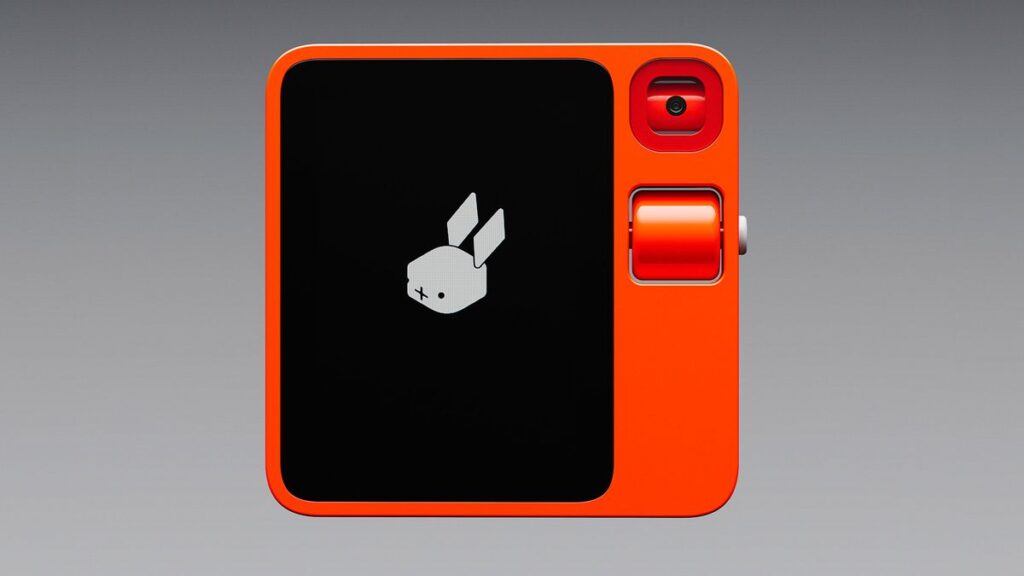
The Rabbit r1 was designed in collaboration with Teenage Engineering and is built to be stylish and easily fit in your pocket. Rabbit said the company took cues from Tamagotchi when creating the design, and the luminous orange color scheme is designed to be eye-catching.
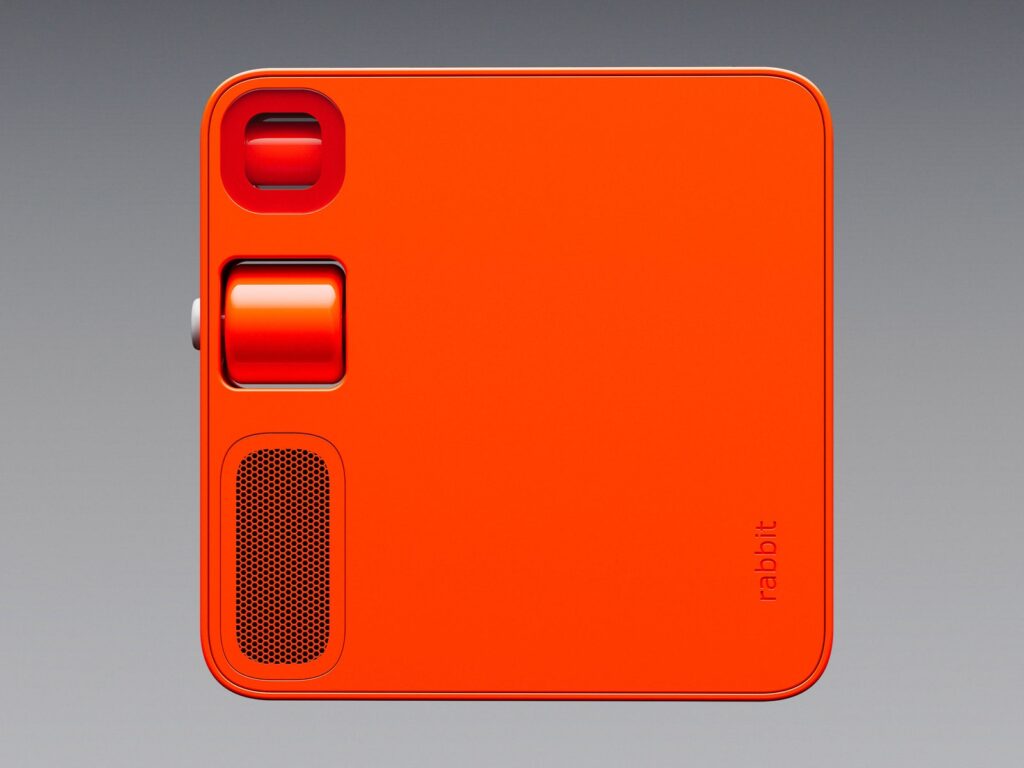
The r1 features a 2.88-inch touchscreen, a push-to-talk button for voice commands, and a scroll wheel for flicking through activity cards in Rabbit OS. There’s also an AI-enhanced rotating camera called Rabbit eye for making video calls.
The device is powered by MediaTek Helio P35 processor with 4GB of RAM and 128GB of storage. There’s the aforementioned SIM slot for cell phone connectivity, as well as a USB-C port for all-day battery and charging.