

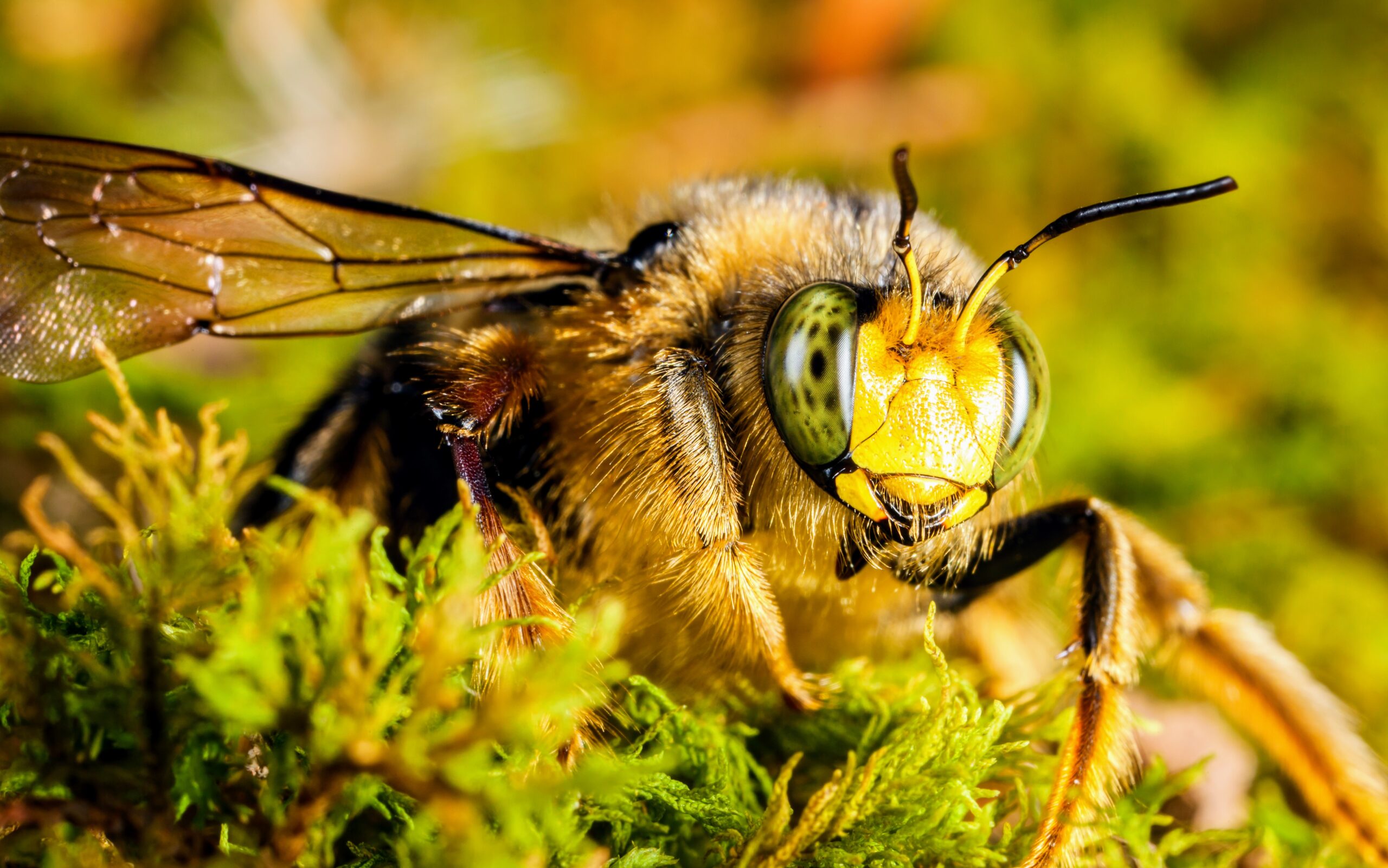
A recent study led by Queen Mary University of London (QMUL) found that bumblebees display much higher levels of cognitive ability and complex social learning abilities than previously realized. .
Experts have discovered that bumblebees can learn complex tasks through observation, a trait once thought to be unique to humans. This finding suggests that elements of cumulative culture, or layers of knowledge and skills across generations, may also exist among these insects.
sophisticated puzzle
The study involved a sophisticated two-step puzzle box designed to test bumblebees’ problem-solving abilities.
To access the sweet reward, the bees had to complete two separate actions in a specific order. Initially, the bees were given an additional reward midway through the task, but this was later removed, forcing the bees to open the box entirely on their own to obtain the treat.
watch and learn
The most surprising observation came from the fact that bees observing “demonstrator” bees were able to learn entire sequences without prior experience of intermediate rewards.
This study marks a major shift in our understanding of social learning, suggesting that bumblebees can acquire and transmit behaviors that exceed their innate cognitive limits. It was once believed that this ability was a hallmark of the complexity and depth of human culture.
Challenging tasks bumblebees learn
First author Alice Bridges, a PhD student at QMUL, highlighted the challenges of this task and pointed to the need to initially train demonstrator bees with temporary rewards to promote learning. .
“This is a very difficult task for bees. They have to learn two steps to get a reward, and the first action in the sequence received no reward. But other bees “We learned the whole story from social observations of these trained bees, even though they never experienced the step reward,” Bridges explained.
This is in sharp contrast to the bees’ inability to solve puzzles without demonstration, highlighting the importance of social learning.
Learning about bumblebees provides hints for cultural transmission
The implications of this study extend beyond the realm of individual learning and suggest the possibility of cumulative culture between animals. This concept, the gradual construction of knowledge and practice over time, has traditionally been associated with human society.
The ability of bees to learn complex tasks from demonstrators suggests mechanisms of cultural transmission and innovation that go beyond mere individual learning.
“This challenges the traditional view that only humans can learn socially complex behaviors beyond individual learning,” said QMUL zoologist and lead author Lars Chitka.
“Many of the most remarkable achievements of social insects, such as the nesting structures of honey bees and wasps and the agricultural habits of ants that farm aphids and fungi, may have first been spread by imitation by clever innovators, and then spread. , which is increasingly likely.” They eventually became part of the species-specific behavioral repertoire. ”
The evolutionary origins of social learning
This pioneering research was published in the journal Nature – It not only expands our understanding of animal intelligence, but also encourages further exploration of the cognitive abilities of insects.
Demonstrating that bumblebees are capable of social learning and have the potential to participate in the rudiments of cumulative culture prompts a reassessment of long-held assumptions about the mental life of insects and raises the question of social learning and culture. Opening new horizons in research on the evolutionary origins of
—–
Like what you read? Subscribe to our newsletter for fascinating articles, exclusive content and the latest updates.
Check us out on EarthSnap, the free app from Eric Ralls and Earth.com.
—–