

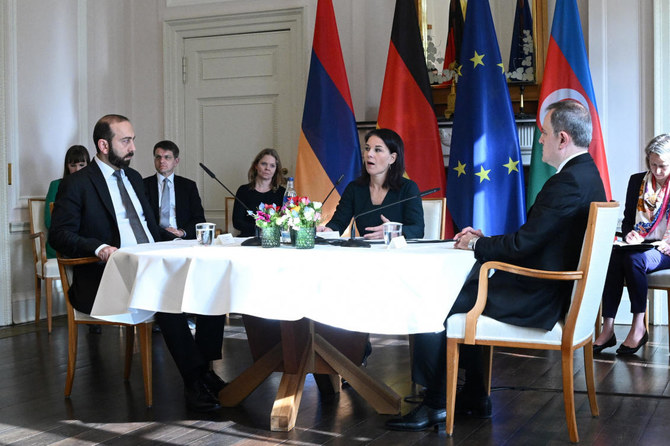
On February 28 and 29, Azerbaijan and Armenian Foreign Ministers Jeyhun Bayramov and Ararat Mirzoyan held the latest round of peace talks in Berlin, Germany. The two countries had agreed to hold this ministerial meeting at a recent summit led by German Chancellor Olaf Scholz on the sidelines of the Munich Security Conference on February 17th.
The very fact that the leaders of the two countries reaffirm their desire to continue dialogue and resolve remaining issues peacefully is certainly of vital importance for peace and security in the South Caucasus region. Nevertheless, the foreign ministers’ meeting in Berlin showed that peace talks between the two countries face several significant challenges and have reached a stalemate. Despite initial optimism on both sides over the past two years about the likelihood of a swift peace agreement, recent developments suggest that optimism is fading. , little substantive progress has been reported.
Challenges rocking peace talks relate to the complicated fate of the land route between western Azerbaijan and the enclave of Nakhchivan (also known as the Zangezur Corridor), Armenia’s territorial claims to Azerbaijan in its constitutional documents, and Baku’s recently declared position. Armenia will not sign a peace treaty unless its constitution is amended, increasing the contradictions between the two countries’ positions over the border demarcation process and border villages that each side claims are under the occupation of the other. The former issue is more complex and includes geopolitical dimensions, but while the two countries previously appeared to be more on the same page regarding the fate of border villages, they have recently become more at odds.
Claims by Armenian leaders about the existence of more than 30 villages in Armenia under Azerbaijani control are beginning to be asserted more loudly, adding further negativity to an already tense situation. Armenian Prime Minister Nikol Pashinyan previously acknowledged the existence of Azerbaijani enclaves under his country’s control, but Baku vehemently rejected his claims regarding more than 30 villages. The escalation of the conflict over the past month indicates that the latest meeting of the Boundaries and Demarcations Commission, held in late January, has not made significant progress in this direction. Apparently, neither the Munich nor the Berlin talks improved the situation.
Thus, we seem to have reached a new impasse in the Armenia-Azerbaijan peace process. However, unlike the “stalemate” of earlier periods, the current situation appears to be based on what Azerbaijani officials call “de facto peace.” Except for the border incident in early February, the border between Armenia and Azerbaijan has remained calm since the one-day war in September 2023. This period of calm was almost unprecedented since the collapse of the Soviet Union, and was facilitated by mutual verbal recognition by both countries. territorial integrity of the other by each side;
Despite fear-mongering campaigns by Armenia and some political groups in Western countries, the Azerbaijani leadership vehemently rejects any plans to use force against Armenia to open the Zangezur corridor. In a meeting with the German economic delegation in Baku, President Ilham Aliyev reaffirmed this position, saying that French President Emmanuel Macron and EU High Representative Josep Borrell are spreading baseless claims about Azerbaijan’s intentions. Criticized that there is. “Mr. Borrell said that Azerbaijan would face dire consequences if it attacked Armenia. First, where did Mr. Borrell get this information suggesting that Azerbaijan was planning to attack Armenia? Is it? There are no such plans. These are just hints by Mr. Macron,” Aliyev stressed.
Therefore, the current “de facto peace” situation represents a constructive stage in Armenian-Azerbaijani relations and provides a promising basis for formalizing peace through the conclusion of a peace agreement. Occasional meetings between official representatives of the two countries, along with expert-level exchanges, play an important role in promoting mutual understanding and addressing protracted conflicts.
However, the timeframe for a peace treaty and eventual “legal peace” between the two countries may be longer than expected. Current challenges, especially those with geopolitical dimensions (such as the Zangezur Corridor), require more than just political will from Baku and Yerevan. This complexity is further exacerbated by the Armenian government’s anti-Russian statements. We will adopt a cautious approach for the two South Caucasus republics, rather than reaching a hasty agreement, and consider how the broader geopolitical conflict between the West and Russia and the ongoing war in Ukraine will unfold. We have reached a crossroads where it seems more advantageous to wait and see what happens. A course of action whose future outcome is uncertain.
In summary, the recent Berlin Foreign Ministers’ Conference highlighted the continued stalemate in the Armenia-Azerbaijan peace process. Despite continued dialogue and expressed intentions for a peaceful resolution by the leaders of both countries, significant challenges impede progress toward a formal peace agreement. The complex situation surrounding the Zangezur Corridor, constitutional disputes, differing positions over border villages, and, more destructively, the geopolitical dimensions of these disputes are contributing to the impasse. Despite previous optimism, recent developments suggest that the prospects for immediate progress in peace negotiations are dimming. However, amidst this impasse, there is a notable sign of hope: the “de facto peace” currently prevailing between Armenia and Azerbaijan. This period of relative calm, especially since the one-day war in September 2023, presents an unprecedented opportunity to bring stability to the region. Despite the challenges, it is essential for both countries to maintain diplomatic channels and engage in constructive dialogue to maintain current stability and address protracted conflicts.