

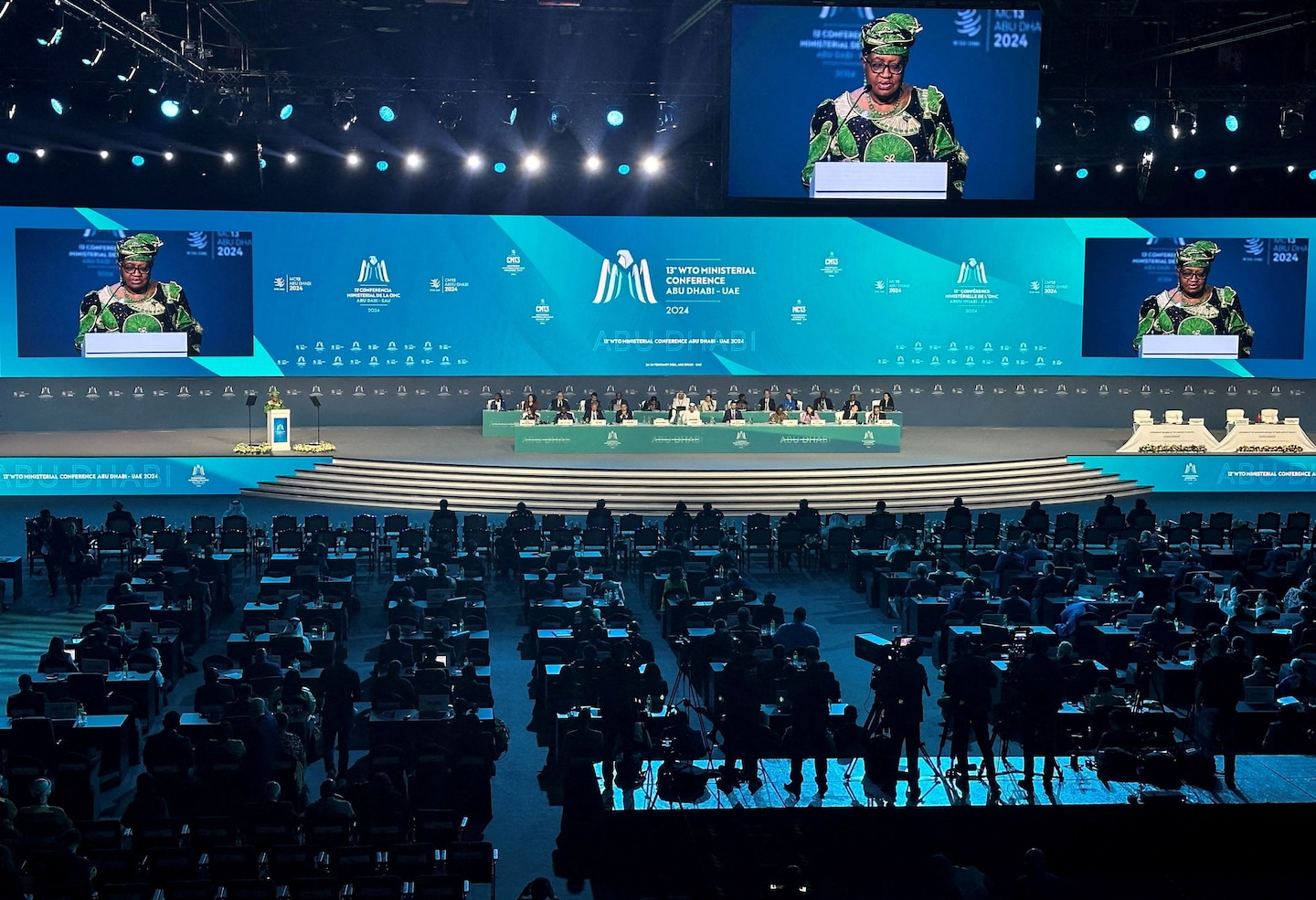
Member countries failed to make progress on even small but important items, such as ending subsidies for fishing that are putting the world’s fish stocks at risk. Unsurprisingly, there has been no progress toward repairing the WTO’s key trade dispute mechanism, with Washington, frustrated by the WTO’s “judicial activism,” blocking its appointment to the Appellate Body as the final arbiter. After that, this mechanism still hardly works. The internet narrowly dodged a bullet at the last minute when India and South Africa agreed to extend the suspension of tariffs on digital goods for another two years.
If there is one clear lesson from this conference, it is that unless Washington restores its commitment to a rules-based trading system, the institutions it has painstakingly built over more than half a century to police international commerce will continue to fail. , will prove irrelevant to the emerging global challenges in focus. From mass adoption of artificial intelligence to climate change.
No decision was easy in the WTO, where change requires consensus. In almost 30 years, until this week, the organization had managed to conclude one “multilateral” agreement on trade promotion measures (which does not cover all member states), along with a partial agreement on fisheries. The Doha Round, another big bet on a broad global agreement, collapsed.
Future progress seems even less likely.
A world constrained by climate change and seemingly on the cusp of a technological revolution with uncertain but likely far-reaching implications needs a strong WTO to guide this new phase of global economic interaction.
Key topics on the agenda include how to coordinate different strategies for building and deploying new energy technologies to combat climate change, which is already causing tensions between Europe and the United States. There is. The United States is also heavily involved in the development of artificial intelligence, which will require international coordination on protection of intellectual property, treatment of data used to train new systems, and privacy concerns. It is in everyone’s interest that mechanisms to resolve trade disputes work.
Rather, rising tensions between the United States and China and growing skepticism in Washington about the impact of trade on American workers have decimated the WTO. Ignoring WTO rules is becoming the norm. Various countries have expressed dissatisfaction with trade-distorting subsidies and domestic content provisions in the Inflation Control Act of 2022, the Biden administration’s main tool for green energy development and climate action. And now the European Union is following the US government’s lead and setting its own subsidy package.
This not only makes the green transition slower and more costly; It also crowds out developing countries, raising questions about how they will respond to climate change in their own countries. “Rich countries can play the subsidy game,” said WTO Director-General Ngozi Okonjo-Iweala. “Poor countries can’t afford it.”
The rules-based trade order may collapse. According to the International Monetary Fund, the long-term costs of splitting the world into competing trading blocs could reach 7 percent of global economic output. China has already set up its own system, cutting back on regional and bilateral trade agreements with about 30 countries that account for nearly 40% of its exports.
The future of the global trade structure depends largely on the United States, which was the main force in the decades-long post-World War II process that led to the establishment of the WTO in 1995. Unfortunately, the US has lost interest. Biden defends a new “consensus” that is cautious about globalization, as the explosion of protectionism that began under President Donald Trump is due in part to the WTO’s failure to curb China’s illegal tactics to capture global markets. It survived even when it came to power.
Certainly, the WTO needs reform. Resolving trade disputes requires a better system that not only addresses U.S. concerns but also makes it more accessible to small countries. A more agile system is needed for groups of countries to be freed from the burden of universal agreements and move forward in areas of common interest. It must address China’s repeated use of non-market strategies to tilt the playing field in its favor and conquer foreign markets.
However, abandoning the WTO would be a grave mistake; the world would no longer have a multinational police force to maintain fair trade between countries, and the world as a whole would become even poorer without the WTO.