

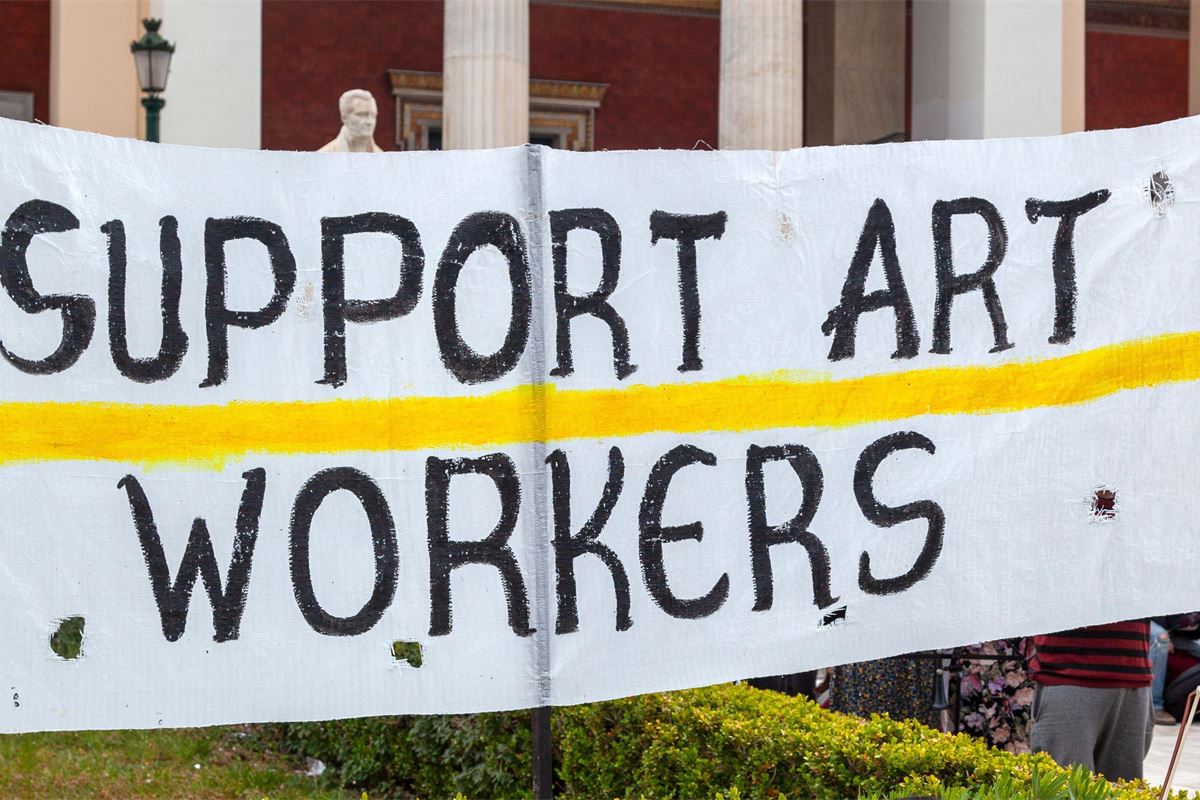
It is not uncommon to hear heartfelt tributes to European culture and traditions in political speeches. However, there is a disconnect between the declared high value ascribed to culture and the low level of support given to cultural creators and cultural professionals.
In Europe today, the biggest investments in culture are made by artists and cultural professionals themselves. They struggle with low wages, unstable incomes, atypical working conditions, discontinuous work arrangements, and a general lack of job security. Even if they have rights and protections that are commonplace in other industries, they may be less likely to receive cultural offerings.
According to 2022 statistics from the European Union Statistics Office, a third (31.7 per cent) of cultural and creative workers in Europe are self-employed, compared to 14 per cent in the economy as a whole. . Furthermore, research by the European Parliament Research Service shows that the cultural sector has one of the highest rates of false self-employment in the EU.
Difficulties in accessing social security further exacerbate the precarious situation of these professionals. After all, their work often requires them to travel abroad, and access to social security is complicated by differing administrative procedures and definitions of work status at the national level. While digitalization and especially generative artificial intelligence are sometimes useful tools, they are also increasingly threatening artists’ livelihoods. The level of censorship that restricts freedom of artistic expression is also increasing, which in turn affects revenue.
This situation is not new, but was brought to a breaking point by the Covid-19 pandemic, which brought the cultural sector to a standstill due to successive lockdowns. All shows have been canceled and all exhibitions postponed, with severe economic consequences for workers already facing severe levels of insecurity.
In short, the pandemic has exposed the unviability of the current working model for cultural professionals. That is why last year the Parliament drafted its own legislative report, co-rapporteured by the Committee on Culture and Education and the Committee on Employment and Social Affairs.
This situation is not new, but it has been brought to a breaking point by the COVID-19 pandemic.
The report calls for the establishment of a so-called EU framework on the social and professional situation of artists and other professionals in the cultural and creative fields, through legislative and non-legislative tools. Specifically, the framework will include a Directive on Decent Work Conditions that aims to correctly determine the employment status of cultural and creative workers, with a view to curbing spurious self-employment. Become. It will also establish a decision allowing work towards EU quality standards in this area.
Another important initiative included in the report is the introduction of ‘social conditioning’ in the next cycle of EU cultural funding programs such as Creative Europe. This principle ensures that EU, national or collective labor and social obligations are always met as part of such projects, that artists are also compensated for the time they spend rehearsing and preparing funding applications, and that they are always paid a fair amount. Guaranteed to get paid.
Our proposal was adopted on 21 November 2023 with 433 votes in favor, sending an important political signal to the Commission on the need for better labor protection for cultural professionals. The committee now has several weeks left to respond to our legislative initiative.