

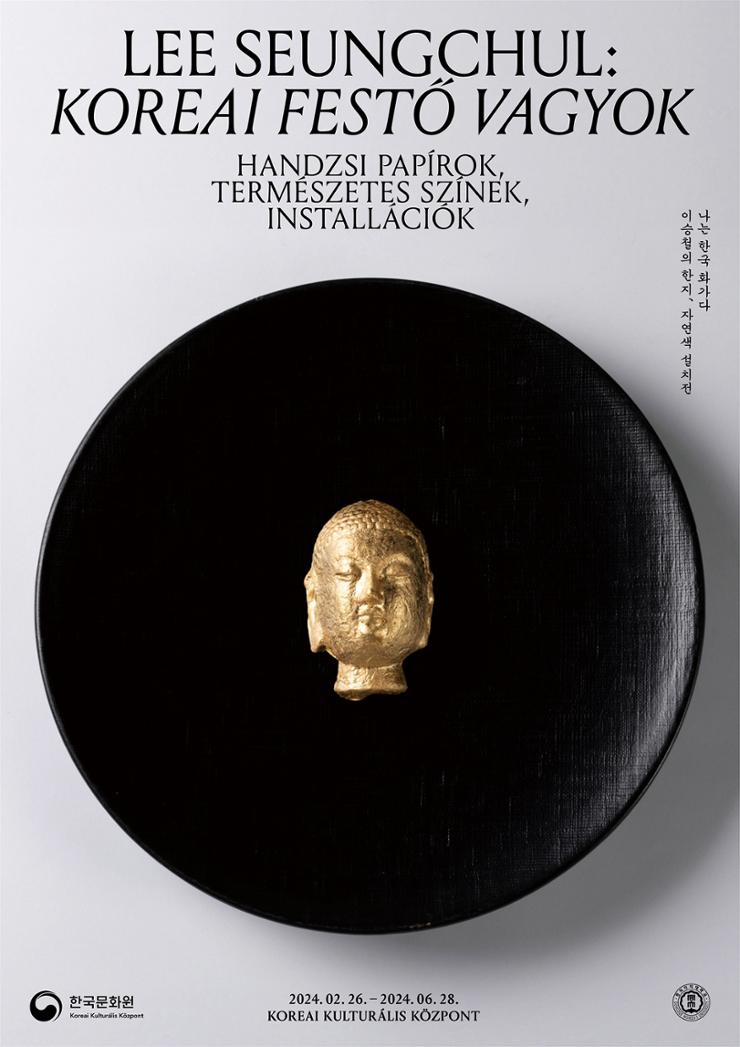

“I am a Korean Painter: Hanji, Color of Nature by Lee Seung-cheol” poster / Provided by the Hungarian Korean Cultural Center
Kwon Miyu
The Korean Cultural Center in Hungary is hosting an exhibition that not only showcases the beauty and versatility of traditional Korean paper, Hanji, but also marks an important step in promoting Korean culture throughout Europe. ing.
“I am a Korean Painter: Hanji, Colors of Nature by Lee Seung-cheol” is on display at the center until June 28, offering a unique insight into the fusion of the ancient craft of hanji with modern art To do.
Lee Seung-cheol, who also serves as a lecturer at Dongduk Women’s University and a researcher at Gamseong Art Museum, has devoted herself to researching traditional Korean paper and natural dyeing techniques for over 30 years.
His work has won international acclaim, especially when it was exhibited at the Korean Cultural Center in Italy and Austria last year, and this is the third stop of the touring exhibition.
The Budapest exhibition, curated by Seo Joo-hee, art columnist and adjunct professor at Dongduk Women’s University, aims to build on this success and further integrate South Korea’s artistic heritage into the European cultural landscape. .
This exhibition provides a new visual language for hanji, based on Lee’s long-term research and exploration of the materiality of hanji. The Budapest show will feature Lee’s Hanji objects, including “Thousand Buddhas,” as well as “The Mirror Room,” an immersive installation that presents an endless panorama of the colors of Korean nature that Lee has collected over the years. Masu.
Lee’s personal collection of antique Hanji crafts is also on display, offering a glimpse into the material’s rich history and cultural significance.

“A Thousand Buddhas” by Lee Seung-cheol / Provided by the Hungarian Korean Cultural Center
In addition to the exhibition, a series of workshops led by Lee and Jang Seong-woo, a master of traditional Korean paper-making, will provide hands-on experience with hanji until Thursday.
These workshops are aimed at both the general public and professionals involved in the conservation of cultural heritage, inviting experts from the Hungarian National Museum and the Hungarian National Archives to share knowledge and skills across borders. means a collaborative effort.
This exhibition was held at an auspicious time, as hanji is being considered for inclusion on the UNESCO Intangible Cultural Heritage List in 2026. This recognition emphasizes the global importance of hanji, not only as a material for artistic expression, but also for the preservation of cultural heritage. .
In 2020, the Italian Central Institute of Archives and Pathology recognized the importance of hanji in the restoration of cultural properties, highlighting its durability and ecological sustainability.