

Kurt Weiland, a political scientist at the University of Texas at Austin, makes the case for democracy not in the weaknesses of institutions, but in what he sees as their enduring strength. His book, The Resilience of Democracies to the Threat of Populism, published last month by Cambridge University Press, has received little attention in the general public. media. Weyland examines 40 populist leaders elected in Latin America and Europe since the late 20th century and argues that only seven have overturned their countries’ democratic institutions. And each of these cases occurred under conditions that are unlikely to occur in the United States in the near future.
In the wake of Trump’s rise, scholars are adding to the list of examples of countries that have transitioned from democracy to competitive authoritarianism, such as Peru under Alberto Fujimori in the 1990s and Hungary under Viktor Orbán in the 2010s. It became so. A Supreme Court brief by “democracy experts” seeking to remove President Trump from the ballot states: “While the Cold War era was characterized by the collapse of democracy through coups and wars, much of today’s decline and failure occurs under democratically elected politicians who exploit their popularity.” Constitution, To destroy laws and norms from within. ”
Weyland goes so far as to argue with doomsayers that populism is uncomfortable with liberal democracy and could threaten its foundations. He defines populism as a style of charismatic leadership based on the populist’s “redemptive mission” and “direct emotional connection” with supporters. Populist leaders derive their authority from the strength of their personality, and once elected, they circumvent existing institutions and often seek to “engineer their own self-perpetuation.”
However, it usually fails. Weiland argues that scholars have discounted the many examples in which populists have come to power and liberal democracies have remained intact, such as Silvio Berlusconi’s Italy and Carlos Menem’s Argentina. Comparing these examples of democratic restoration with a small number of instances where democracies have fallen under the grip of populism, Weyland finds several patterns that allay concerns about Trumpist authoritarianism in the United States.
First, it was especially difficult to overthrow democracies, where there is a strong separation of powers between various institutions and government departments. But unstable institutions can also be a major hurdle, Weyland argues. Would-be authoritarians need to gain overwhelming popularity to sideline them.This is only possible if one or more crises occur and Populists successfully solve problems, or, in the case of left-wing populists in Latin America, resource abundance allows for significant expansion of government finances.
There are many complaints about the “anti-majoritarian” features of the U.S. Constitution, such as the Senate and the Supreme Court, but it is precisely this division of powers that is preventing the democratic backsliding that has been highlighted in other countries. Raw majoritarianism makes it easy for populists in power to rewrite the rules to suppress opposition. As Weyland points out, Hungary, the most prominent example of a resurgence of authoritarianism in the West, had become “the most majoritarian democracy in Eastern Europe” before Orbán took office. “I was there.”
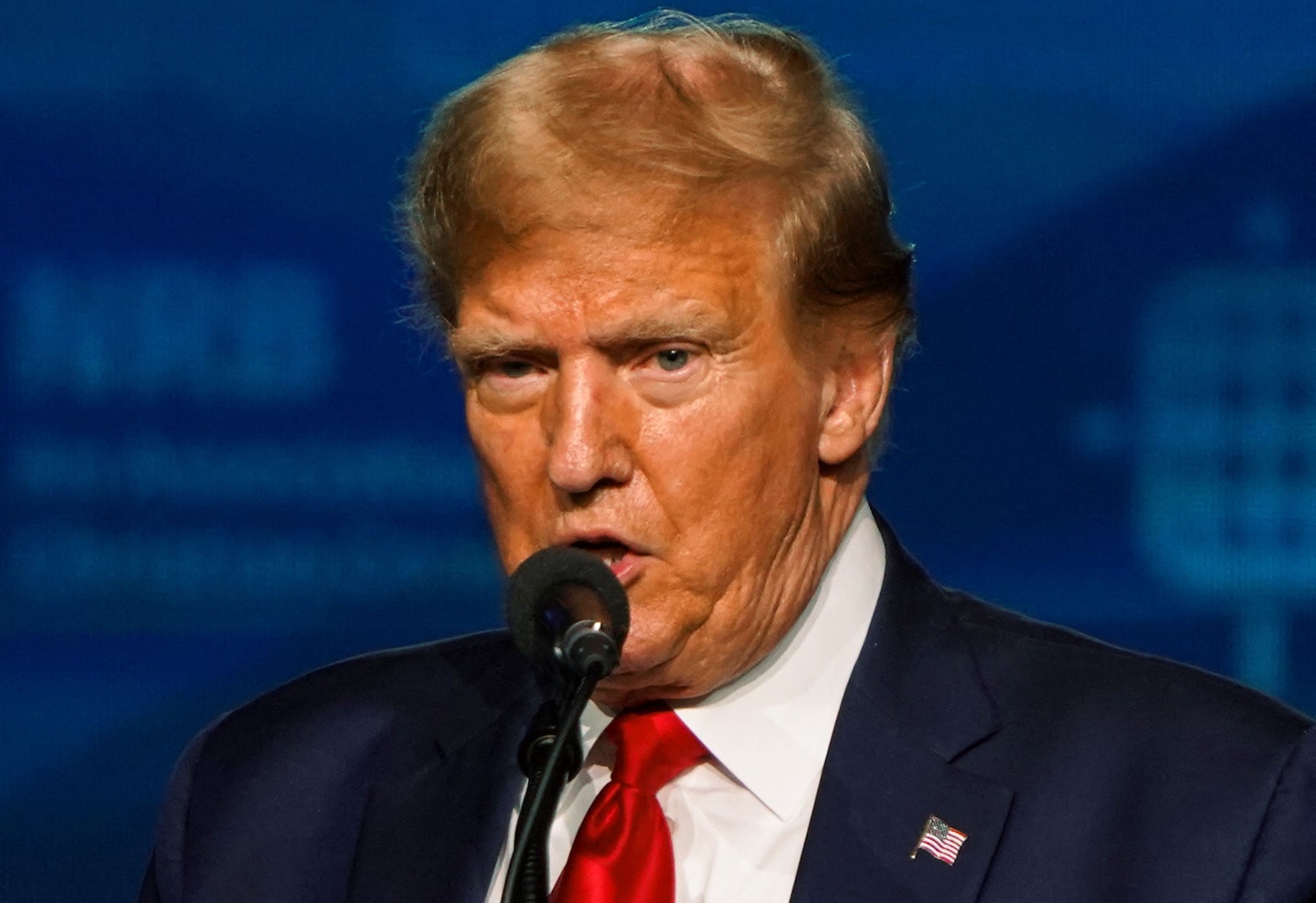
In contrast, Trump was frequently blocked by Congress from 2017 to 2021. And, as Weyland observes, he did not “push out the kind of blatant transgressions that populist defiance of court orders in other parts of the world did.” [Hugo] Chavez of Venezuela [Vladimir] The Slovak Messiah has done so frequently. ”
Part of the reason is that President Trump has never had an overwhelming democratic mandate, with his average approval rating in the low 40s during his term in office. The less popular his leadership is, the less likely his power grab will be successful. Weiland points out that Fujimori received more than 80% support when he shut down Peru’s parliament in 1992, ending Peru’s democracy less than two years after he was elected. . Its popularity is not manufactured. It was earned by Mr. Fujimori’s extraordinary success in crushing bloody domestic rebellions and curbing hyperinflation.
Supermajority support was possible for presidents earlier in U.S. history – and may still be possible under extraordinary circumstances – but someone as intentionally polarizing as Trump could muster support. Is there any? As Weiland puts it, “Even bold feats of charisma may no longer overcome the deep fault lines that divide modern American politics.” The precise nature of President Trump’s actions make him irresistible to his base. As such, he will always face a powerful and well-resourced opposition.
None of this is reason to be satisfied with President Trump’s second term. America’s separation of powers is too strong for any president, especially one as undisciplined as Trump, to stifle the kind of policy competition that President Recep Tayyip Erdoğan is having in Turkey. But given Mr. Trump’s actions after the 2020 election, with his re-election and the support of a more brazen group of advisers, no one is aware that he will sow chaos, sow unrest, and risk serious consequences. It cannot be ignored.
One of Weyland’s examples of populist attacks on democracy failing is the 2009 regime of Manuel Zelaya, which attempted to seize power without the economic preconditions that have made such maneuvers successful in other Latin American countries. Honduras in the year. “When the stubborn president continued to flout legislative and judicial prohibitions, the military finally ousted him and forestalled his attack on liberal pluralism, but in the process it obstructed democracy.” Weyland writes.
This example shows that populists are encouraged to defend their interests by any means necessary, not only through their own nefarious acts, but also by challenging powerful opponents in the elites and even subverting democracy itself. “can pose problems for liberal pluralism.”Abnormal checks on the majority in the constitution and polarization are affecting modern society. populist The formula for democratic subversion is unlikely to succeed, especially in the modern United States. Other formulas may still be available.